Docking your boat should be straightforward, but one unexpected gust of wind, passing wake, or poorly positioned fender can result in scratched gelcoat, damaged rub rails, or expensive hull repairs.
Choosing the best boat fenders is one of the simplest ways to protect your boat when docking, tying up at a marina, or securing alongside another vessel.
Not all boat fenders are designed for the same situations. Traditional cylindrical fenders provide versatile protection, low-freeboard fenders protect vulnerable gunwales, and newer contoured designs offer a different approach to securing modern boat hulls.
For 2026, we’ve selected five boat fenders covering everyday docking, challenging dock conditions, low-profile boats, premium protection, and value.
Our top picks at a glance:
- Taylor Made Big B: Best Overall for Versatility
- Taylor Made Low Freeboard: Best for Low-Freeboard Boats
- MISSION SENTRY 2.0: Best Premium Boat Fender
- Extreme Max BoatTector 2-Pack: Best Value Fender Kit
- Seachoice Twin Eye Ribbed: Best Traditional Fender
Whether you’re protecting a fishing boat, runabout, recreational cruiser, or other pleasure boat, this guide will help you select the right design and size for your docking needs.
Affiliate disclosure: Boat Gear Pilot may earn a commission from qualifying purchases through links in this article, at no additional cost to you.
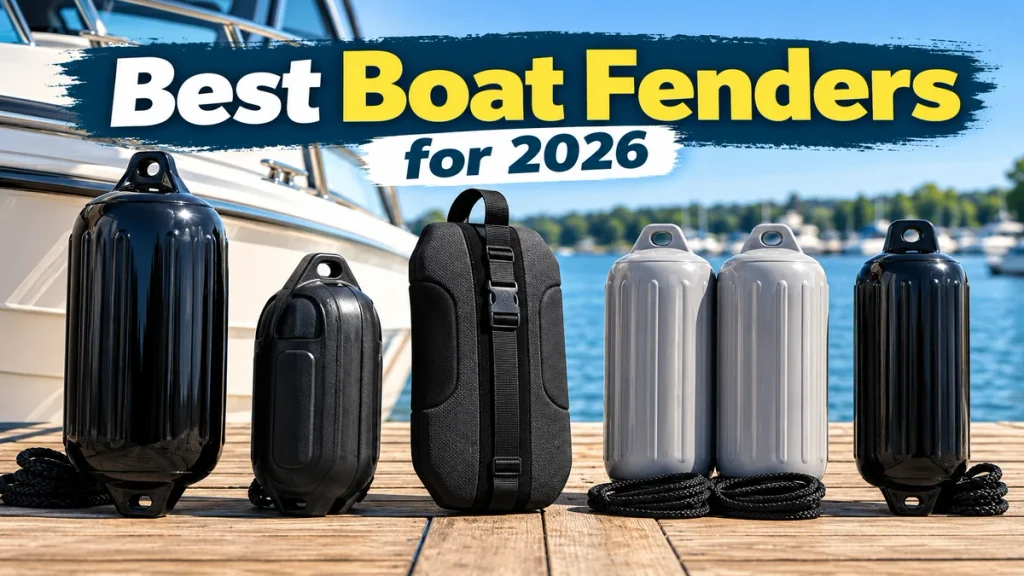
Quick Comparison: Best Boat Fenders for 2026
| Boat Fender | Best For | Selected Size | Main Advantage |
|---|---|---|---|
| Taylor Made Big B | Overall versatility | 8 × 20 inches | Horizontal or vertical positioning |
| Taylor Made Low Freeboard | Low-profile boats | 5 × 14 inches | Protects vulnerable gunwales |
| MISSION SENTRY 2.0 | Premium protection | 22 × 9 × 5.5 inches | Contoured foam design |
| Extreme Max BoatTector | Value | 6.5 × 22 inches | Two fenders and lines included |
| Seachoice Twin Eye | Traditional use | 5.5 × 20 inches | Simple ribbed cylindrical design |
Quick recommendation: For boat owners who want versatile protection in different docking situations, the Taylor Made Big B is our overall pick. Its center rope tube allows positioning that ordinary twin-eye fenders cannot always achieve as conveniently.
However, owners of low-profile boats or modern hulls may find a specialized fender more practical.
1. Taylor Made Big B Fender — Best Overall for Versatility
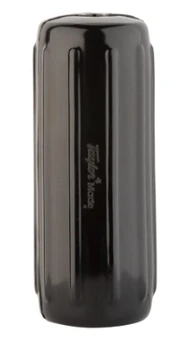
The Taylor Made Big B Inflatable Vinyl Fender earns our Best Overall recommendation because it combines traditional marine-grade construction with flexible mounting options.
Unlike conventional twin-eye fenders, the Big B incorporates a center rope tube running through the fender. This allows it to hang vertically or horizontally using a single line.
That flexibility is useful when docking alongside pilings, irregular docks, or locations where water levels fluctuate.
Key Specifications
- Manufacturer: Taylor Made
- Model: Big B
- MPN: 71026
- Color: Black Onyx
- Dimensions: 8 inches diameter × 20 inches long
- Material: Marine-grade vinyl
- Mounting: Center rope tube
- Orientation: Horizontal or vertical
- Manufacturer’s suggested boat length: Approximately 25–35 feet
What Makes It Stand Out?
The center rope tube is the Big B’s most distinctive feature.
A conventional cylindrical fender typically hangs from an eyelet at the end. The Big B’s through-center design allows a line to pass along its length, creating more positioning choices.
Horizontal positioning can be particularly helpful when protecting against pilings or supporting coverage along a wider section of the hull.
The fender also features molded ribs that help limit rolling against the boat’s surface.
Its inflatable construction allows pressure adjustments using the appropriate inflation needle.
Pros
- Versatile horizontal and vertical mounting
- Marine-grade vinyl construction
- Ribbed design helps minimize rolling
- Adjustable inflation
- Suitable for a variety of docking configurations
Cons
- Requires a suitable fender line
- Larger than some compact fenders
- May be more expensive than basic cylindrical designs
- The selected size is not ideal for every boat
Who Should Buy It?
The Taylor Made Big B is a strong choice for owners of recreational boats and fishing boats who regularly dock at different marinas or encounter pilings and changing dock configurations.
Its flexibility makes it especially useful for boaters who want more positioning options from a conventional inflatable fender.
Our Verdict: Best Overall for Versatility.
Shop Taylor Made Big B
2. Taylor Made Low Freeboard Fender — Best for Low-Freeboard Boats
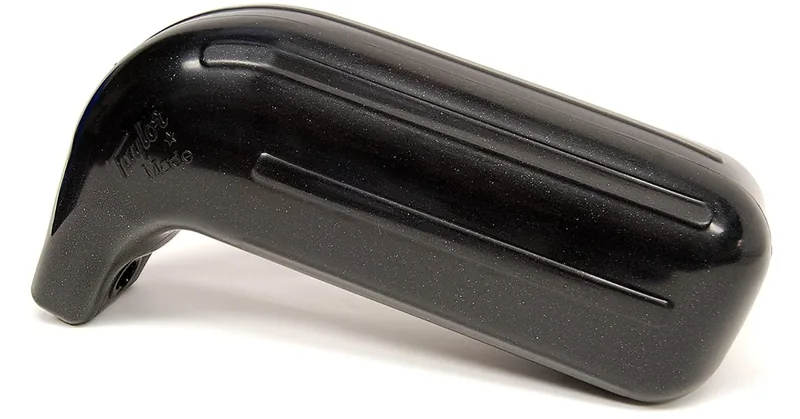
Boats with relatively low sides present a particular docking challenge.
A conventional cylindrical fender may hang too low to protect the rub rail or gunwale, particularly when the dock sits relatively high above the water.
The Taylor Made Low Freeboard Fender addresses that problem with a shape designed to position cushioning where low-profile boats need it.
Key Specifications
- Manufacturer: Taylor Made
- Model: Low Freeboard Fender
- MPN: 31006
- Color: Metallic Black
- Dimensions: Approximately 5 × 14 inches
- Material: Marine-grade vinyl
- Construction: Inflatable
- Primary application: Low-freeboard boats
Why It’s Different
Rather than relying on a conventional cylindrical profile, this fender is shaped to protect the gunwale and rub rail.
It can also be secured over a cleat to position its protective surface higher against the boat.
This configuration can be especially valuable for fishing boats, runabouts, and other vessels where conventional fenders hang below the most vulnerable contact points.
The adjustable inflation valve allows owners to set the fender pressure according to manufacturer guidance.
Pros
- Designed specifically for low-freeboard boats
- Helps protect gunwales and rub rails
- Useful when docking against higher dock surfaces
- Compact design
- Adjustable inflation pressure
Cons
- More specialized than a traditional cylindrical fender
- Smaller coverage area than large conventional fenders
- Not necessarily the best primary fender for high-sided vessels
- Correct placement remains important
Who Should Buy It?
This is an excellent option for owners of low-sided fishing boats and recreational craft who find that ordinary fenders don’t adequately protect the upper hull.
It is particularly worth considering when the rub rail or gunwale is the first area likely to contact the dock.
Our Verdict: Best for Low-Freeboard Boats.
Shop Taylor Made Low Freeboard
3. MISSION SENTRY 2.0 — Best Premium Boat Fender
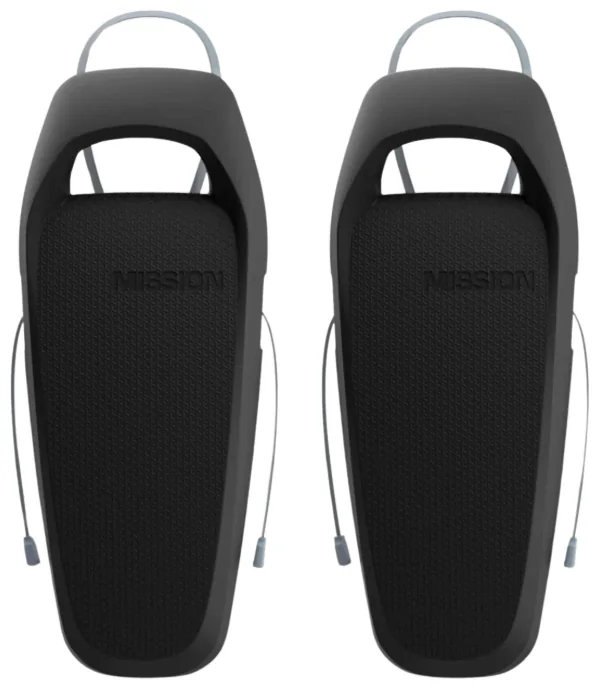
The MISSION SENTRY 2.0 takes a different approach to boat protection.
Instead of using a cylindrical inflatable body, it features a contoured, closed-cell foam design intended to sit against the shape of the hull.
It’s particularly appealing for boat owners who find traditional round fenders difficult to position securely on modern, angled hull surfaces.
Key Specifications
- Manufacturer: MISSION
- Model: SENTRY 2.0
- Selected manufacturer’s MPN: SENT-004-BK
- Color: Obsidian Black
- Package: Two fenders
- Dimensions: 22 × 9 × 5.5 inches per fender
- Material: Closed-cell foam
- Attachment: Integrated strap system with LockCAM adjustment
- Inflation required: No
Premium Design and Construction
The SENTRY 2.0 uses a specialized foam construction that eliminates the need for inflation.
Its contoured profile is designed to remain positioned against the boat instead of rolling like some traditional cylindrical fenders.
The integrated LockCAM strap system makes height adjustments straightforward.
Rather than tying and retying knots, users can release the locking mechanism, adjust the strap, and secure the fender at the desired height.
MISSION also designs the attachment area to preserve access to the cleat for docking lines.
Where It Works Best
The SENTRY 2.0 is particularly well suited to modern recreational boats, wake boats, and some fishing boats with hull shapes that make conventional fender placement difficult.
It may also appeal to owners who frequently dock at restaurants, marinas, and other locations where convenient installation matters.
Pros
- Contoured design intended to reduce rolling
- Closed-cell foam construction
- No inflation required
- Integrated adjustable straps
- Two fenders included
- Particularly useful on compatible modern hull shapes
Cons
- Premium price compared with basic cylindrical fenders
- Specific shape may not fit every hull equally well
- Bulkier than some deflated inflatable alternatives
- Buyers should confirm fit and attachment points before purchase
Who Should Buy It?
The SENTRY 2.0 is ideal for boaters who prioritize convenience and a more tailored fit against modern hull shapes.
Its integrated attachment system may be especially valuable for frequent docking.
Our Verdict: Best Premium Boat Fender.
Shop MISSION SENTRY 2.0
Confirm that the selected listing is the SENTRY 2.0 Obsidian Black two-pack.
4. Extreme Max BoatTector 2-Pack — Best Value Fender Kit
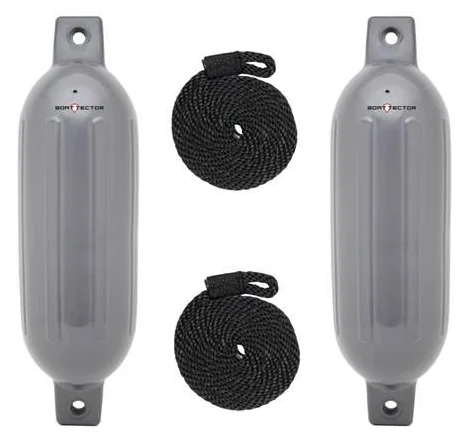
Outfitting a boat with several fenders can become expensive when each fender and line must be purchased separately.
The Extreme Max BoatTector 2-Pack provides a convenient alternative by combining two inflatable fenders with matching fender lines.
For owners who need to equip a boat without purchasing every component individually, that package can offer practical value.
Key Specifications
- Manufacturer: Extreme Max
- Model: BoatTector Value 2-Pack
- MPN: 3006.7459
- Color: Gray
- Dimensions: 6.5 × 22 inches per fender
- Package: Two inflatable fenders
- Included lines: Two 3/8-inch × 5-foot fender lines
- Construction: Ribbed PVC
- Inflation: Needle valve
Why We Like This Kit
The most obvious advantage is convenience.
Instead of ordering two separate fenders and then finding compatible fender lines, buyers receive a matched package.
Each fender features reinforced ribs and molded eyelets.
The inflatable design also permits pressure adjustment, allowing owners to follow the recommended inflation level for their docking conditions.
Extreme Max uses UV-stabilized and chemically resistant materials in this product line.
Everyday Docking Performance
The BoatTector kit is best suited for conventional docking situations where cylindrical fenders can be positioned against the hull.
Two fenders may cover basic needs in some docking situations, but boats often require additional fenders depending on length, contact points, and docking conditions.
Buyers should determine the number and size needed before assuming one two-pack is sufficient.
Pros
- Two fenders included
- Two matching fender lines included
- Reinforced ribbed construction
- Adjustable inflation
- Convenient starter package
- Useful for standard docking configurations
Cons
- Inflation needle or pump may need to be purchased separately
- Only two fenders included
- Not specifically shaped for low-freeboard gunwales
- Cylindrical fenders can require repositioning on angled hulls
Who Should Buy It?
The Extreme Max BoatTector kit is a practical choice for recreational boat owners who want traditional inflatable protection without purchasing every component separately.
It’s also worth considering for boaters replacing an older pair of fenders.
Our Verdict: Best Value Fender Kit.
Shop Extreme Max BoatTector
5. Seachoice Twin Eye Ribbed Fender — Best Traditional Fender
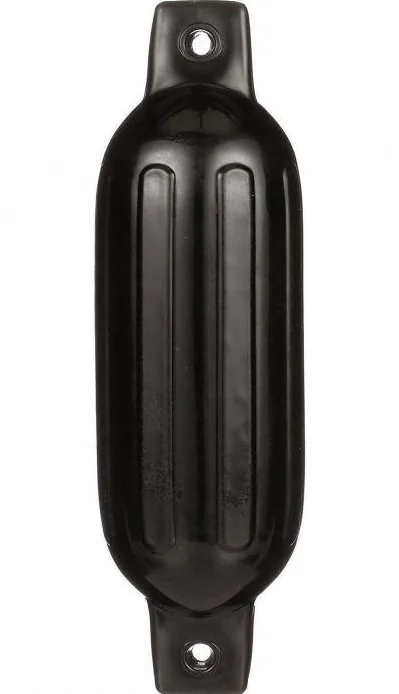
Sometimes a straightforward cylindrical fender is exactly what a boat needs.
The Seachoice Twin Eye Ribbed Fender uses a familiar inflatable design with molded attachment points and ribbed marine-grade vinyl construction.
It offers a conventional docking solution without the more specialized features found on premium contoured fenders.
Key Specifications
- Manufacturer: Seachoice
- Model: Twin Eye Ribbed Fender
- MPN: 79051 / 50-79051
- Color: Black
- Dimensions: 5.5 × 20 inches
- Material: Marine-grade vinyl
- Construction: Rotomolded
- Attachment: Twin-eye design
- Package: One fender
Traditional Construction
The Seachoice fender uses rotomolded construction to create consistent wall thickness.
Its ribbed exterior provides a cushioned surface intended to protect the boat when it contacts a dock or neighboring vessel.
The integrated attachment points support conventional vertical hanging.
A recessed inflation valve helps keep the valve housing away from direct contact with surrounding surfaces.
A Simple Docking Solution
The greatest appeal of this model is its straightforward design.
There are no integrated premium strap systems or specialized shapes to accommodate.
Instead, the fender provides an inflatable protective barrier that can be positioned along the side of an appropriately sized boat.
Seachoice markets this model for smaller recreational boats, although boat weight, freeboard, exposure, and manufacturer sizing guidance should also influence your selection.
Pros
- Familiar cylindrical fender design
- Marine-grade vinyl construction
- Ribbed cushioning surface
- Rotomolded construction
- Twin-eye attachment points
- Suitable for conventional docking
Cons
- Single fender rather than a complete kit
- Fender line may need to be purchased separately
- Less mounting flexibility than the Big B
- Not tailored to modern contoured hulls
- Smaller size may be inadequate for larger or heavier boats
Who Should Buy It?
This is a good option for owners of smaller recreational boats looking for a traditional fender or an additional protective point along the hull.
Its conventional design also makes it useful as a replacement for an older ribbed fender.
Our Verdict: Best Traditional Fender.
Selected model: black, 5.5 × 20 inches, single fender, MPN 79051. Verify the package quantity when purchasing.
How to Choose the Best Boat Fenders
Choosing the right boat fender involves more than selecting a popular brand.
The best option depends on your boat’s dimensions, hull shape, weight, freeboard, and the docking conditions you regularly encounter.
1. Choose the Right Fender Size
Fender size is one of the most important considerations.
A fender that’s too small may compress excessively or fail to cover the areas likely to contact the dock.
A fender that’s unnecessarily large can be difficult to store and position.
Use manufacturer sizing charts as your starting point. For example, Taylor Made recommends its 8 × 20-inch Big B for boats approximately 25–35 feet long.
That recommendation applies to the specific Big B model. It should not be used as a universal sizing rule for every fender style.
Heavier boats, exposed marinas, significant wakes, and rough docking conditions may require additional or larger fenders.
2. Consider Your Boat’s Freeboard
Freeboard is the vertical distance between the waterline and the deck edge.
Boats with low freeboard may need protection high against the hull or around the gunwale.
A conventional fender hanging too low can leave those areas exposed.
Specialized products, such as the Taylor Made Low Freeboard, are intended to address that problem.
3. Choose Between Cylindrical and Contoured Fenders
Traditional cylindrical fenders are versatile, familiar, and available in numerous sizes.
They’re practical for many recreational boats and marina configurations.
However, they can move or roll when improperly positioned.
Contoured fenders are designed for more specialized hull shapes and may stay positioned more consistently on compatible boats.
The MISSION SENTRY 2.0 is an example of that approach.
Neither design is automatically best for every vessel.
4. Consider the Docking Environment
Think about where you regularly secure your boat.
Floating docks, fixed docks, pilings, and rafting situations create different contact points.
A horizontal fender may help protect against a piling, while a conventional vertical fender may be appropriate alongside a straight dock.
Water-level changes and passing wakes also affect fender positioning.
For demanding mooring conditions, follow manufacturer sizing guidance and consider whether additional protection is appropriate.
5. Understand Fender Materials
Most traditional inflatable fenders use flexible vinyl or similar marine-grade materials.
Their advantages include cushioning, adjustable inflation, and a broad selection of sizes.
Closed-cell foam designs eliminate routine inflation and can provide a contoured shape.
However, material alone doesn’t determine protection.
Proper sizing, attachment, placement, and condition are equally important.
6. Account for the Number of Fenders Needed
A single fender rarely provides sufficient protection for an entire boat.
Many recreational boats use several fenders along the docking side, depending on their length and the positions where dock contact may occur.
Longer boats may need additional protective points.
Consider the widest area of the hull, the bow and stern geometry, and any pilings or dock structures.
For a secure docking setup, combine suitable fenders with correctly positioned dock lines.
How to Position Boat Fenders Correctly
Even high-quality fenders cannot protect a boat if they’re hanging in the wrong location.
Step 1: Identify Contact Points
Before tying up, evaluate the dock and identify where your boat is most likely to make contact.
Pay particular attention to pilings, dock corners, the rub rail, and the widest section of the hull.
Step 2: Position the Fender at the Correct Height
The fender should cover the area where contact is likely.
For conventional docks, this often means placing the protective surface around the height of the dock edge.
For higher docks or low-freeboard boats, specialized placement may be necessary.
Step 3: Secure the Fender Properly
Use suitable fender lines and attachment points.
Make sure the line and attachment can handle the expected movement and load.
Do not assume every rail, fitting, or accessory can safely carry the load.
Step 4: Check for Movement
Before leaving the boat secured, check whether the fender can swing away, shift, or become trapped.
Changes in wind, tide, water level, and passing wakes can alter how the boat rests against the dock.
Step 5: Inspect Fender Condition
Check for cuts, cracks, damaged eyelets, worn straps, and air leaks.
Replace components that can no longer provide dependable protection.
Fenders are protective equipment, and neglecting their condition can undermine their effectiveness.
Frequently Asked Questions About Boat Fenders
What are the best boat fenders for everyday docking?
Traditional inflatable cylindrical fenders work well for many recreational boats.
The Taylor Made Big B is our Best Overall selection because of its versatile mounting design.
However, the most suitable choice still depends on boat size and hull configuration.
What’s the difference between boat fenders and boat bumpers?
The terms are sometimes used interchangeably.
Generally, a fender is a removable protective cushion positioned between a boat and another surface.
A dock bumper is typically attached to the dock itself.
Both help reduce contact damage, but they protect from different positions.
How many boat fenders do I need?
The answer depends on boat length, displacement, docking conditions, and the number of contact points.
Several fenders are commonly used along the docking side.
Check manufacturer recommendations rather than relying on one universal quantity.
Are inflatable boat fenders better than foam fenders?
Neither is universally better.
Inflatable fenders offer flexible sizing and traditional cushioning.
Foam fenders don’t require inflation and can be designed around specific hull shapes.
Your boat and docking environment should determine the choice.
Can I leave boat fenders hanging while underway?
For normal operation, remove and properly stow fenders unless the manufacturer specifically permits otherwise.
Loose fenders can swing, drag, damage the boat, or interfere with safe operation.
MISSION specifically advises against leaving SENTRY fenders deployed while underway.
How much should I inflate a boat fender?
Follow the instructions for the specific manufacturer and model.
Overinflation can reduce compliance with the hull and potentially damage the fender.
Some models have explicit pressure limits, while others use different valve and inflation systems.
What size boat fenders do I need for a 20-foot boat?
A 20-foot boat may use smaller fenders than a heavier 30-foot cruiser, but length alone doesn’t determine the correct size.
Consult the fender manufacturer’s chart and account for weight, freeboard, and docking conditions.
Do boat fenders prevent all hull damage?
No.
Fenders reduce the likelihood and severity of contact damage when correctly sized and positioned.
They cannot compensate for unsafe docking, inadequate dock lines, excessive loads, or severe weather.
Final Verdict: Which Boat Fender Should You Buy in 2026?
The best boat fender is the one that provides reliable cushioning at your boat’s actual contact points.
For general versatility, Taylor Made Big B is our Best Overall selection. Its center rope tube and horizontal-or-vertical mounting options make it useful in many docking environments.
For fishing boats and other low-profile vessels, Taylor Made Low Freeboard offers specialized protection around vulnerable gunwales and rub rails.
Boat owners who prefer premium materials and easier strap adjustment should consider MISSION SENTRY 2.0, particularly when traditional fenders are difficult to secure against a contoured hull.
The Extreme Max BoatTector 2-Pack is a practical value choice for anyone needing two conventional inflatable fenders with matching lines.
Finally, the Seachoice Twin Eye Ribbed Fender remains an appealing conventional option for smaller recreational boats and straightforward docking applications.
Whichever design you choose, correct sizing and positioning matter as much as the brand.
For additional recommendations on outfitting and maintaining your boat, explore our guides to best boat anchors, best boat covers, and best boat trailer winches.
Protect your boat before the next docking mishap—not after the damage is done.
Editorial note: These recommendations are based on published manufacturer specifications, product features, intended applications, and available retailer information. Boat Gear Pilot has not independently conducted hands-on testing of these five products. Product availability and specifications may change.