
A reliable GPS antenna can improve the accuracy and consistency of your boat’s navigation electronics, especially when your chartplotter or multifunction display does not have a clear view of the sky. Many modern marine GPS antennas also provide fast position updates and heading data that can improve chart orientation, radar overlays, and other navigation features.
In this guide, we compare the best marine GPS antennas for 2026 from Garmin, Lowrance, Simrad, and Raymarine. Whether you’re upgrading an existing electronics system or adding an external GPS receiver to your boat, these four options cover some of the most popular marine electronics platforms.
Affiliate Disclosure: Boat Gear Pilot participates in affiliate programs, including the Amazon Services LLC Associates Program and the eBay Partner Network. As an Amazon Associate, we earn from qualifying purchases. We may also earn a commission from qualifying purchases made through eBay and other affiliate links, at no additional cost to you.
Table of Contents
Quick Picks: Best Marine GPS Antennas for 2026
| Product | Best For |
|---|---|
| Garmin GPS 24xd | Best Overall |
| Lowrance Point-1 | Best for Lowrance Users |
| Simrad GS25 | Best for Simrad Systems |
| Raymarine RS150 | Best for Raymarine Systems |
1. Garmin GPS 24xd — Best Overall Marine GPS Antenna
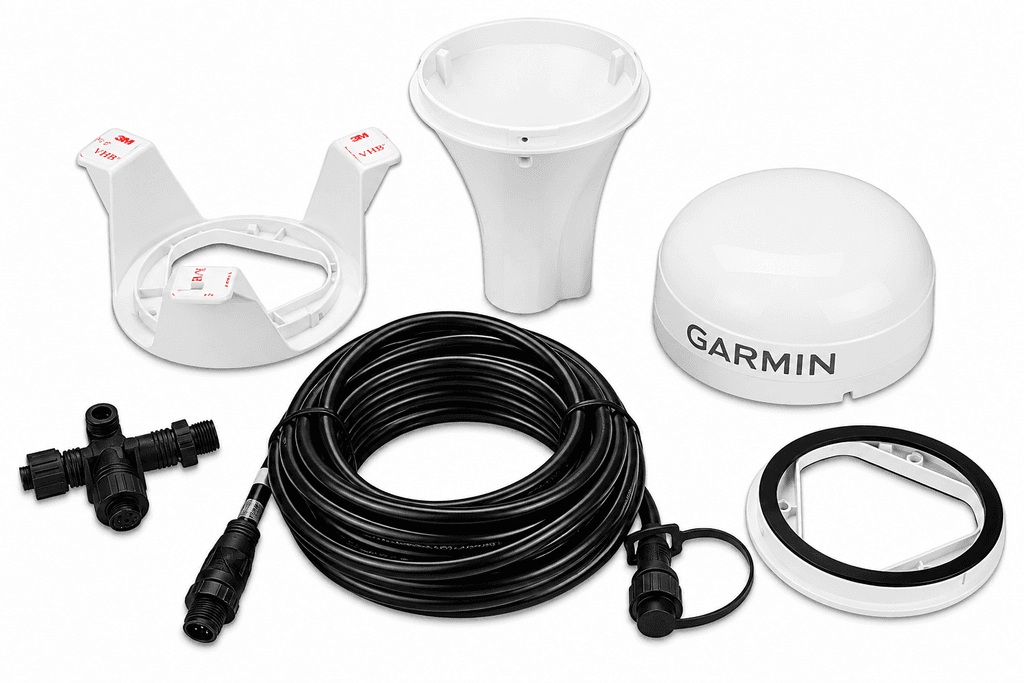
The Garmin GPS 24xd is a high-accuracy marine GPS antenna and heading sensor designed to provide reliable positioning data for compatible marine electronics. Its multi-band GNSS receiver uses multiple satellite systems to help maintain accurate positioning even in challenging marine environments.
In addition to GPS positioning, the GPS 24xd includes a magnetic heading sensor that provides heading information even when the boat is sitting still. With 10 Hz position updates and NMEA 2000 connectivity, it integrates easily with compatible Garmin chartplotters and other marine electronics.
Why We Like It
The GPS 24xd combines accurate positioning and heading data in one compact sensor. Its multi-band GNSS support and 10 Hz updates make it a strong upgrade for boaters who want dependable navigation data, while its NMEA 2000 connection makes it especially easy to integrate into a Garmin marine electronics setup.
Key Features
- Multi-band GNSS receiver
- GPS, Galileo, GLONASS and BeiDou support
- 10 Hz position updates
- Integrated magnetic heading sensor
- NMEA 2000 connectivity
- Provides heading data even while stationary
- Designed for marine navigation systems
Best For
Boaters who want accurate GPS positioning and heading data, especially those using compatible Garmin chartplotters and NMEA 2000 marine electronic
Pros & Cons
| Pros | Cons |
|---|---|
| Accurate multi-band GNSS positioning | More expensive than basic GPS-only antennas |
| Built-in magnetic heading sensor | Some features provide the most value within a Garmin setup |
| Fast 10 Hz position updates | |
| NMEA 2000 connectivity | |
| Provides heading data while stationary |
2. Lowrance Point-1 — Best for Lowrance Users
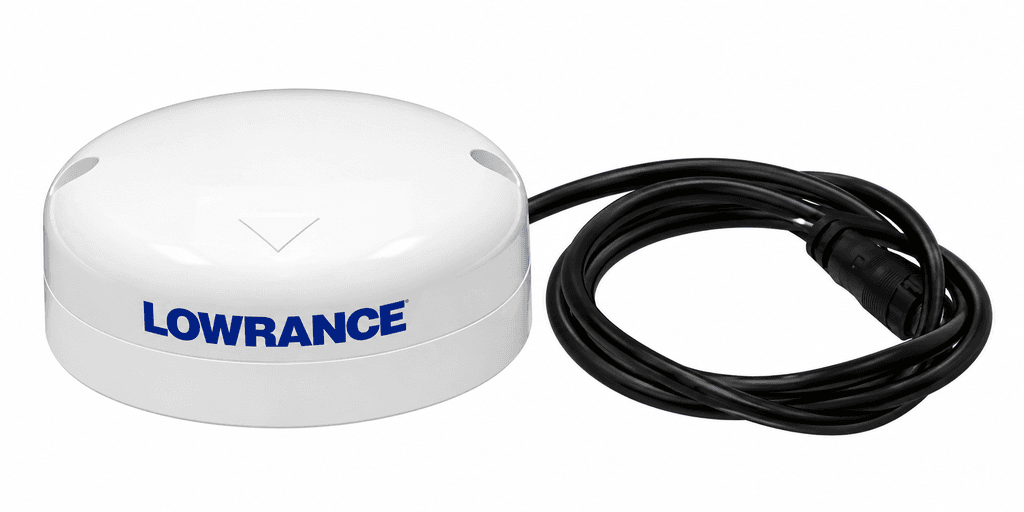
The Lowrance Point-1 is a marine GPS and heading antenna designed to provide accurate position and heading data to compatible Lowrance electronics. It combines a high-sensitivity GPS/GLONASS receiver with an integrated electronic compass, helping improve chart orientation and vessel heading information.
With 10 Hz position updates and NMEA 2000 connectivity, the Point-1 can provide smooth, responsive navigation data across your onboard network. It’s especially useful for anglers and boaters who want accurate heading information at slow speeds or while the boat is stationary.
Why We Like It
The Point-1 is a strong upgrade for boaters already using Lowrance electronics. Its combination of GPS positioning and electronic heading data helps keep charts properly oriented and provides more useful heading information at slow speeds or while stationary. The simple NMEA 2000 connection also makes it easy to add to a compatible marine network.
Key Features
- Integrated GPS/GLONASS receiver
- Built-in electronic compass
- 10 Hz position updates
- Provides heading data at slow speeds and while stationary
- NMEA 2000 connectivity
- Helps improve chart orientation and radar/chart overlay
- Designed to integrate with compatible Lowrance marine electronics
Best For
Boaters and anglers using compatible Lowrance electronics who want improved GPS positioning, chart orientation, and accurate heading data at slow speeds or while stationary.
Pros & Cons
| Pros | Cons |
|---|---|
| GPS and heading sensor in one unit | Not recommended by Lowrance as an autopilot heading sensor |
| Accurate heading at slow speeds or while stationary | Best value for boats using compatible Lowrance electronics |
| Fast 10 Hz position updates | |
| Simple NMEA 2000 integration | |
| Useful for chart orientation and radar overlay |
3. Simrad GS25 — Best for Simrad Systems
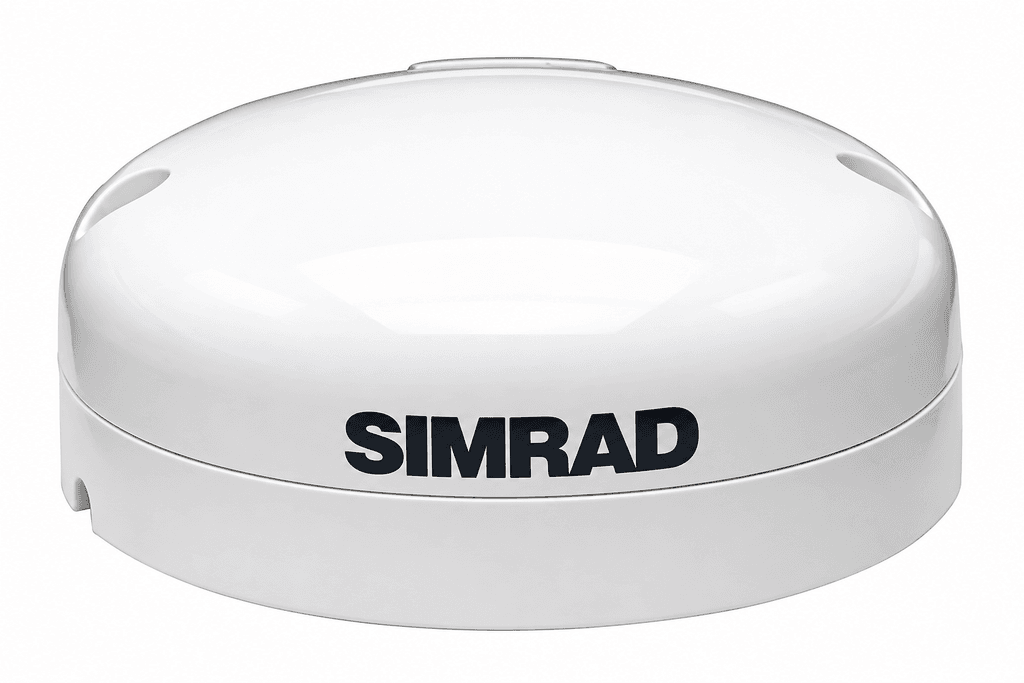
The Simrad GS25 is a marine GPS antenna and heading sensor designed to provide reliable position and heading data to compatible Simrad electronics. It combines a GPS receiver with an integrated electronic compass, making it useful for navigation, chart orientation, and radar overlay applications.
With 10 Hz position updates and NMEA 2000 connectivity, the GS25 delivers responsive navigation data across a compatible onboard network. It is a natural choice for boaters who already use Simrad chartplotters and want an external GPS and heading source that integrates cleanly with their electronics.
Why We Like It
The GS25 is a straightforward way to add both GPS positioning and heading data to a compatible Simrad network. Its 10 Hz updates provide smooth position information, while the integrated electronic compass helps improve chart orientation and radar overlay performance. It’s especially appealing for boaters who want to keep their navigation electronics within the Simrad ecosystem.
Key Features
- Integrated GPS receiver
- Built-in electronic compass
- 10 Hz position updates
- NMEA 2000 connectivity
- Provides GPS position and heading data
- Supports improved chart orientation and radar overlay
- Designed for integration with compatible Simrad marine electronics
Best For
Boaters using compatible Simrad chartplotters who want a dedicated GPS and heading sensor for improved positioning, chart orientation, and radar overlay.
Pros & Cons
| Pros | Cons |
|---|---|
| GPS and heading sensor in one unit | Best suited to Simrad electronics |
| Fast 10 Hz position updates | Not a replacement for a dedicated autopilot compass |
| Simple NMEA 2000 integration | |
| Helps improve chart orientation | |
| Useful for radar overlay applications |
4. Raymarine RS150 — Best for Raymarine Systems
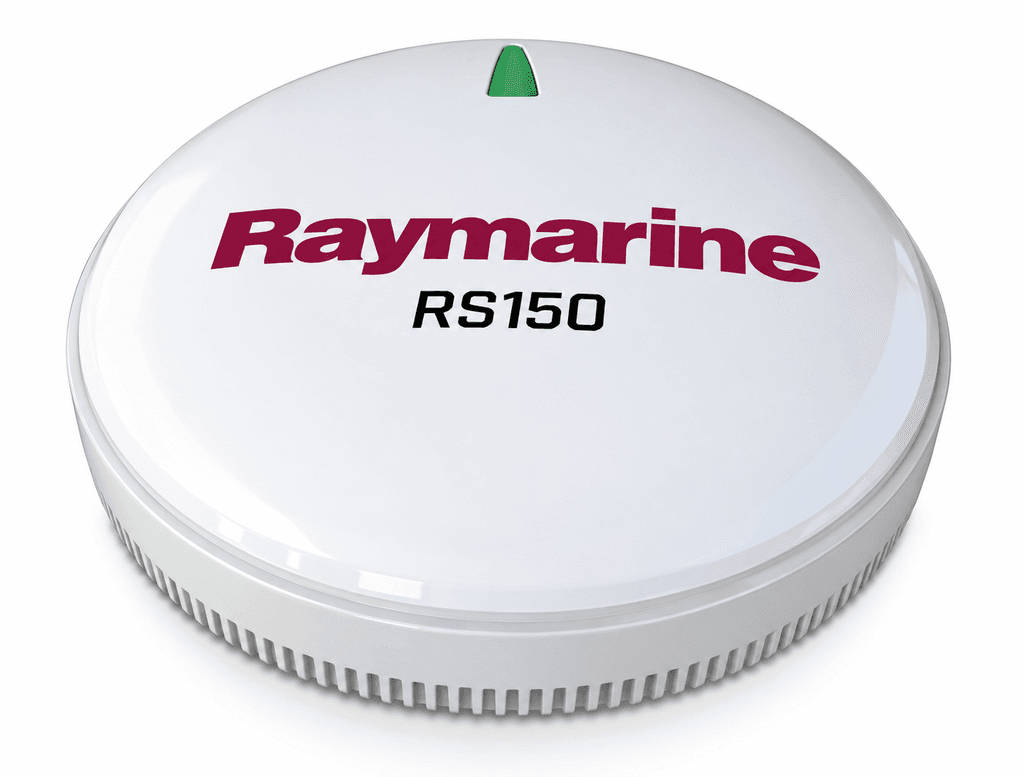
The Raymarine RS150 is a compact marine GPS/GNSS receiver designed to provide fast and reliable position data to compatible Raymarine navigation systems. Its 72-channel receiver supports multiple satellite constellations and delivers 10 Hz position updates for smooth, responsive tracking on your chartplotter.
The RS150 connects through Raymarine’s SeaTalkng network and can also integrate with NMEA 2000 systems using the appropriate adapter. Its compact, waterproof design makes it suitable for installation on a wide range of recreational boats.
Why We Like It
The RS150 is a simple way to add a dedicated external GPS/GNSS receiver to a compatible Raymarine navigation system. Its 10 Hz updates provide smooth position tracking, while the compact design makes installation relatively straightforward. It’s an especially good fit for boats already equipped with Raymarine chartplotters and SeaTalkng networking.
Key Features
- 72-channel GPS/GNSS receiver
- GPS and GLONASS satellite support
- 10 Hz position updates
- SeaTalkng connectivity
- NMEA 2000 compatibility with the appropriate adapter
- Compact marine-grade design
- Designed for integration with compatible Raymarine navigation electronics
Best For
Boaters using compatible Raymarine chartplotters who want a dedicated external GPS/GNSS receiver with fast position updates and simple SeaTalkng integration.
Pros & Cons
| Pros | Cons |
|---|---|
| Fast 10 Hz position updates | Does not include a heading sensor like some competitors |
| 72-channel GPS/GNSS receiver | NMEA 2000 integration may require an adapter |
| Simple SeaTalkng integration | |
| Compact, marine-grade design | |
| Great fit for Raymarine electronics |
Marine GPS Antennas Comparison
| GPS Antenna | Position Updates | Heading Sensor | Best For |
|---|---|---|---|
| Garmin GPS 24xd | 10 Hz | Yes | Best Overall |
| Lowrance Point-1 | 10 Hz | Yes | Lowrance Users |
| Simrad GS25 | 10 Hz | Yes | Simrad Systems |
| Raymarine RS150 | 10 Hz | No | Raymarine Systems |
How to Choose the Best Marine GPS Antenna
Choosing the right marine GPS antenna starts with compatibility. Check which networking standard your chartplotter and other marine electronics use, such as NMEA 2000 or SeaTalkng, and confirm that the antenna can communicate with your existing system.
Position update rate is another important consideration. The models in this guide provide 10 Hz updates, which means position information is refreshed up to 10 times per second for smooth tracking on a chartplotter.
You should also decide whether you need heading data. Models such as the Garmin GPS 24xd, Lowrance Point-1, and Simrad GS25 include heading sensors that can provide vessel heading even at very low speeds or while stationary. This can be useful for chart orientation and compatible radar-overlay features.
Finally, consider where the antenna will be installed. For the best satellite reception, follow the manufacturer’s mounting instructions and choose a location with a clear view of the sky and minimal interference from other onboard equipment.
Frequently Asked Questions About Marine GPS Antennas
Do I need an external GPS antenna for my boat?
Not every boat needs an external GPS antenna. Many modern chartplotters have built-in GPS receivers that work well when they have a clear view of the sky. An external GPS antenna can be useful when the chartplotter is installed inside an enclosed helm, satellite reception is inconsistent, or you want additional features such as dedicated heading data.
What is the difference between a GPS antenna and a GPS heading sensor?
A GPS antenna or receiver provides the boat’s geographic position, while a heading sensor determines the direction the boat is pointing. Some marine units combine both functions. A heading sensor is particularly useful at slow speeds or while stationary, when GPS course-over-ground information alone may not accurately show the direction the bow is facing.
What does 10 Hz mean on a marine GPS antenna?
A 10 Hz GPS receiver can update position data up to 10 times per second. Faster updates can make your boat’s movement appear smoother and more responsive on a chartplotter, particularly when maneuvering, changing direction, or traveling at higher speeds.
Where should a marine GPS antenna be mounted?
A marine GPS antenna should generally be mounted where it has a clear view of the sky and is away from equipment that could interfere with satellite reception or heading data. Common locations include a hardtop, radar arch, or other elevated mounting surface. Always follow the manufacturer’s installation and separation requirements for your specific antenna.
Can a marine GPS antenna improve radar overlay?
Yes, when the system includes an accurate heading source. A compatible GPS and heading sensor can help align radar targets with the chart display, making radar overlay more useful for navigation and situational awareness. Compatibility depends on your radar, chartplotter, heading sensor, and onboard network.
Final Verdict
The best marine GPS antenna for your boat depends largely on your existing electronics and whether you need both positioning and heading data.
The Garmin GPS 24xd is our best overall pick thanks to its multi-band GNSS receiver, fast position updates, and integrated heading sensor. The Lowrance Point-1 and Simrad GS25 are strong choices for boaters already using those respective electronics platforms, while the Raymarine RS150 provides a dedicated external GPS/GNSS solution for compatible Raymarine systems.
If you’re upgrading more of your navigation setup, check out our Best Marine GPS & Chartplotters for 2026 guide. Boaters adding radar can also read our Best Marine Radar Systems for 2026 guide, and our Best Marine Autopilot Systems for 2026 guide covers options for improving automatic steering and course control.
Before purchasing, verify that the antenna is compatible with your chartplotter, network, and the specific navigation features you want to use.