
A quality marine radar system can dramatically improve situational awareness when boating at night, in fog, rain, or other low-visibility conditions. Modern solid-state radar can help you detect boats, shorelines, buoys, weather, and other targets that may be difficult to see with the naked eye.
For 2026, we’ve selected four radar systems from Garmin, Simrad, Furuno, and Raymarine. Because marine radar compatibility often depends on the chartplotter or multifunction display already installed on your boat, we’ll compare their range, target-tracking features, scanning capabilities, and system compatibility to help you narrow down the right option.
Affiliate Disclosure: Boat Gear Pilot participates in affiliate programs, including the Amazon Services LLC Associates Program and the eBay Partner Network. As an Amazon Associate, we earn from qualifying purchases. We may also earn a commission from qualifying purchases made through eBay and other affiliate links, at no additional cost to you.
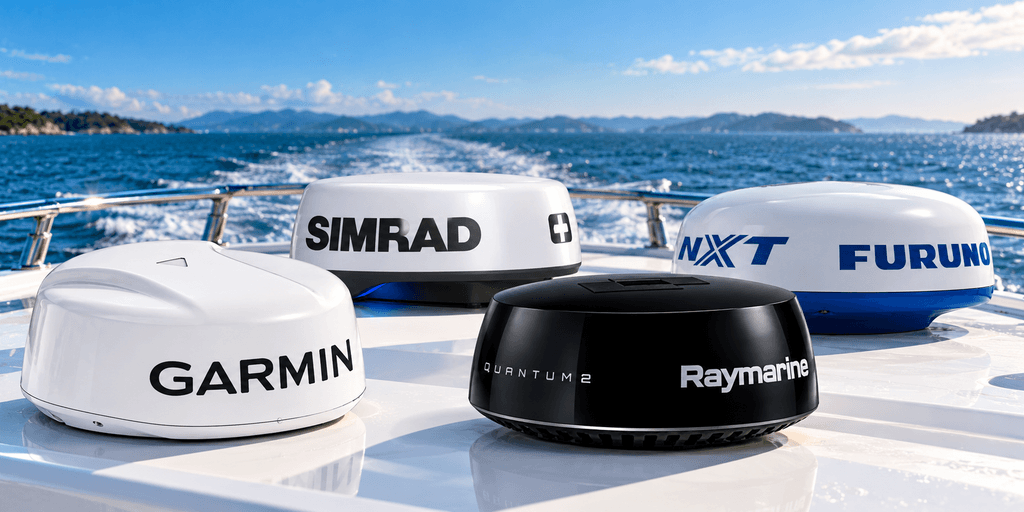
Table of Contents
Quick Picks
Best Overall: Garmin GMR Fantom 18x 18″ Dome Radar
Best for Collision Awareness: Simrad HALO20+ 20″ Dome Radar
Best for Target Tracking: Furuno DRS4D-NXT 24″ Doppler Radar
Best for Raymarine Systems: Raymarine Quantum 2 Q24D Doppler Radar
1. Garmin GMR Fantom 18x 18″ Dome Radar — Best Overall
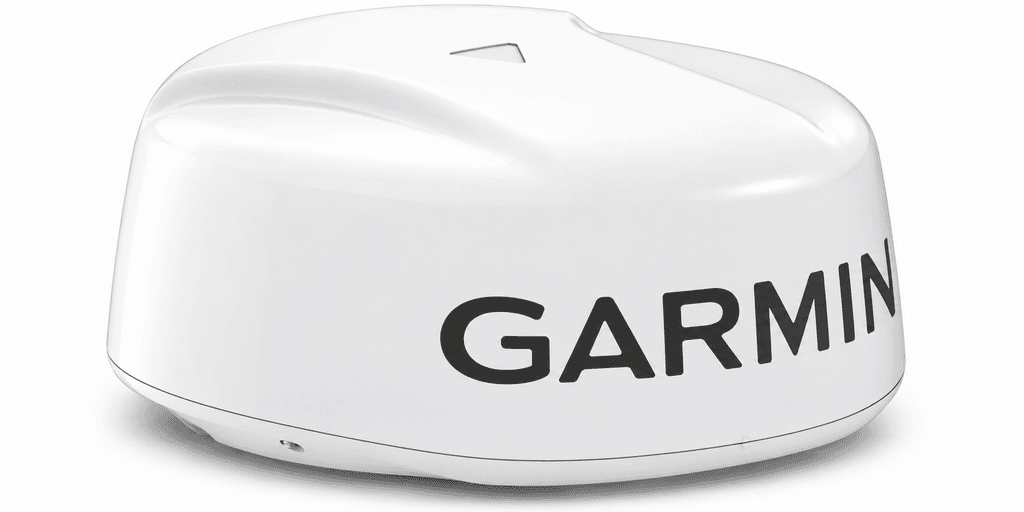
The Garmin GMR Fantom 18x is a compact solid-state dome radar designed to provide both close-range detail and long-range situational awareness. With 50 watts of transmit power and a maximum range of up to 48 nautical miles, it offers substantial capability from an 18-inch radome.
Garmin’s MotionScope technology uses the Doppler effect to help identify moving targets and indicate whether they’re approaching or moving away. With scanning speeds up to 60 RPM, the Fantom 18x can also provide frequent radar updates when navigating busy waterways or low-visibility conditions
Why We Like It
The Garmin GMR Fantom 18x combines long-range capability, fast scanning, and Doppler target detection in a relatively compact 18-inch radome. Its MotionScope technology can make moving traffic easier to interpret by visually distinguishing targets based on their motion.
It’s particularly well suited to boaters already using compatible Garmin chartplotters, creating an integrated navigation setup with radar overlay and target-tracking capabilities.
Key Features
- 18-inch solid-state dome radar
- 50W transmit power
- Up to 48 nautical miles of maximum range
- MotionScope Doppler technology
- Up to 60 RPM scanning
- Dual-range capability
- Radar overlay with compatible Garmin chartplotters
- IPX7 water-resistance rating
- Compact design for smaller and midsize boats
Potential Drawbacks
- Premium price compared with basic marine radar systems
- Best suited to boats already using compatible Garmin chartplotters
- Installation requires proper mounting, power, and network connections
- Some advanced features depend on the connected Garmin display and system configuration
- An 18-inch dome may provide less target separation than larger radar arrays in certain situations
Best For
Boaters already using Garmin marine electronics who want a compact, powerful radar with long-range capability, fast scanning, and Doppler-based moving-target detection.
2. Simrad HALO20+ 20″ Dome Radar — Best for Collision Awareness
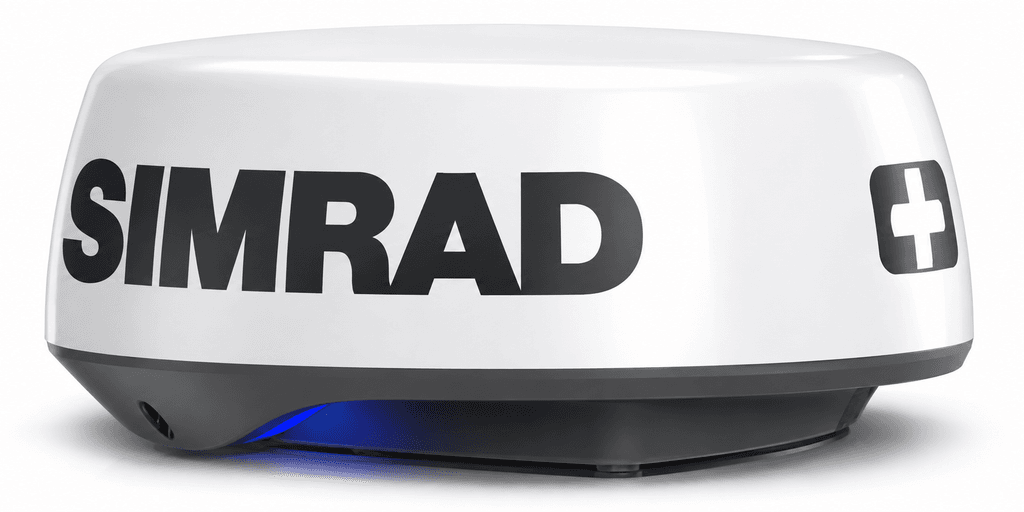
The Simrad HALO20+ is a 20-inch pulse-compression radar designed to provide fast, detailed target detection from close range out to 36 nautical miles. Its compact dome design makes it well suited to center consoles, fishing boats, and other recreational vessels where mounting space is limited.
One of its standout features is VelocityTrack Doppler technology, which helps show whether radar targets are approaching or moving away. With scanning speeds up to 60 RPM at shorter ranges, the HALO20+ can provide frequent updates when navigating busy waterways, harbors, or reduced-visibility conditions.
Why We Like It
The Simrad HALO20+ combines fast scanning, Doppler target detection, and excellent close-range performance in a compact radar dome. VelocityTrack makes moving targets easier to interpret by showing whether they’re approaching or moving away from your boat.
Its Dual Range capability can also display two radar ranges simultaneously on a compatible Simrad multifunction display, helping you monitor nearby traffic while keeping an eye on targets farther away.
Key Features
- 20-inch pulse-compression radar dome
- Up to 36 nautical miles of range
- VelocityTrack Doppler technology
- Up to 60 RPM scanning at shorter ranges
- Dual Range capability
- Fast target updates for busy waterways
- Low-power solid-state radar technology
- Designed to integrate with compatible Simrad multifunction displays
- Compact dome design for recreational boats
Potential Drawbacks
- Maximum range is shorter than the Garmin Fantom 18x and Furuno DRS4D-NXT
- Best suited to boats already using compatible Simrad displays
- Advanced features depend on the connected multifunction display and system configuration
- Installation requires proper mounting, power, and network connections
- Premium features make it more expensive than basic radar systems
Best For
Boaters using Simrad marine electronics who want fast radar updates and Doppler-assisted target awareness for navigating busy waterways, harbors, and low-visibility conditions.
3. Furuno DRS4D-NXT 24″ Doppler Radar — Best for Target Tracking
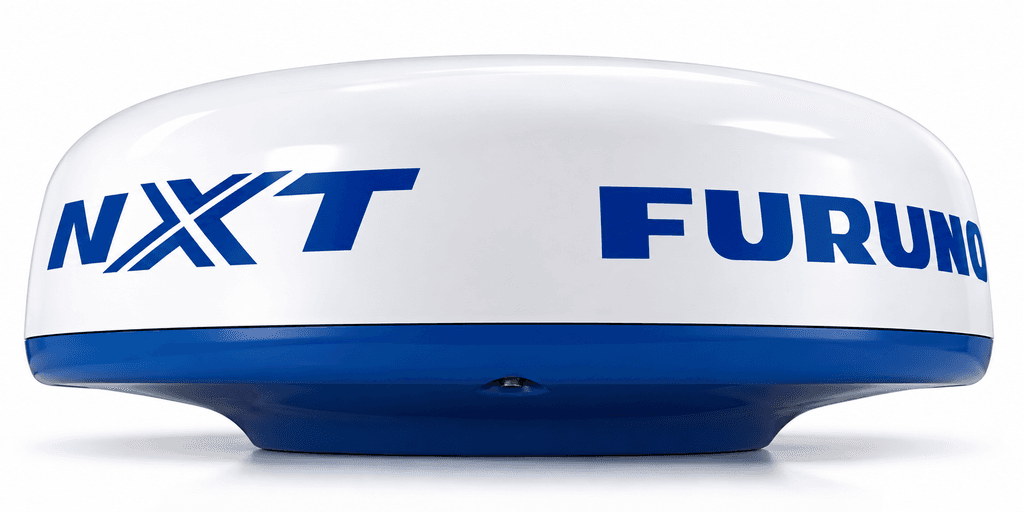
The Furuno DRS4D-NXT is a 24-inch solid-state Doppler radar designed for boaters who want advanced target detection and tracking. It delivers 25 watts of solid-state power with a maximum detection range of up to 48 nautical miles.
One of its standout features is Target Analyzer, which uses Doppler technology to help identify potentially hazardous moving targets. Furuno’s Fast Target Tracking can also automatically acquire and track targets, making the radar particularly useful when navigating areas with significant vessel traffic.
Why We Like It
The Furuno DRS4D-NXT stands out for its Doppler-based target analysis and automatic tracking capabilities. Target Analyzer can make radar returns easier to interpret by helping distinguish potentially hazardous moving targets from stationary or less concerning returns.
Its 48-nautical-mile maximum range also gives it strong long-range capability, while the 24-inch radome provides a larger antenna than the smaller Garmin and Simrad domes in this comparison.
Key Features
- 24-inch solid-state Doppler radar
- 25W transmit power
- Up to 48 nautical miles of maximum range
- Target Analyzer Doppler technology
- Fast Target Tracking
- Automatic target acquisition and tracking
- Solid-state radar technology
- Designed to integrate with compatible Furuno multifunction displays
- Larger 24-inch radome for strong target detection and separation
Potential Drawbacks
- Larger 24-inch radome requires more mounting space than compact 18- and 20-inch models
- Premium price compared with entry-level marine radar systems
- Best suited to boats already using compatible Furuno multifunction displays
- Advanced features depend on proper network integration and system configuration
- Installation may be more involved than adding simpler marine electronics
Best For
Boaters using Furuno marine electronics who want advanced Doppler target analysis, automatic target tracking, and strong long-range radar performance for navigating busy or low-visibility waterways.
4. Raymarine Quantum 2 Q24D Doppler Radar — Best for Raymarine Systems
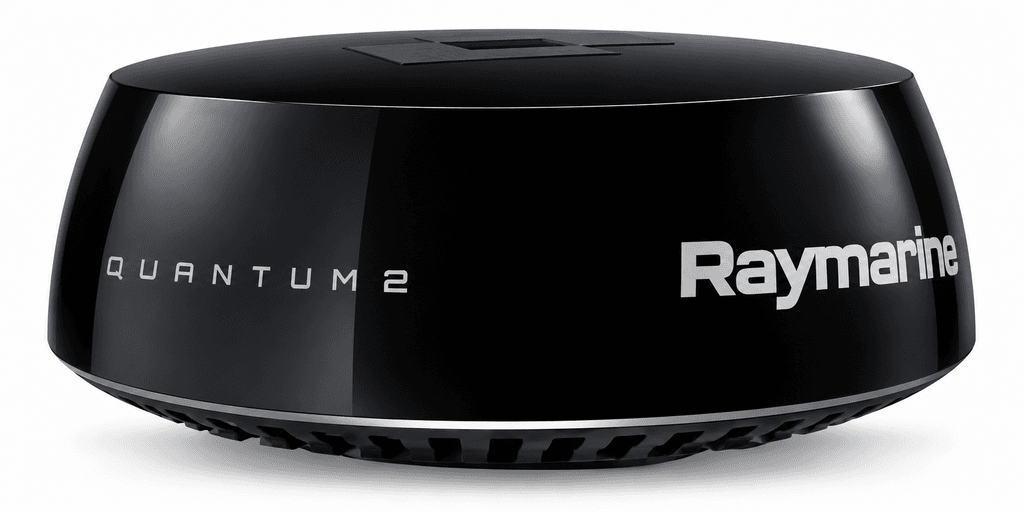
The Raymarine Quantum 2 Q24D is an 18-inch solid-state CHIRP pulse-compression radar designed to improve target awareness in crowded or low-visibility conditions. Its Doppler target processing helps identify moving contacts and visually distinguishes targets based on whether they are approaching or moving away.
Quantum 2 can also track multiple radar targets and integrates with compatible Raymarine multifunction displays, making it a natural radar upgrade for boats already equipped with Raymarine electronics.
Why We Like It
The Raymarine Quantum 2 combines Doppler target awareness with a compact 18-inch radome, making it a practical option for boats where mounting space is limited. Its Doppler processing can make moving vessel traffic easier to interpret when navigating crowded waterways or poor visibility.
It’s especially attractive for boats already equipped with compatible Raymarine multifunction displays, allowing the radar to become part of an integrated navigation system.
Key Features
- 18-inch solid-state CHIRP radar dome
- Doppler target processing
- Color-coded moving-target awareness
- CHIRP pulse-compression technology
- Tracks multiple radar targets
- Compact radome design
- Integrates with compatible Raymarine multifunction displays
- Designed for improved awareness in crowded and low-visibility conditions
- Suitable for smaller and midsize recreational boats
Potential Drawbacks
- Best suited to boats already using compatible Raymarine multifunction displays
- Maximum range is lower than some larger or higher-powered radar systems
- Advanced features depend on proper system integration and configuration
- Installation requires appropriate mounting, power, and network connections
- Different Quantum 2 packages may include different cables or connection options
Best For
Boaters already using Raymarine marine electronics who want a compact Doppler radar that improves moving-target awareness and integrates with their existing multifunction display system.
Best Marine Radar Systems for 2026 Comparison
| Marine Radar | Dome Size | Max Range | Standout Feature |
|---|---|---|---|
| Garmin GMR Fantom 18x | 18″ | 48 NM | MotionScope Doppler |
| Simrad HALO20+ | 20″ | 36 NM | VelocityTrack |
| Furuno DRS4D-NXT | 24″ | 48 NM | Target Analyzer |
| Raymarine Quantum 2 Q24D | 18″ | 24 NM | Doppler Target Processing |
How to Choose the Best Marine Radar
Make Sure It Works With Your Chartplotter
Unlike many boat accessories, marine radar systems are not universally interchangeable. Garmin, Simrad, Furuno, and Raymarine radars are generally designed to integrate with compatible multifunction displays from their respective ecosystems.
Before buying a radar, confirm that the exact model is compatible with your existing chartplotter or multifunction display, including any required network cables, adapters, or software versions.
Consider How Much Radar Range You Need
Maximum radar range can matter for offshore boating, but close-range target detail is often just as important when navigating harbors, rivers, fog, or crowded waterways.
For many recreational boaters, a modern dome radar with roughly 24–48 nautical miles of maximum range provides plenty of capability. Offshore boaters may place greater value on longer range and improved target separation.
Look for Doppler Target Detection
Modern marine radar systems can use Doppler processing to help identify moving targets and determine whether they’re approaching or moving away from your boat. This can make vessel traffic easier to interpret, especially in busy waterways or poor visibility.
Garmin MotionScope, Simrad VelocityTrack, Furuno Target Analyzer, and Raymarine Doppler processing all approach this idea somewhat differently, so consider how each system displays moving targets on its compatible multifunction display.
Consider Dome Size and Mounting Location
Radar domes typically range from about 18 to 24 inches for recreational boats. Smaller domes are easier to install where mounting space is limited, while larger antennas can provide improved target separation in some situations.
Before purchasing, check the radar’s dimensions, weight, mounting requirements, and required clearance. The radar should also have a clear view around the boat with minimal obstruction from antennas, towers, or other equipment.
Plan for Power, Networking, and Installation
Marine radar installation involves more than mounting the dome. You’ll need the correct power wiring and network connection to communicate with your compatible multifunction display.
Cable routing, mounting height, radar alignment, and nearby obstructions can all affect performance. For more complex installations, professional installation may be worthwhile to ensure the radar is mounted and configured correctly.
Frequently Asked Questions About Marine Radar
Do I need radar on my boat?
Radar isn’t required for every recreational boat, but it can significantly improve situational awareness in fog, darkness, rain, and other low-visibility conditions. It can help detect boats, buoys, shorelines, and other objects that may be difficult to see visually.
Radar can be particularly valuable for boaters who regularly travel offshore, at night, in heavy vessel traffic, or in areas where fog is common.
How far can marine radar see?
It depends on the radar, antenna height, target height, weather, and surrounding conditions. The radar systems in this guide have advertised maximum ranges of roughly 24 to 48 nautical miles.
In real-world boating, maximum range isn’t everything. Close-range detection and target separation can be especially important when navigating around other boats, markers, shorelines, and obstacles.
Can I add radar to my existing chartplotter?
Often, yes—but the radar must be compatible with your specific chartplotter or multifunction display. Marine radar systems are generally designed to work within the manufacturer’s electronics ecosystem.
Before purchasing, verify the exact radar model, chartplotter model, networking requirements, and any necessary cables or adapters.
What is Doppler marine radar?
Doppler marine radar analyzes changes in the reflected radar signal to help determine whether detected targets are moving relative to your boat. Many modern systems use this information to make approaching or potentially hazardous targets easier to identify on the display.
Features such as Garmin MotionScope, Simrad VelocityTrack, Furuno Target Analyzer, and Raymarine Doppler processing use Doppler technology in different ways to improve target awareness.
Final Thoughts
Choosing the right marine radar depends heavily on your existing chartplotter system, boating environment, desired range, and target-tracking needs. Because radar systems are closely integrated with their manufacturer’s multifunction displays, compatibility should be one of the first things you verify before purchasing.
The Garmin GMR Fantom 18x combines compact size, long-range capability, and MotionScope technology. The Simrad HALO20+ offers fast scanning and VelocityTrack for moving-target awareness, while the Furuno DRS4D-NXT provides advanced target analysis and tracking. For boats already equipped with Raymarine electronics, the Quantum 2 Q24D provides Doppler target detection in a compact package. Upgrading your boat’s navigation electronics? Check out our guides to the Best Marine GPS & Chartplotters for 2026 and Best Marine VHF Radios for 2026 for more marine electronics options.