Best Marine GPS & Chartplotters for 2026: Top Picks for Navigation and Fishing
Choosing the right marine GPS and chartplotter can make navigation safer and fishing more efficient. In this guide, we compare some of the best marine GPS and chartplotters for 2026 based on mapping, screen quality, sonar compatibility, networking, ease of use, and overall value to help you find the right system for your boat.
Affiliate Disclosure: Boat Gear Pilot may earn a commission from qualifying purchases made through links on this page, at no additional cost to you.
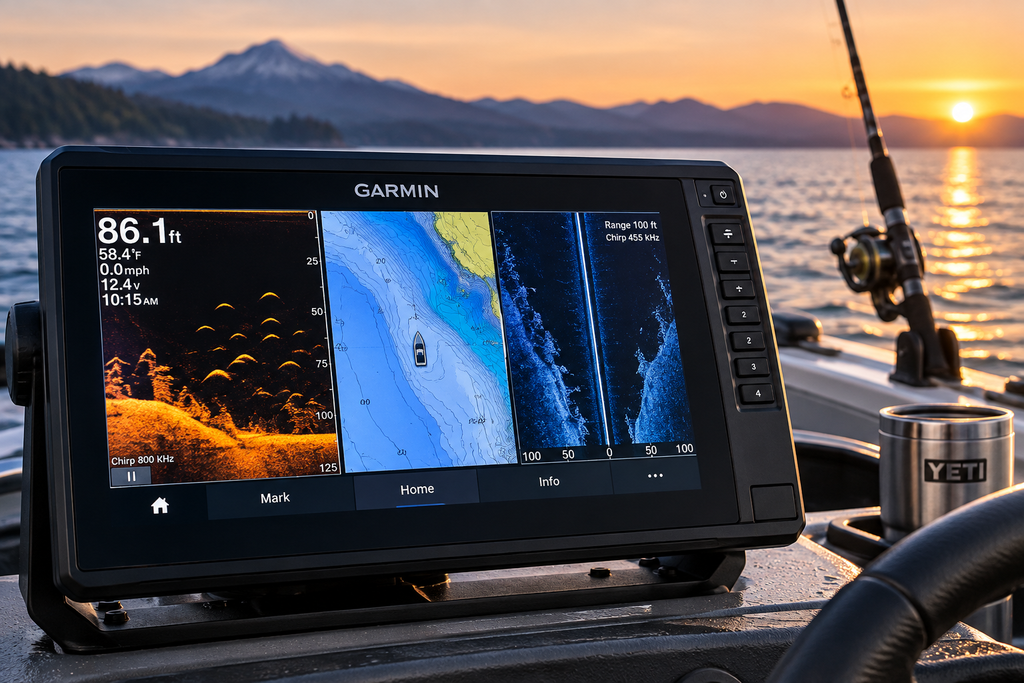
Our Top Marine GPS & Chartplotter Picks for 2026
Best Overall: Garmin GPSMAP x3 Series
Best for Serious Anglers: Lowrance HDS PRO
Best for Fishing & Mapping: Humminbird XPLORE
Best for Offshore & Cruising: Simrad NSS 4
1. Garmin GPSMAP x3 Series — Best Overall
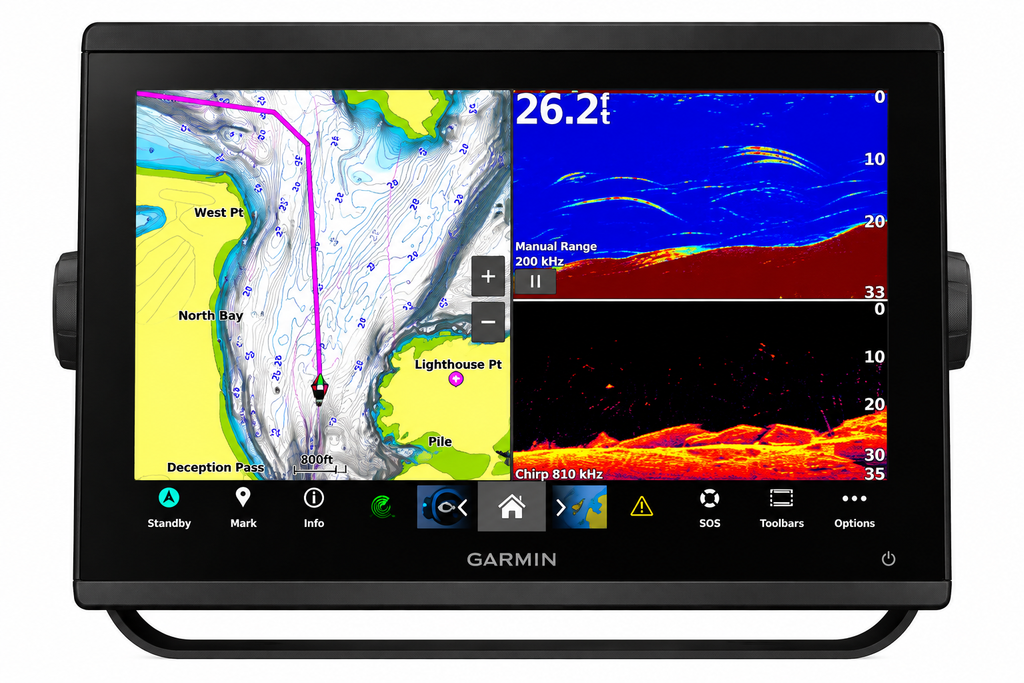
The Garmin GPSMAP x3 Series is a premium choice for boaters who want powerful navigation, detailed charting, sonar compatibility, and extensive networking capabilities in one system. With bright touchscreen displays and support for Garmin marine charts, radar, autopilot, cameras, and advanced sonar, the GPSMAP x3 Series can serve as the center of a complete marine electronics setup.
Best for: Boaters who want a premium chartplotter that can handle navigation, sonar, radar, autopilot, and other networked marine electronics.
Key Features
- Bright touchscreen display options
- Garmin Navionics+ chart compatibility
- Traditional CHIRP and scanning sonar support
- Compatible with Garmin LiveScope systems
- Radar and autopilot integration
- Garmin Marine Network connectivity
- NMEA 2000 connectivity for compatible marine equipment
Pros & Cons
- Pro: Excellent navigation and charting capabilities
- Pro: Strong integration with Garmin sonar and LiveScope
- Pro: Supports radar, autopilot, cameras, and other marine electronics
- Pro: Good choice for building a complete networked helm
- Con: Premium price
- Con: Some sonar, charts, and accessories may require additional purchases
2. Lowrance HDS PRO — Best for Serious Anglers
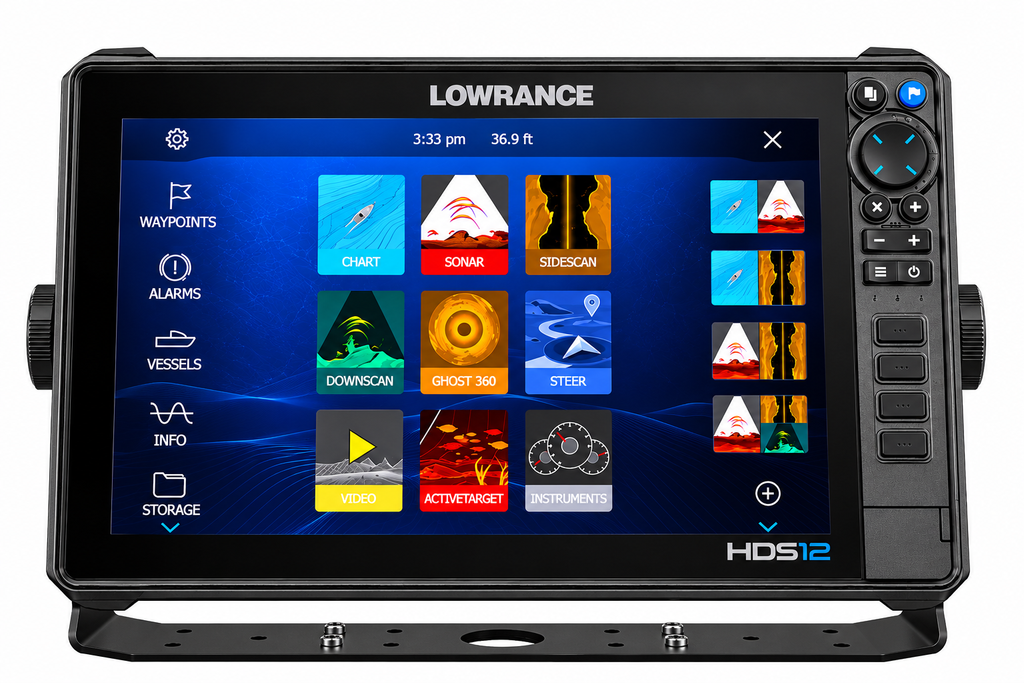
The Lowrance HDS PRO combines advanced chartplotting with powerful sonar capabilities, making it a strong choice for serious anglers who want navigation and fish-finding tools in one system. It supports detailed mapping, high-definition sonar, live sonar, and networking with compatible marine electronics.
Best for: Serious anglers who want advanced sonar, detailed mapping, and a chartplotter that can integrate with a larger fishing electronics system.
Key Features
- High-resolution touchscreen display
- C-MAP chart compatibility
- CHIRP and high-definition scanning sonar
- Compatible with ActiveTarget live sonar
- Radar and autopilot integration
- Networking with compatible marine electronics
- NMEA 2000 connectivity
Pros & Cons
- Pro: Excellent sonar and fish-finding capabilities
- Pro: Strong support for ActiveTarget live sonar
- Pro: Detailed mapping and navigation features
- Pro: Good networking and expansion options
- Con: Premium price
- Con: Some advanced sonar features require additional equipment
3. Humminbird XPLORE — Best for Fishing & Mapping
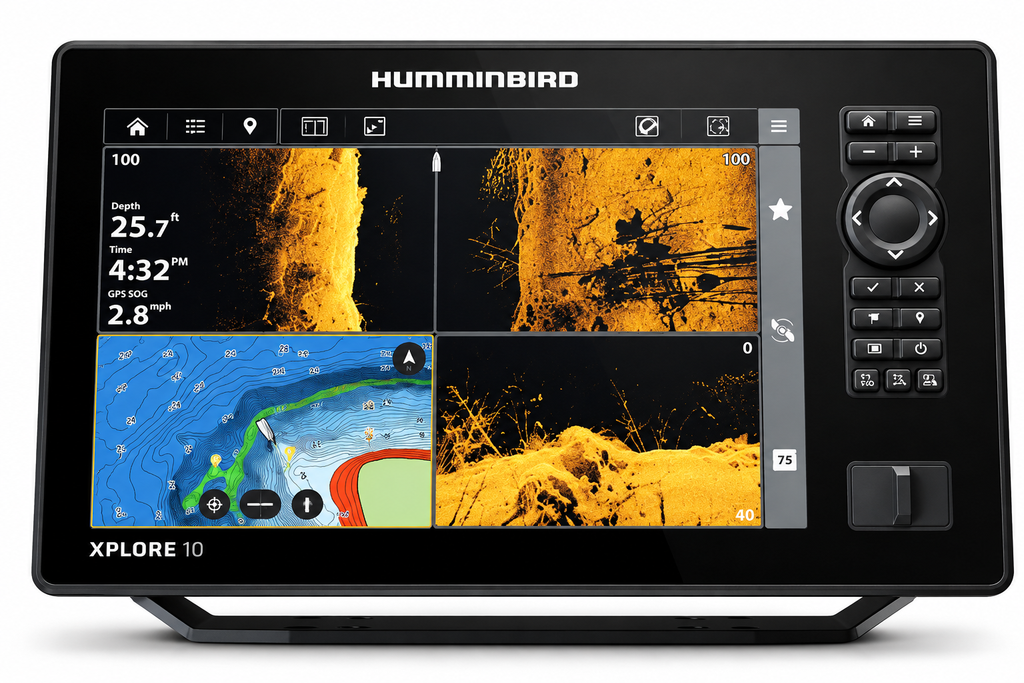
The Humminbird XPLORE Series combines advanced fish-finding technology with detailed mapping and modern touchscreen controls. It offers strong integration with Humminbird sonar technologies and the One-Boat Network, making it a good choice for anglers who want navigation, mapping, and fishing electronics working together in one system.
Best for: Anglers who want advanced mapping, strong sonar capabilities, and integration with compatible Humminbird and Minn Kota equipment.
Key Features
- High-resolution touchscreen display
- Built-in GPS and advanced mapping
- MEGA Side Imaging+ compatibility
- MEGA Down Imaging+ compatibility
- Dual Spectrum CHIRP sonar
- Wi-Fi and Bluetooth connectivity
- One-Boat Network integration
Pros & Cons
- Pro: Excellent mapping and navigation features
- Pro: Strong side-imaging and down-imaging capabilities
- Pro: Modern touchscreen interface
- Pro: Excellent integration with compatible Minn Kota equipment
- Con: Premium price
- Con: Some advanced sonar features require compatible transducers or additional equipment
4. Simrad NSS 4 — Best for Offshore & Cruising
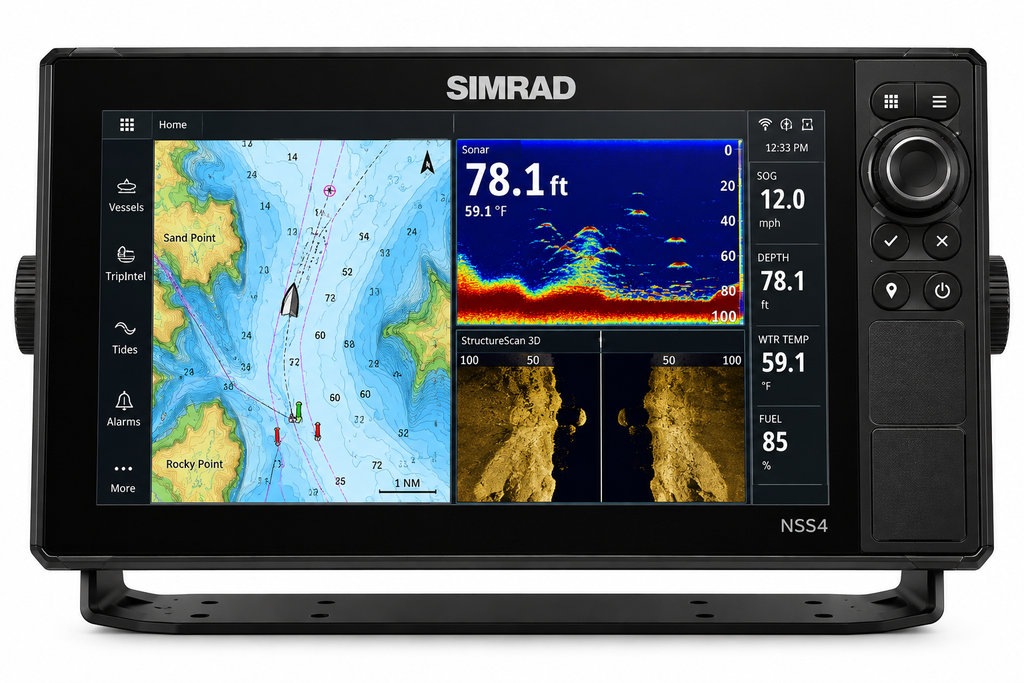
The Simrad NSS 4 is a premium multifunction chartplotter designed for offshore fishing, cruising, and larger boats. It combines fast performance, detailed charting, sonar support, radar integration, and extensive networking capabilities in a modern touchscreen system.
Best for: Offshore anglers, cruisers, and larger boats that need a powerful chartplotter with radar, sonar, autopilot, and extensive networking capabilities.
Key Features
- High-resolution touchscreen display
- Detailed marine chart compatibility
- Advanced sonar support
- Radar integration
- Autopilot integration
- NMEA 2000 connectivity
- Networking with compatible Simrad marine electronics
Pros & Cons
- Pro: Excellent for offshore navigation and cruising
- Pro: Strong radar, sonar, and autopilot integration
- Pro: Extensive networking capabilities
- Pro: Modern touchscreen interface
- Con: Premium price
- Con: May be more system than smaller boats need
How to Choose the Best Marine GPS & Chartplotter
When choosing a marine GPS and chartplotter, consider how you use your boat and which features matter most. Screen size, mapping, sonar compatibility, radar support, networking, and ease of use can all affect which system is the best fit. Anglers may prioritize advanced sonar and live imaging, while offshore boaters and cruisers may place more importance on detailed charts, radar, autopilot integration, and larger displays.
Screen Size
Larger displays make charts, sonar, and split-screen views easier to read, especially when operating the boat in rough conditions. Choose a screen size that fits your helm while remaining easy to see from your normal driving position.
Mapping & Charts
Look for a chartplotter that supports detailed marine charts for the areas where you boat. Features such as depth contours, navigation aids, route planning, and chart updates can make navigation safer and help anglers identify productive fishing areas.
Sonar Compatibility
If you fish, check which sonar technologies and transducers the chartplotter supports. Depending on the system, this may include traditional CHIRP sonar, side imaging, down imaging, and live sonar. Some advanced sonar features require additional transducers or modules.
Radar & Autopilot Integration
If you boat offshore or in changing weather conditions, consider a chartplotter that can integrate with compatible marine radar and autopilot systems. Connecting these systems through your marine network can give you a more complete navigation setup at the helm.
Networking & Connectivity
Consider how the chartplotter will connect with the rest of your boat’s electronics. NMEA 2000 and manufacturer networking systems can allow compatible devices such as sonar modules, radar, autopilots, engine data, and other displays to share information across the boat.
Budget & Expandability
Consider both the initial cost of the chartplotter and the cost of expanding the system later. Radar, live sonar, transducers, autopilot components, and upgraded charts can add to the total investment, so choosing a system that can grow with your boating needs may provide better long-term value.
Frequently Asked Questions About Marine GPS & Chartplotters
What is the difference between a GPS and a chartplotter?
A marine GPS determines your position using satellite signals, while a chartplotter displays that position on electronic marine charts. Modern chartplotters typically combine GPS navigation with mapping and may also integrate sonar, radar, autopilot, and other marine electronics.
Do I need a separate fish finder if I have a chartplotter?
Not necessarily. Many modern chartplotters also support fish-finding sonar when connected to a compatible transducer or sonar module. If fishing is a priority, make sure the chartplotter supports the sonar technologies you want before choosing your system.
What size chartplotter should I get for my boat?
The right size depends on your helm space, viewing distance, and how you plan to use the display. Smaller boats may be well served by a 7- or 9-inch unit, while larger boats and offshore setups often benefit from 10-, 12-, or 16-inch displays that provide more room for charts, sonar, and split-screen views.
Can I add radar to my chartplotter later?
Often, yes. Many higher-end chartplotters can connect to compatible marine radar systems, allowing you to expand your electronics setup later. Before buying, confirm that the chartplotter supports the specific radar system you may want to add.
Final Thoughts
The best marine GPS and chartplotter for your boat depends on how and where you spend your time on the water. Garmin GPSMAP x3, Lowrance HDS PRO, Humminbird XPLORE, and Simrad NSS 4 each offer strong navigation and marine electronics capabilities, but their sonar, mapping, networking, and expansion options differ. Consider the features you need today as well as the equipment you may want to add in the future before choosing your system.
Looking for more boating electronics recommendations? Check out our Best Fish Finders for 2026 guide for more sonar and fishing electronics comparisons.