Best Fish Finders for 2026: Top Picks for Every Type of Boater
Choosing the right fish finder can make a huge difference on the water. In this guide, we compare some of the best fish finders for 2026 based on sonar performance, screen quality, GPS and mapping features, ease of use, and overall value to help you find the right unit for your boat and fishing style.
Affiliate Disclosure: Boat Gear Pilot may earn a commission from qualifying purchases made through links on this page, at no additional cost to you.
Our Top Fish Finder Picks for 2026
- Best Overall: Garmin ECHOMAP Ultra 2
- Best for Live Sonar: Garmin ECHOMAP Ultra 2 with LiveScope Plus
- Best for Serious Anglers: Lowrance HDS PRO
- Best for Side Imaging: Best for Side Imaging: Humminbird XPLORE 10
- Best Budget Option: Garmin STRIKER Vivid 7sv
1. Garmin ECHOMAP Ultra 2 — Best Overall
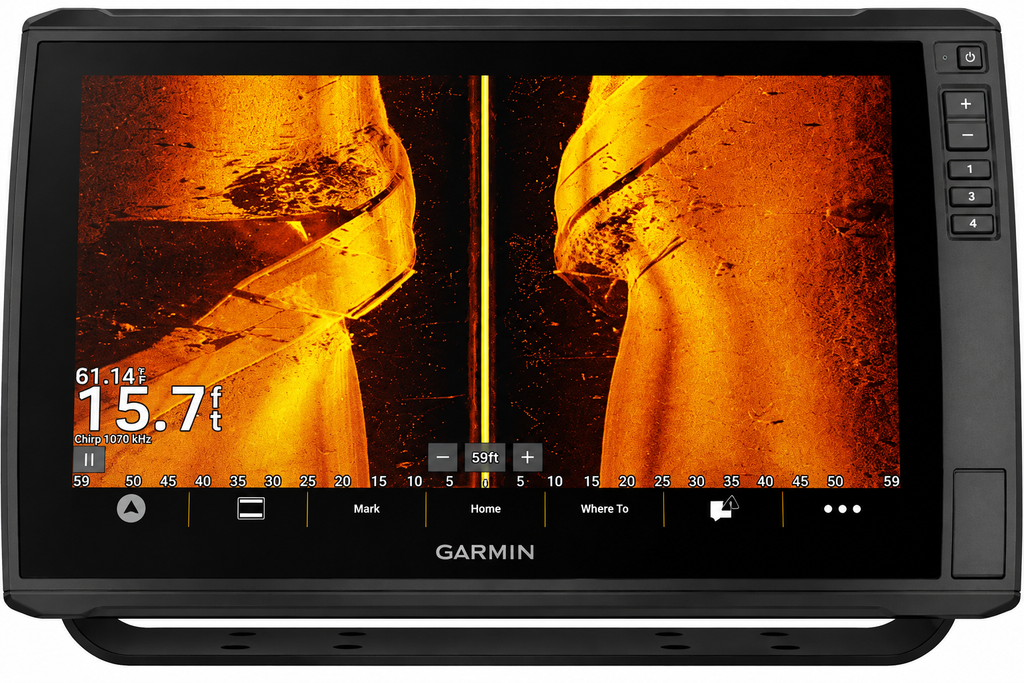
The Garmin ECHOMAP Ultra 2 is a strong choice for anglers who want premium sonar, detailed mapping, and a large touchscreen in one system. It supports Garmin’s advanced sonar technologies and can be paired with LiveScope for real-time views of fish, structure, and your lure beneath the boat.
Best for: Anglers who want a premium all-in-one fish finder/chartplotter with the ability to add advanced live sonar.
Key Features
- Large touchscreen display
- CHIRP traditional sonar support
- ClearVü and SideVü scanning sonar
- Compatible with Garmin LiveScope systems
- Built-in GPS and detailed mapping options
- Wireless networking and connectivity features
Pros & Cons
- Pro: Excellent sonar and mapping capabilities
- Pro: Large, easy-to-use touchscreen
- Pro: Compatible with Garmin LiveScope
- Pro: Strong choice for both fishing and navigation
- Con: Higher price than entry-level fish finders
- Con: LiveScope equipment may need to be purchased separately depending on the package
2. Lowrance HDS PRO — Best for Serious Anglers
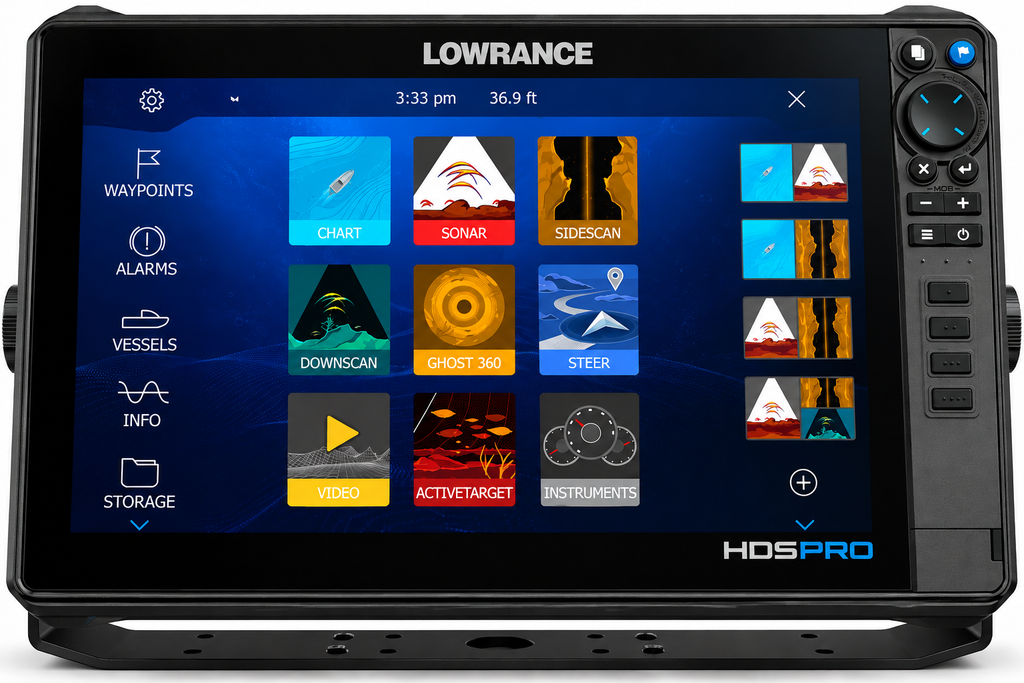
The Lowrance HDS PRO is designed for anglers who want advanced sonar, detailed mapping, and powerful fish-finding capabilities. It supports Lowrance’s premium sonar technologies and is especially well suited for anglers who want to build a more advanced electronics system.
Best for: Serious anglers who want a high-performance fish finder/chartplotter with advanced sonar and the ability to expand their electronics setup.
Key Features
- High-resolution touchscreen display
- CHIRP sonar and high-definition scanning sonar
- Support for ActiveTarget live sonar
- Detailed GPS mapping and chartplotting
- Networking support for multiple marine electronics
- Expandable system for radar, trolling motors, and additional sonar
Pros & Cons
- Pro: Powerful sonar and fish-finding capabilities
- Pro: Excellent touchscreen interface
- Pro: Compatible with ActiveTarget live sonar
- Pro: Highly expandable for a complete boat electronics system
- Con: Premium price
- Con: Advanced features can take some time to learn
3. Humminbird XPLORE 10 — Best for Side Imaging
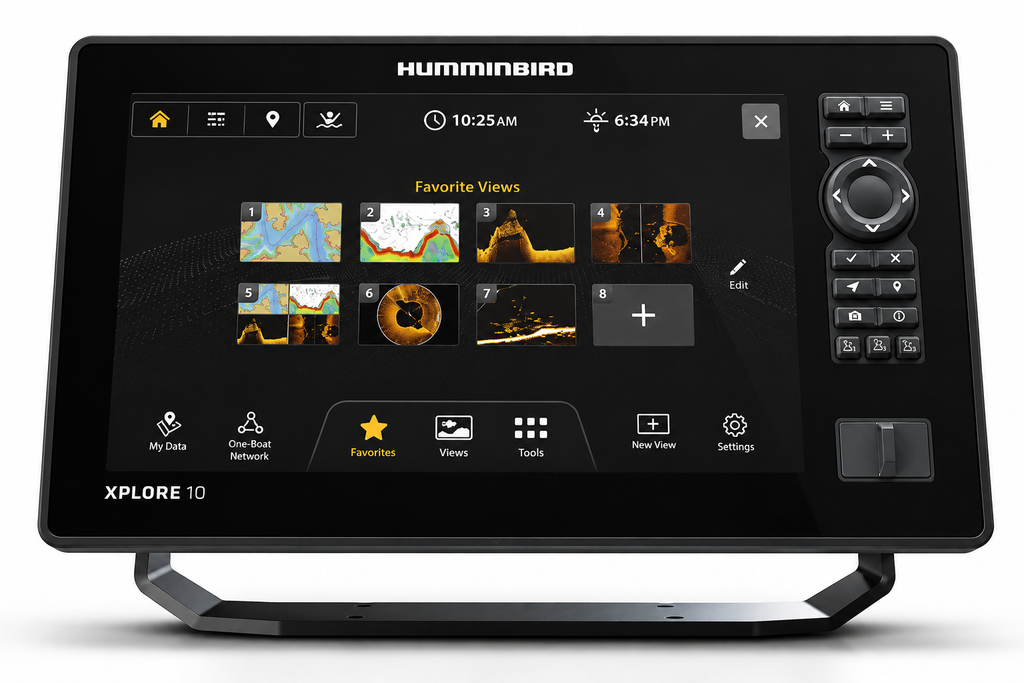
The Humminbird XPLORE 10 is a premium fish finder and chartplotter designed for anglers who want detailed sonar imaging, modern touchscreen controls, and advanced mapping. When paired with a compatible MEGA Side Imaging+ transducer, it provides detailed views of structure, cover, and fish to either side of the boat.
Best for: Anglers who want premium side imaging, touchscreen controls, advanced mapping, and a fish finder system that can expand with additional Humminbird and Minn Kota equipment.
Key Features
- 10.1-inch HD touchscreen display
- MEGA Side Imaging+
- MEGA Down Imaging+
- Dual Spectrum CHIRP sonar
- Wi-Fi and Bluetooth connectivity
- One-Boat Network compatibility
Pros & Cons
- Pro: Excellent side-imaging detail
- Pro: Large 10.1-inch touchscreen
- Pro: MEGA Side Imaging+ and MEGA Down Imaging+
- Pro: Strong networking and expansion options
- Con: Premium price
- Con: Some advanced sonar features require compatible transducers or additional equipment
4. Garmin STRIKER Vivid 7sv — Best Budget Option
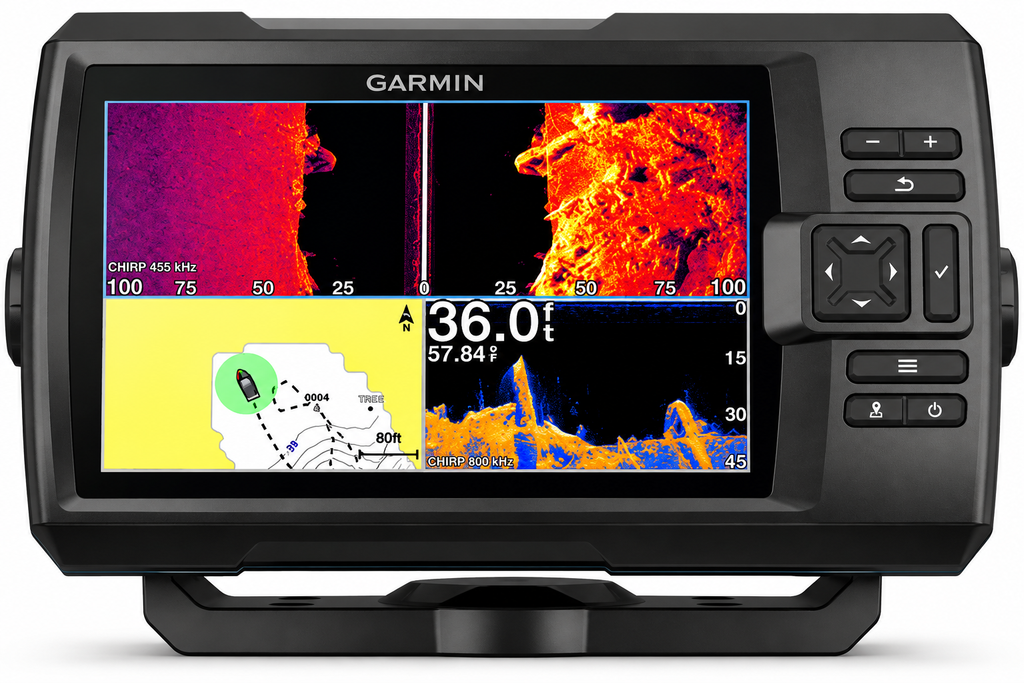
The Garmin STRIKER Vivid 7sv is a more affordable option for anglers who still want a good-size display and scanning sonar. It combines traditional CHIRP sonar with ClearVü and SideVü scanning, making it a practical choice for smaller boats or anglers who don’t need a full-featured chartplotter.
Best for: Budget-conscious anglers who want CHIRP sonar, SideVü, and ClearVü on a 7-inch display without paying for a premium chartplotter.
Key Features
- 7-inch color display
- Traditional CHIRP sonar
- ClearVü scanning sonar
- SideVü scanning sonar
- High-sensitivity GPS
- Quickdraw Contours mapping for creating your own fishing maps
Pros & Cons
- Pro: Good value for a 7-inch fish finder
- Pro: Includes CHIRP, ClearVü, and SideVü sonar
- Pro: Simple, easy-to-use controls
- Pro: Quickdraw Contours lets you create custom fishing maps
- Con: Not a full-featured chartplotter
- Con: Fewer networking and expansion options than premium units
How to Choose the Right Fish Finder
The best fish finder for your boat depends on how you fish, where you fish, and which features you’ll actually use. Before spending more for a premium unit, consider the type of sonar you need, screen size, mapping capabilities, boat size, and whether you plan to add equipment such as live sonar, radar, or a networked trolling motor.
1. Sonar Type
Traditional CHIRP sonar is useful for seeing fish and structure directly below the boat. Side-imaging sonar helps you search a much wider area to either side, while down imaging provides a more detailed view beneath the boat. Live sonar adds real-time imaging that can show fish movement and even your lure as you work it through the water.
2. Screen Size
Larger screens make it easier to view sonar, maps, and multiple data panels at the same time. A 7-inch display can work well on smaller boats, while 9-, 10-, and 12-inch displays provide more viewing area and are especially useful when using split-screen sonar and navigation.
3. GPS & Mapping
If you use your fish finder for navigation as well as fishing, pay close attention to its mapping capabilities. A chartplotter with detailed marine charts can help you navigate safely, mark fishing spots, save routes, and return to productive areas. Also consider whether the unit supports upgraded mapping for the lakes, rivers, or coastal waters where you fish most often.
4. Networking & Expandability
If you plan to expand your boat’s electronics in the future, consider a fish finder that can connect with additional displays, live sonar, radar, trolling motors, and other marine electronics. Premium systems generally offer more networking options, while simpler units can be a better value if you only need standalone sonar and GPS.
5. Budget
Fish finders range from a few hundred dollars to several thousand dollars once displays, transducers, live sonar, and mapping are included. Focus on the features you’ll actually use rather than simply buying the most expensive system. For many anglers, a solid mid-range unit provides the best balance of sonar performance, screen size, mapping, and price.
Frequently Asked Questions
What size fish finder is best for most boats?
For many recreational boats, a 7- to 10-inch display provides a good balance of screen space, price, and mounting size. Larger 10- to 12-inch displays are especially helpful if you frequently use split-screen views with sonar and mapping at the same time.
Do I need side imaging on a fish finder?
Side imaging isn’t essential for every angler, but it can be extremely useful for locating structure, cover, and fish away from the boat. It allows you to scan a wider area without having to drive directly over the spot, which can make searching unfamiliar water much more efficient.
Is live sonar worth the extra cost?
Live sonar can be worth the extra cost for anglers who want to see fish, structure, and lure movement in real time. It can be especially useful for techniques where seeing how fish react to your presentation matters. However, casual anglers may get more value from a quality CHIRP and side-imaging system without the added expense.
What is the difference between a fish finder and a chartplotter?
A fish finder uses sonar to show fish, depth, bottom structure, and other underwater targets. A chartplotter uses GPS and marine charts for navigation. Many modern units combine both functions, giving you sonar and navigation on the same display.
Final Thoughts
There isn’t one fish finder that is right for every boater. The best choice depends on your fishing style, boat, budget, and the sonar and navigation features you actually need. Compare the options above based on how you fish, and choose the system that gives you the features you’ll use most often without paying for capabilities you don’t need.
Looking for more boating equipment recommendations? Explore our Boat Electronics guides for more comparisons and buying advice.