
The best solar panels for boats can help keep batteries charged at the dock, on a mooring, or away from shore power. Choosing one starts with your available mounting space, daily power use, and whether a rigid or flexible panel fits your boat.
In this guide, we compare four solar panels from BougeRV, Renogy, Newpowa, and DOKIO. We’ll look at where each one fits best so you can choose a practical setup for your boat.
Affiliate Disclosure: Boat Gear Pilot may earn a commission if you purchase through our Amazon or eBay links, at no additional cost to you. As an Amazon Associate, we earn from qualifying purchases.
Table of Contents
Quick Picks
| Pick | Solar panel | Best for |
|---|---|---|
| Best Overall | BougeRV Yuma 200W CIGS Thin-Film Solar Panel with Tape | Low-profile mounting on suitable curved surfaces |
| Best High-Output Flexible Panel | Renogy 200W 12V Flexible Solar Panel | Boats with room for a 200W flexible panel |
| Best Rigid Panel | Newpowa 100W 12V Solar Panel | Hardtops and other flat, sturdy mounting areas |
| Best Budget Flexible Panel | DOKIO 100W 18V Flexible Solar Panel | Smaller boats and lower-cost flexible setups |
1. BougeRV Yuma 200W CIGS Thin-Film Solar Panel with Tape — Best Overall
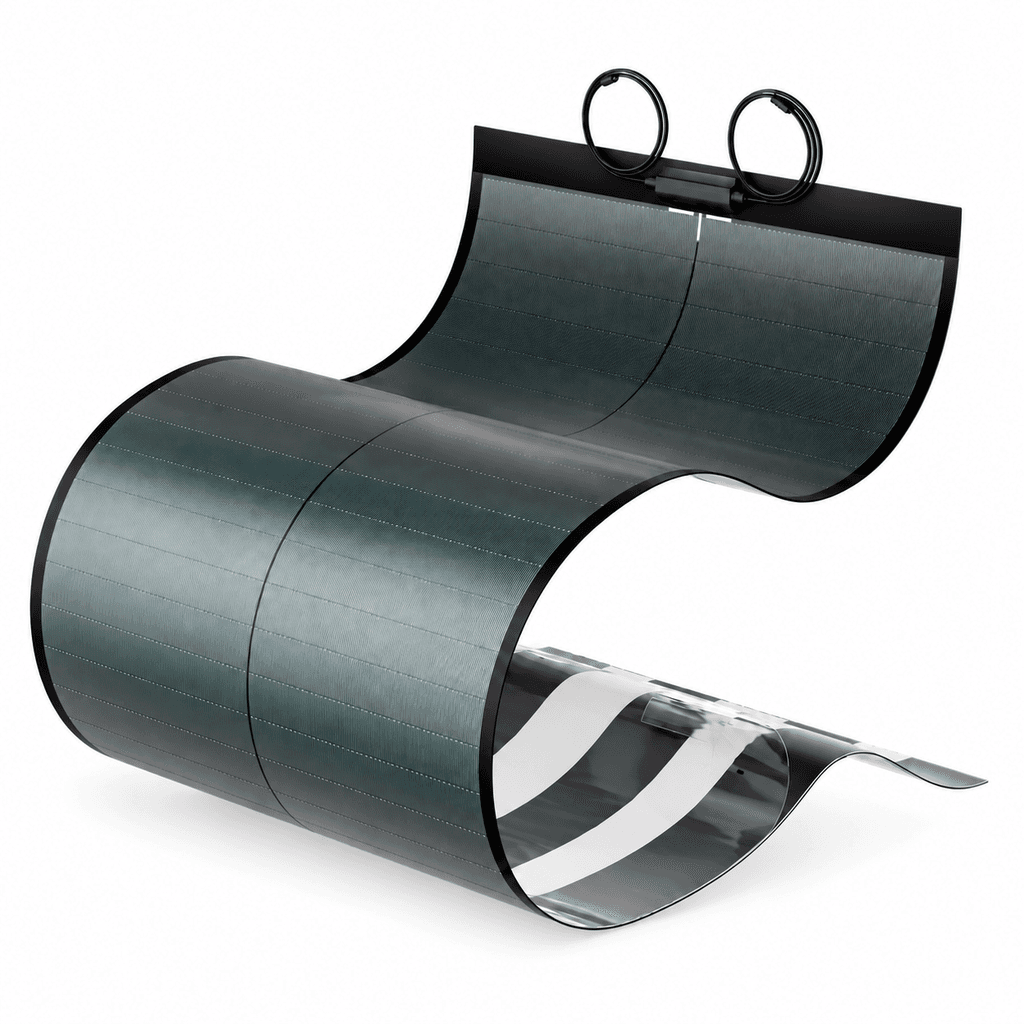
The BougeRV Yuma 200W is a flexible CIGS thin-film panel designed for installations where a rigid frame would be difficult to fit. This version has adhesive backing, giving boat owners a low-profile mounting option on a suitable surface without panel brackets.
Its 200W rating makes it the highest-output single panel in our picks. The flexible construction is useful when available mounting space has a gentle curve, but measure the full panel and check BougeRV’s surface and installation requirements before choosing a spot on your boat.
Why We Like It
The Yuma combines 200W of rated output with a thin, flexible design that can fit mounting spaces where a rigid panel would be awkward. Its adhesive backing also makes a clean, low-profile installation possible on a suitable boat surface. That combination makes it our best overall pick for boat owners who have the space and want more solar capacity from a single panel.
Key Features
- 200W rated output: The highest-rated single panel in this guide.
- CIGS thin-film construction: Flexible design for suitable gently curved mounting surfaces.
- Adhesive backing: The tape version offers a low-profile mounting option without panel brackets.
- ShadePower design: BougeRV designs the Yuma series to maintain some output when part of the panel is shaded.
Best For
Boat owners who want a low-profile 200W panel and have a suitable surface for adhesive mounting.
Pros & Cons
Pros
- 200W rated output from one panel
- Flexible, low-profile design
- Adhesive backing avoids panel mounting brackets
Cons
- Needs a suitable surface and careful preparation for adhesive installation
- Larger footprint than a 100W panel
- Higher cost than basic rigid panels
2. Renogy 200W 12V Flexible Solar Panel — Best High-Output Flexible Panel
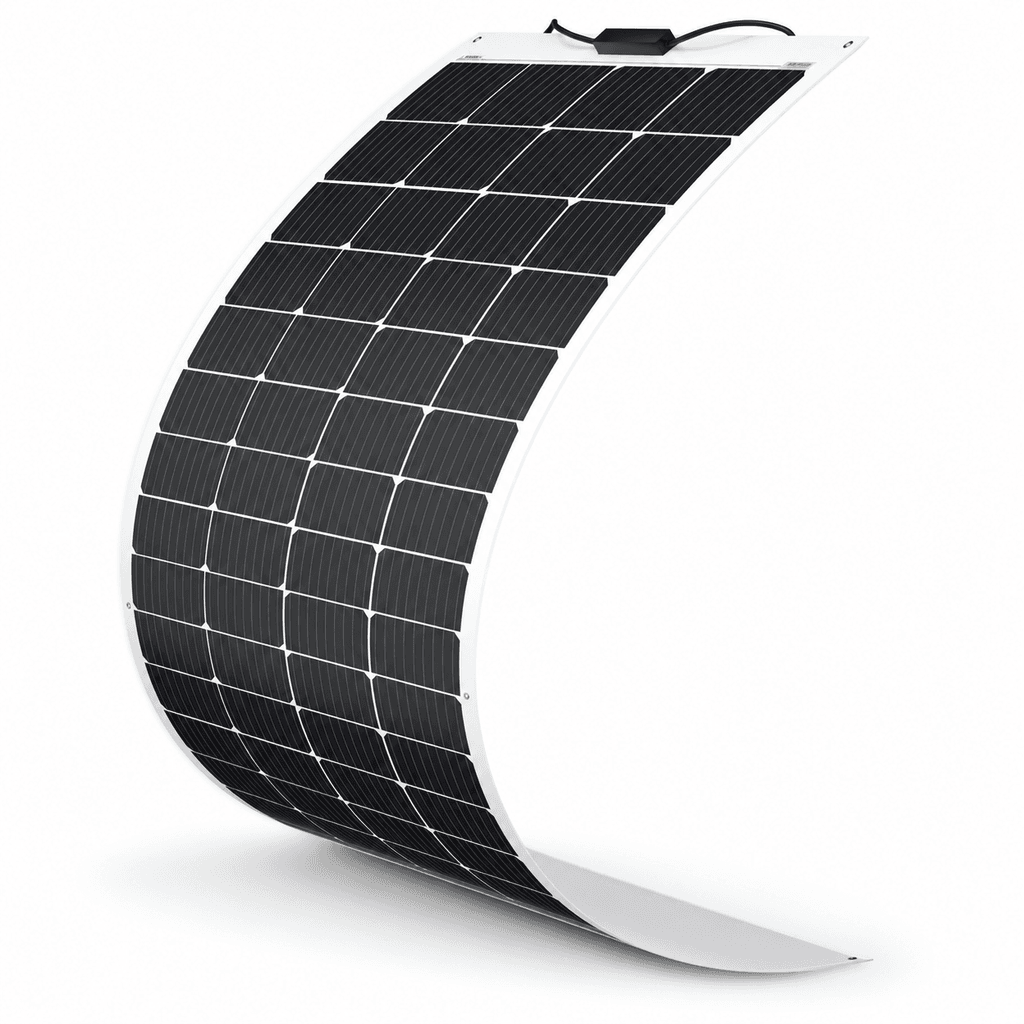
The Renogy 200W 12V Flexible Solar Panel is a monocrystalline option for boat owners who want substantial solar capacity without mounting a rigid panel. Its slim construction can follow a suitable curved surface, making it worth considering for a hardtop or other area where a flat frame would be difficult to install.
Renogy lists this panel at approximately 63 by 29 inches, so measure your available space before buying. The panel has an ETFE surface and uses bypass diodes to help limit the effect of partial shading, which matters on boats where antennas, rails, and other equipment can cast shadows.
Why We Like It
The Renogy offers 200W of rated output in a thin panel that can fit some mounting areas a rigid panel cannot. Its ETFE surface and bypass diodes are useful features for a boat installation, particularly when nearby equipment may shade part of the panel during the day. It is a practical choice if you want a flexible panel and have enough room for its full footprint.
Key Features
- 200W rated output for charging through a compatible solar charge controller
- Flexible monocrystalline panel for suitable curved mounting surfaces
- ETFE surface designed to protect the solar cellsBypass diodes to help reduce the effect of partial shading
- Approximately 63.2 × 29.5 inches; check the available mounting space before ordering
Best For
Boat owners who want 200W of solar capacity from a flexible panel and have enough suitable mounting space for its approximately 63 × 29-inch footprint.
Pros & Cons
Pros
- 200W rated output from a single panel
- Flexible design suits some gently curved surfaces
- ETFE surface and bypass diodes
Cons
- Large footprint requires careful measuring
- Requires a compatible charge controller and proper marine wiring
- Mounting surface must meet Renogy’s installation requirements
3. Newpowa 100W 12V Rigid Solar Panel — Best Rigid Panel
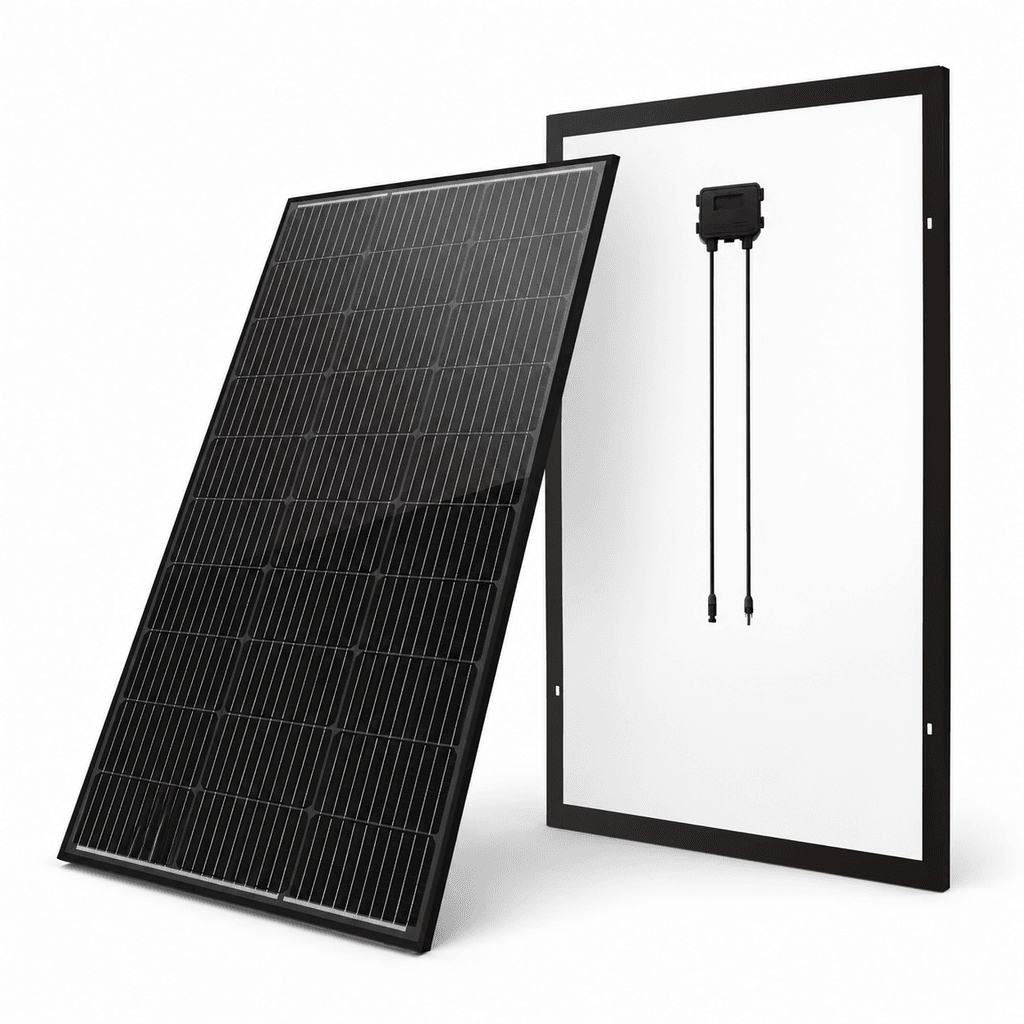
The Newpowa 100W 12V panel is the rigid option in this guide. Its framed construction makes it a candidate for a flat, sturdy mounting area such as a boat hardtop, where you can securely fasten the panel and leave its rear wiring accessible.
At approximately 38.6 by 20.9 inches, it takes up less space than either 200W panel in our picks. Its 100W rating makes it better suited to modest charging needs or a system using multiple panels than to a boat with high daily power consumption.
Why We Like It
The Newpowa is a straightforward choice when your boat has a flat, sturdy place to mount a rigid panel. Its 100W output and smaller footprint make it easier to fit than the 200W options in this guide. We like it for boat owners who prefer a framed panel and want to build a charging setup around their available space.
Key Features
- 100W rated output for a modest solar charging setup
- Rigid monocrystalline panel with a framed design
- Approximately 38.6 × 20.9 inches, smaller than the 200W panels in this guide
- Approximately 13.3 lb according to the NPA100S-12I specification sheet
Best For
Boat owners with a flat, sturdy mounting area who prefer a rigid panel for modest battery charging needs.
Pros & Cons
Pros
- Framed panel suited to a flat, sturdy mounting area
- Smaller footprint than the 200W panels in this guide
- Practical 100W option for modest charging needs
Cons
- Cannot follow a curved mounting surface
- Lower rated output than the 200W picks
- Needs secure mounting hardware and a compatible charge controller
4. DOKIO 100W 18V Flexible Solar Panel — Best Budget Flexible Panel
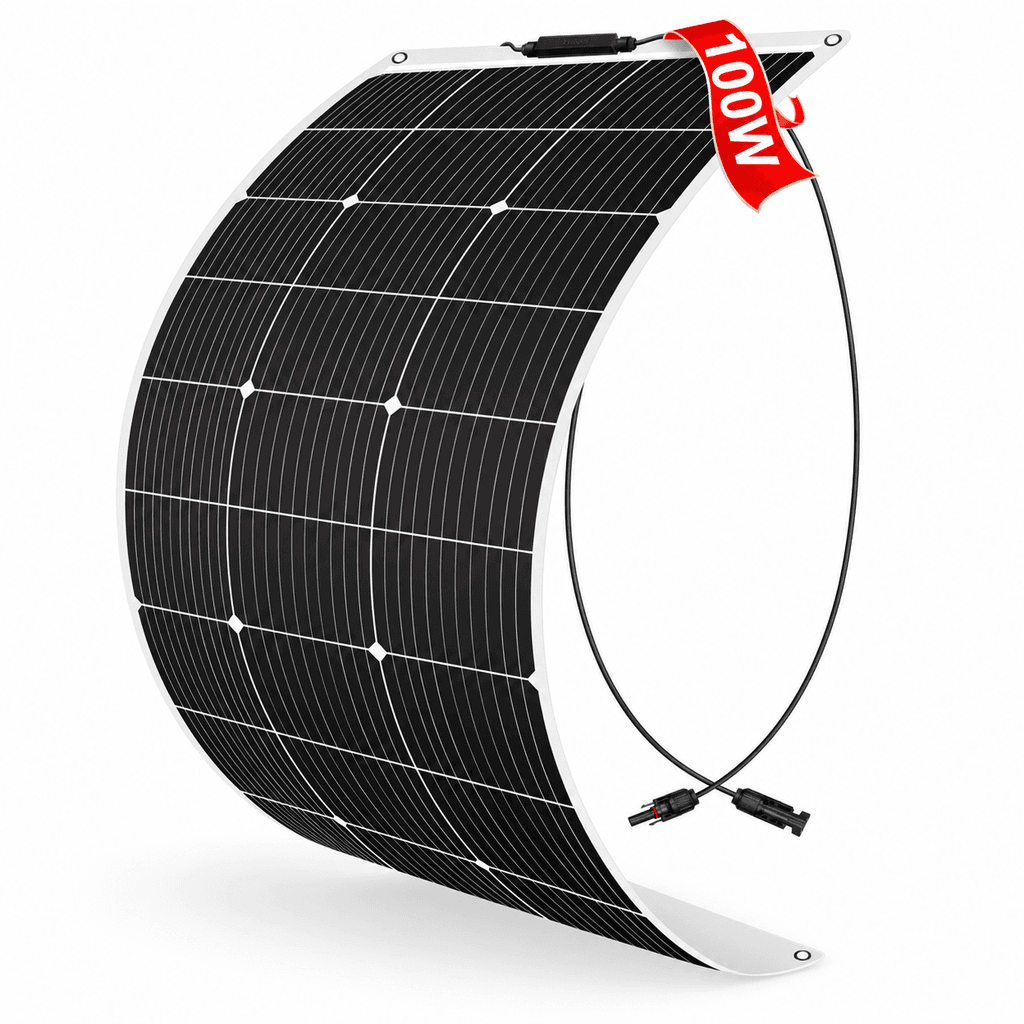
The DOKIO 100W 18V Flexible Solar Panel gives boat owners a smaller flexible option for limited mounting space. Its bendable design can fit a suitable gently curved surface, while the ETFE face helps protect the panel during outdoor use.
This is a single 100W panel with MC4 leads, so you will need a compatible charge controller and the appropriate wiring to charge a boat battery. It makes the most sense for modest power needs or for boaters who want to start with a smaller solar setup.
Why We Like It
The DOKIO gives boat owners a flexible 100W option when a larger panel will not fit. Its compact size and MC4 leads make it a practical starting point for a modest charging setup, provided the mounting surface and charge controller are suitable. We chose it as the budget flexible pick for boaters who need the flexibility without stepping up to a 200W panel.
Key Features
- 100W rated output for modest battery charging needs
- Flexible monocrystalline construction for suitable gently curved surfaces
- ETFE outer surface for outdoor useMC4 leads for connection to compatible solar equipment
- Single-panel option rather than a kit with a charge controller
Best For
Boat owners with limited mounting space who want a lower-cost flexible panel for modest battery charging needs.
Pros & Cons
Pros
- Flexible design suits some gently curved mounting areas
- Smaller 100W option for limited space
- ETFE surface and MC4 leads
Cons
- Lower rated output than the 200W picks
- Charge controller is not included
- Mounting surface and wiring need careful planning
How to Choose a Solar Panel for Your Boat
Start with your boat’s daily power use. Add up the energy used by your electronics, lights, pumps, and other equipment, then decide how much of that you want solar to replace. A panel’s wattage is its rated output under test conditions; actual charging will vary with sunlight, shade, temperature, and installation angle.
Measure the mounting area before choosing a panel. Rigid panels need a flat, sturdy mounting structure. Flexible panels can fit some gently curved surfaces, but they still need to be installed within the manufacturer’s bend and mounting limits. Check that antennas, rails, and other equipment will not regularly shade the panel.
Finally, match the panel to a charge controller rated for its voltage and current and compatible with your battery type. Plan the cable route, connections, and circuit protection as part of the installation.
Frequently Asked Questions
How many watts of solar does a boat need?
It depends on what you run and how long you run it. A 100W panel can help maintain a battery or offset modest daily use; a 200W panel offers more charging potential if you have the mounting space. Estimate your daily use in watt-hours before choosing a size.
Can a solar panel charge a boat battery directly?
For a typical boat installation, connect the panel through a compatible solar charge controller. The controller regulates charging for your battery type and helps prevent improper charging.
Are flexible solar panels better for boats?
Flexible panels can be easier to fit on some gently curved surfaces and have a low profile. A rigid panel can be a good choice when your boat has a flat, sturdy mounting area. The best option depends on the surface, available space, and how you plan to secure it.
Will solar panels work when part of the panel is shaded?
They can still produce power, but shading may reduce output substantially. Position the panel to avoid regular shadows from antennas, rails, and other boat equipment.
Final Verdict
The best solar panel for your boat depends on your daily power use and where you can mount it.
The BougeRV Yuma 200W is our best overall pick for boat owners who want a low-profile panel with adhesive mounting. The Renogy 200W Flexible Solar Panel is another high-output choice for a suitable curved surface. If you have a flat, sturdy mounting area, choose the Newpowa 100W rigid panel. The DOKIO 100W flexible panel is a smaller, budget-friendly option for modest charging needs.
A solar panel is only one part of a charging setup. Our Best Marine Batteries for 2026 and Best Marine Battery Monitors for 2026 guides can help with the rest of your system. If you also want power away from your boat’s battery bank, see our Best Portable Power Stations for Boats in 2026 guide.
Before buying, confirm the panel’s dimensions, mounting requirements, charge-controller compatibility, and wiring needs for your boat.