
The best marine power inverters let you run compatible household appliances and other AC devices from your boat’s battery bank.
In this guide, we compare four options for 2026: the Renogy REGO, AIMS Power, Xantrex Freedom XC Pro, and Go Power GP-ISW2000-12. Three combine an inverter with battery charging; the Go Power is an inverter only. We’ll cover what each does best, its key features, and its pros and cons so you can choose the right setup for your boat.
Affiliate Disclosure: Boat Gear Pilot may earn a commission when you purchase through links in this article, at no extra cost to you. As an Amazon Associate, we earn from qualifying purchases. We may also earn from qualifying purchases through eBay links.
Table of Contents
Our Top Picks
| Product | Best For | Main Advantage |
|---|---|---|
| Renogy REGO 12V 3000W Inverter Charger | Best Overall | 3,000W inverter with built-in battery charging |
| AIMS Power 2000W 12V Inverter/Charger | Best for 2,000W Systems | Inverter, charger, and transfer switch in one unit |
| Xantrex Freedom XC Pro 2000 | Best Premium Option | 2,000W inverter with a 100A charger |
| Go Power GP-ISW2000-12 | Best Inverter Without a Charger | Dedicated 2,000W pure sine wave inverter |
1. Renogy REGO 12V 3000W Inverter Charger — Best Overall
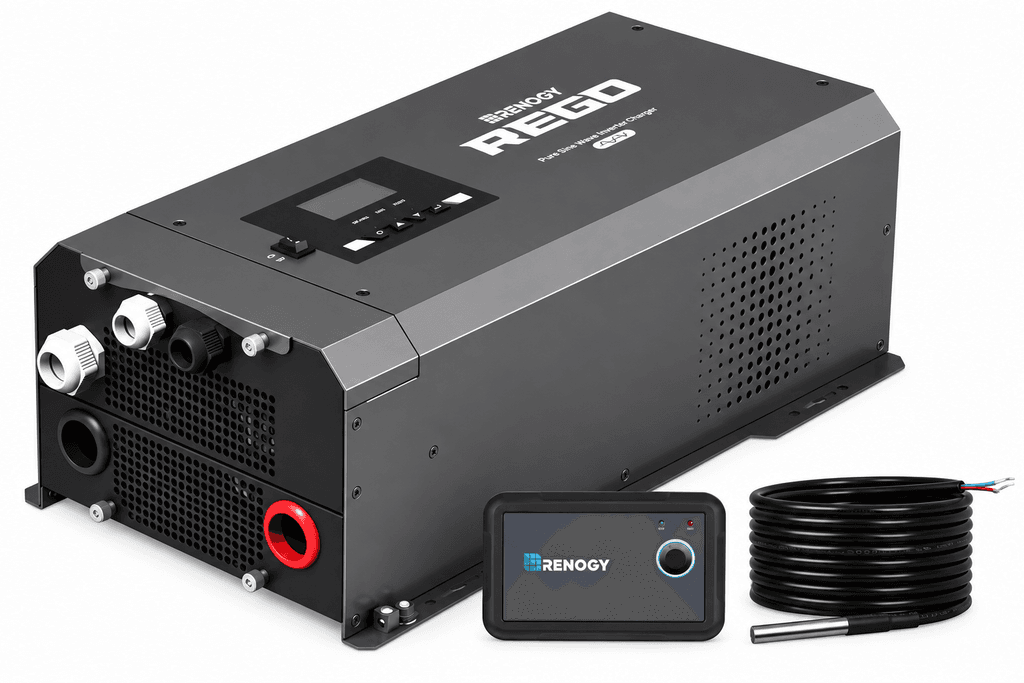
The Renogy REGO 12V 3000W Inverter Charger combines an inverter, battery charger, and automatic transfer switch in one unit. It converts power from a 12V battery bank into household AC power and can charge the batteries when shore power or another AC source is available.
Its 3,000W output makes it a strong choice for boaters planning to run larger AC loads. Before installing it, check that your battery bank, cables, circuit protection, and available mounting space meet Renogy’s requirements.
Why We Like It
The REGO brings three useful functions into one unit: AC power from the battery bank, battery charging when an AC source is connected, and automatic switching between the two. That makes it a practical choice for a boat with shore power and meaningful onboard AC needs. The included display also gives you a convenient way to check and adjust the system.
Key Features
- 3,000W pure sine wave output for AC devices
- Built-in battery charger with four-stage charging
- Automatic transfer switch for switching between battery and external AC power
- LCD display for monitoring and settings
- Built-in Bluetooth for compatible Renogy monitoring devices
- Battery compatibility: Supports compatible lithium and lead-acid batteries when the correct charging profile is selected.
Best For
Boaters with a 12V house battery bank who want to run higher-power AC equipment and charge their batteries from shore power using one integrated unit.
Pros & Cons
| Pros | Cons |
|---|---|
| Combines inverter, charger, and transfer switch | Requires a battery bank and wiring sized for high current |
| 3,000W output supports more demanding AC loads | Larger unit needs adequate mounting space and ventilation |
| LCD display and Bluetooth monitoring options | More capacity than smaller boats may need |
2. AIMS Power 2000W 12V Inverter/Charger — Best for 2,000W Systems
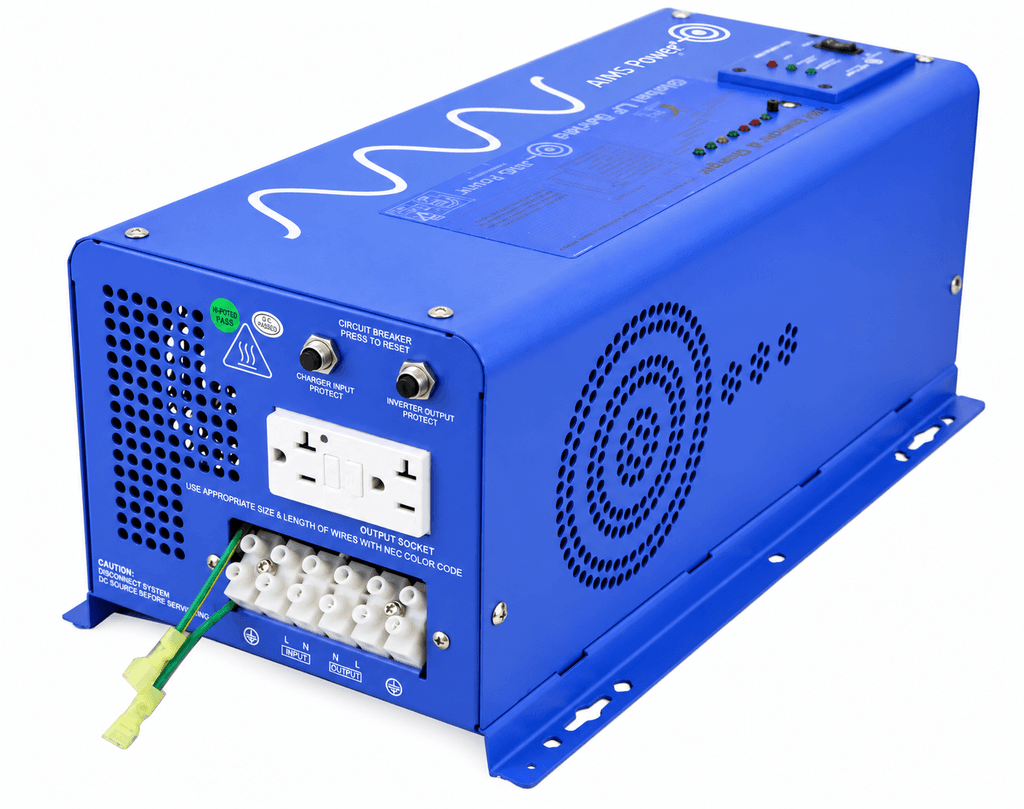
The AIMS Power 2000W 12V Pure Sine Inverter/Charger converts power from a 12V battery bank into AC power for onboard devices. It also combines battery charging and a transfer switch, so the boat can use an external AC source when one is connected.
Its 2,000W rating makes it an option for boaters whose planned AC loads do not call for the Renogy’s 3,000W capacity. Check your appliances’ running and startup power needs, then size the battery bank, cables, and circuit protection for the installation.
Why We Like It
The AIMS Power unit offers inverter power, battery charging, and automatic transfer in one package. Its 2,000W output gives boaters an integrated option when their AC power needs are more modest than a 3,000W setup. We also like that it produces pure sine wave power for electronics and other compatible AC devices.
Key Features
- 2,000W continuous pure sine wave output
- 6,000W surge rating for brief startup loads
- Built-in 70A battery charger with adjustable charging settings
- 30A automatic transfer switch
- Two GFCI outlets plus a hardwire connection
- 12V DC input and 120V AC output
Best For
Boaters with a 12V battery bank who want a 2,000W inverter, battery charger, and automatic transfer switch in one unit, especially when some AC devices have brief startup surges.
Pros & Cons
| Pros | Cons |
|---|---|
| Combines inverter, charger, and transfer switch | 2,000W continuous output may be too low for larger AC loads |
| 6,000W short-term surge rating | Heavy unit needs a secure mounting location |
| GFCI outlets and a hardwire option | Remote display and Bluetooth dongle are optional accessories |
3. Xantrex Freedom XC Pro 2000 — Best Premium Option
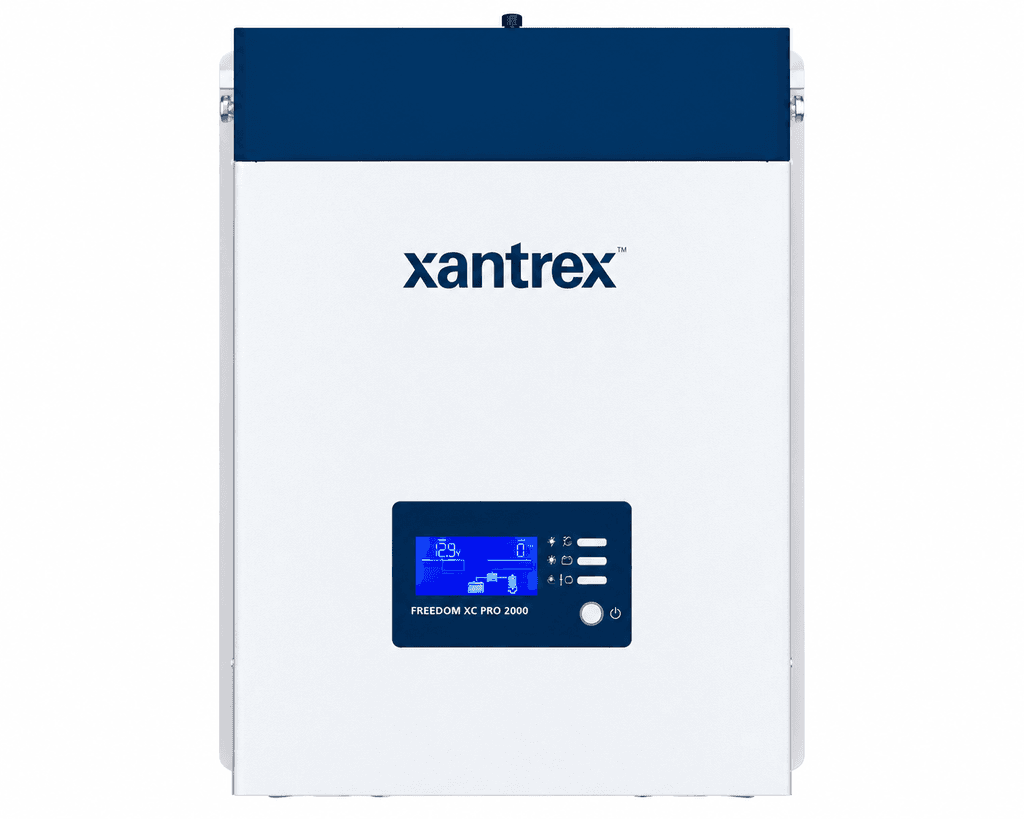
The Xantrex Freedom XC Pro 2000, model 818-2010, combines a 2,000W pure sine wave inverter with a 100A battery charger. It can supply AC power from a 12V battery bank and switch to incoming AC power when available.
Its compact design and high charging output make it a premium option for boaters building a more capable electrical system. For a marine installation, note that Xantrex specifies its 808-1050 drip shield for the marine safety listing. Confirm the installation requirements with a qualified marine electrician before buying.
Why We Like It
The Freedom XC Pro 2000 pairs a 2,000W inverter with a 100A charger in a relatively compact unit. That combination suits boaters who want dependable AC power underway and faster battery charging when connected to shore power. Xantrex also publishes marine installation requirements for this model, which makes it easier to plan the installation correctly.
Key Features
- 2,000W continuous pure sine wave output
- 100A built-in battery charger
- Up to 4,000W surge output for five seconds
- Automatic transfer between inverter power and incoming AC power
- 12V battery input and 120V AC output
- Marine safety listing requires Xantrex drip shield 808-1050
Best For
Boaters who want a compact 2,000W inverter/charger with a 100A charger and are planning a properly protected marine installation.
Pros & Cons
| Pros | Cons |
|---|---|
| 100A charger in a compact inverter/charger | Higher cost than some 2,000W alternatives |
| 4,000W short-term surge rating | 2,000W continuous output limits simultaneous AC loads |
| Automatic transfer to incoming AC power | Marine safety listing requires the separate 808-1050 drip shield |
4. Go Power GP-ISW2000-12 — Best Inverter Without a Charger
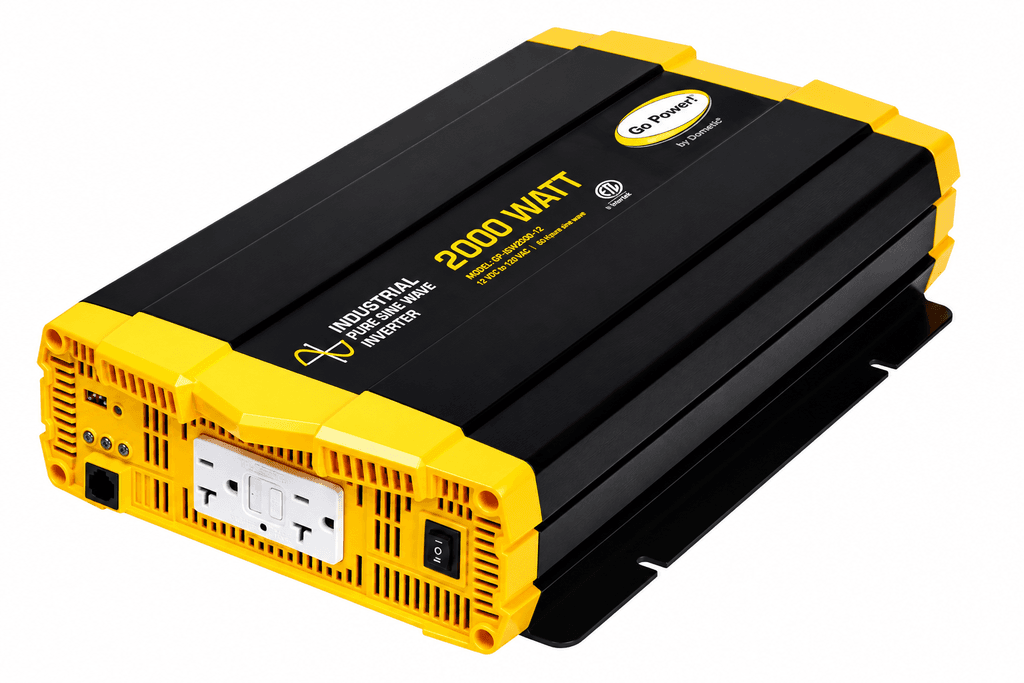
The Go Power GP-ISW2000-12 converts power from a 12V battery bank into 120V pure sine wave AC power. Its 2,000W output can run compatible appliances and electronics, while the two GFCI outlets provide convenient plug-in connections.
This is a dedicated inverter: it does not charge batteries or automatically switch to shore power. That makes it a good fit when your boat already has a separate charging setup and you only need to add AC power from the battery bank. Check the installation requirements and your expected loads before choosing its location and wiring.
Why We Like It
The Go Power focuses on one job: supplying clean AC power from a 12V battery bank. Its 2,000W rating, two GFCI outlets, and low-profile housing make it useful for a boat that already has battery charging handled separately. It gives readers an inverter-only choice alongside the three inverter/chargers in this guide.
Key Features
- 2,000W pure sine wave AC output
- 12V DC battery input
- Two GFCI outlets
- Low-profile housing
- Power-saving mode and overload protection
- Inverter only: battery charging requires a separate charger
Best For
Boaters who already have a battery charger and want to add a dedicated 2,000W inverter to power compatible AC devices from a 12V battery bank.
Pros & Cons
| Pros | Cons |
|---|---|
| Pure sine wave power for compatible AC devices | Does not charge batteries |
| Two built-in GFCI outlets | No built-in transfer switch for shore power |
| Low-profile design and power-saving mode | Battery bank and wiring must support a 2,000W load |
How to Choose a Marine Power Inverter
Add up your AC loads. Check the running wattage of the devices you expect to use at the same time. Appliances with motors may need more power for a brief period when starting, so compare both continuous and surge ratings.
Check your battery bank. A 2,000W or 3,000W inverter can draw substantial current from a 12V system. Make sure the battery capacity, cables, fuses, and switches are sized for the inverter and the way you plan to use it.
Decide whether you need charging. An inverter supplies AC power from your batteries. An inverter/charger also charges the batteries from an external AC source; models with a transfer switch can switch the load to that source.
Plan the marine installation. Check mounting space, ventilation, moisture protection, and the manufacturer’s installation instructions. For the Xantrex 818-2010, the specified drip shield is required for its marine safety listing.
Frequently Asked Questions
What size inverter do I need for a boat?
Add the running wattage of the AC devices you plan to use at the same time, then check whether any need extra power to start. Choose an inverter whose continuous and surge ratings cover those loads. Your battery bank and wiring must also support the inverter.
What is the difference between an inverter and an inverter/charger?
An inverter turns battery power into AC power. An inverter/charger does that and can recharge the batteries when connected to an external AC source. The Go Power model in this guide is an inverter only; the Renogy, AIMS Power, and Xantrex models are inverter/chargers.
Can I install a power inverter anywhere on my boat?
No. Follow the manufacturer’s instructions for mounting position, ventilation, cable length, and protection from moisture. The location must also allow safe wiring and access for inspection or service.
Final Verdict
The best marine power inverters depend on the AC devices you need to run, the size of your battery bank, and whether you also want to charge batteries from shore power.
The Renogy REGO 12V 3000W is our best overall pick for boaters who want higher output and integrated charging. The AIMS Power 2000W offers an inverter/charger with a strong short-term surge rating. The Xantrex Freedom XC Pro 2000 is a compact premium choice with a 100A charger, while the Go Power GP-ISW2000-12 makes sense if you already have a charger and only need an inverter.
Building out the rest of your electrical system? See our Best Marine Batteries for 2026 and Best Marine Battery Monitors for 2026 guides. If you are considering portable power instead, read Best Portable Power Stations for Boats in 2026.
Before buying, confirm your AC load requirements, battery capacity, wiring, circuit protection, and the manufacturer’s marine installation requirements.