
The best marine DC-DC battery chargers help recharge your boat’s house battery from the engine’s charging system while you’re underway. It can be especially useful when you have a lithium house battery or want more control over charging than a simple battery isolator provides.
In this guide, we compare four chargers with different output levels and features, including options that can also accept solar input. The right choice depends on your battery type and capacity, available mounting space, and how your boat’s charging system is wired.
Affiliate Disclosure: Boat Gear Pilot may earn a commission when you purchase through links in this guide, including links to Amazon and eBay. This comes at no additional cost to you.
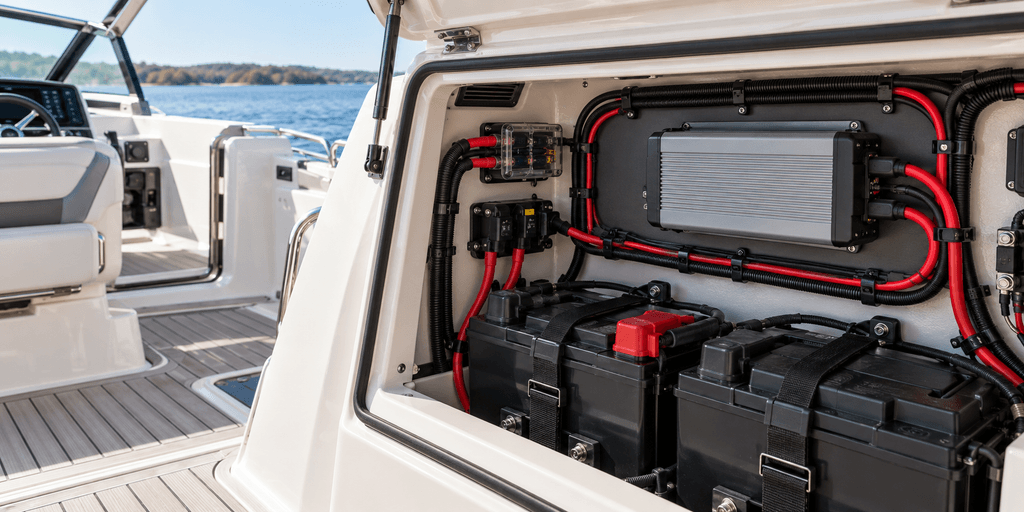
Table of Contents
Quick Picks
| Pick | DC-DC battery charger | Best for |
|---|---|---|
| Best Overall | Victron Energy Orion XS 12/12-50A | Adjustable charging and Bluetooth monitoring |
| Best for Smaller Battery Banks | CTEK D250SE 20A | Moderate charging needs with solar input |
| Best Value with Solar | LiTime 12V 40A DC-DC Charger with MPPT | A 40A charger with built-in solar charging |
| Budget Alternative | Power Queen 12V 40A DC-DC Charger with MPPT | Dual-input charging at a lower price |
1. Victron Energy Orion XS 12/12-50A DC-DC Battery Charger — Best Overall
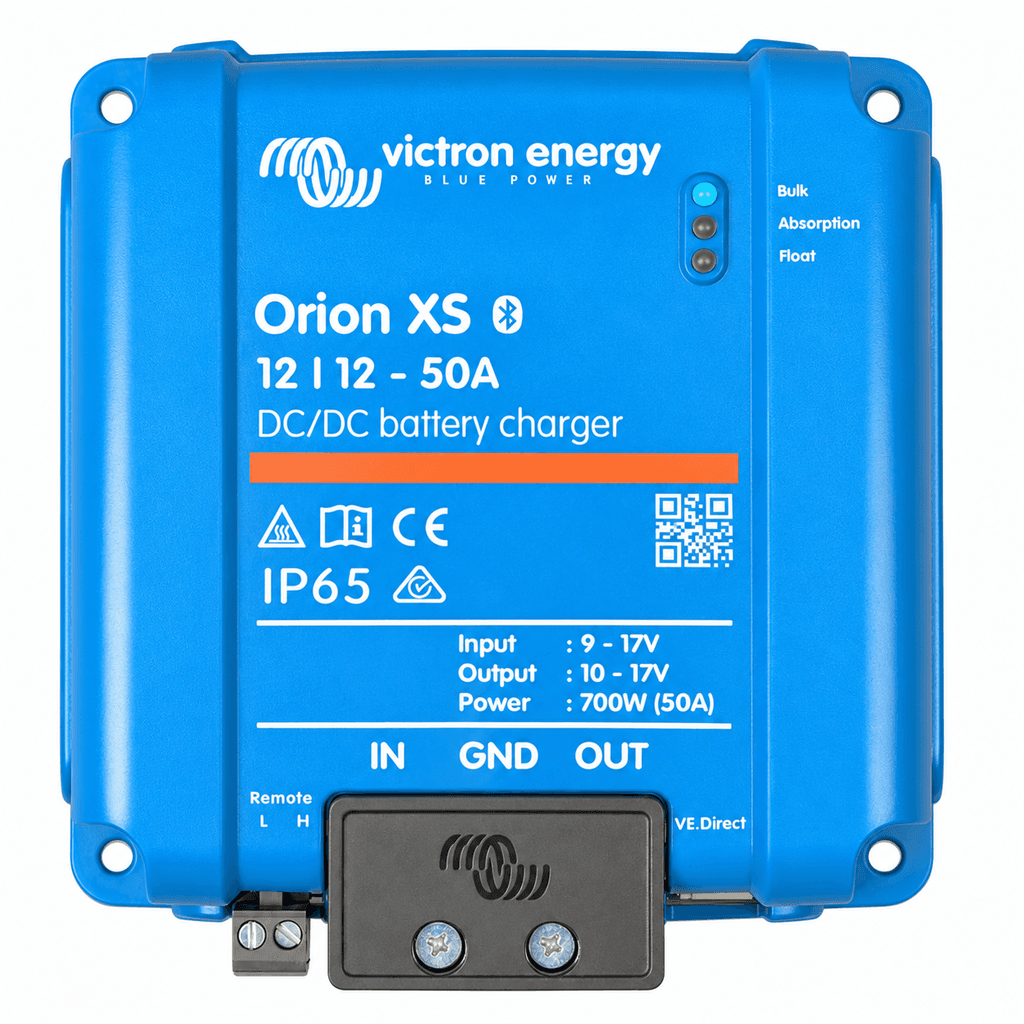
The Victron Energy Orion XS 12/12-50A is a strong choice for boaters who want controlled charging between a 12V starter battery and a 12V house battery. Its charging current can be adjusted up to 50A, which helps you match the charger to your battery bank and the capacity of your engine’s charging system.
Bluetooth monitoring through the VictronConnect app makes it easier to check charging status and change settings without accessing the unit each time. Its IP65 rating also suits a protected marine installation, though you should still follow Victron’s mounting and ventilation instructions when choosing a location on your boat.
Why We Like It
The Orion XS gives you useful control over charging current and battery settings, while VictronConnect lets you monitor the charger from your phone. That combination makes it a versatile pick for a boat with a dedicated house battery, especially when you want to tailor charging to your electrical setup.
Key Features
- Adjustable charging current up to 50A
- Bluetooth monitoring and setup through VictronConnect
- Charging profiles for lead-acid and lithium batteries
- Engine-running detection
- IP65-rated enclosure
Best For
Boaters who want adjustable, app-monitored charging from a 12V starter battery to a 12V house battery.
Pros & Cons
| Pros | Cons |
|---|---|
| Adjustable charging current up to 50A | No built-in solar input |
| Bluetooth monitoring and settings | Requires careful sizing to your alternator and wiring |
| Supports lithium and lead-acid charging profiles | Costs more than basic DC-DC chargers |
2. CTEK D250SE 20A DC-DC Battery Charger — Best for Smaller Battery Banks
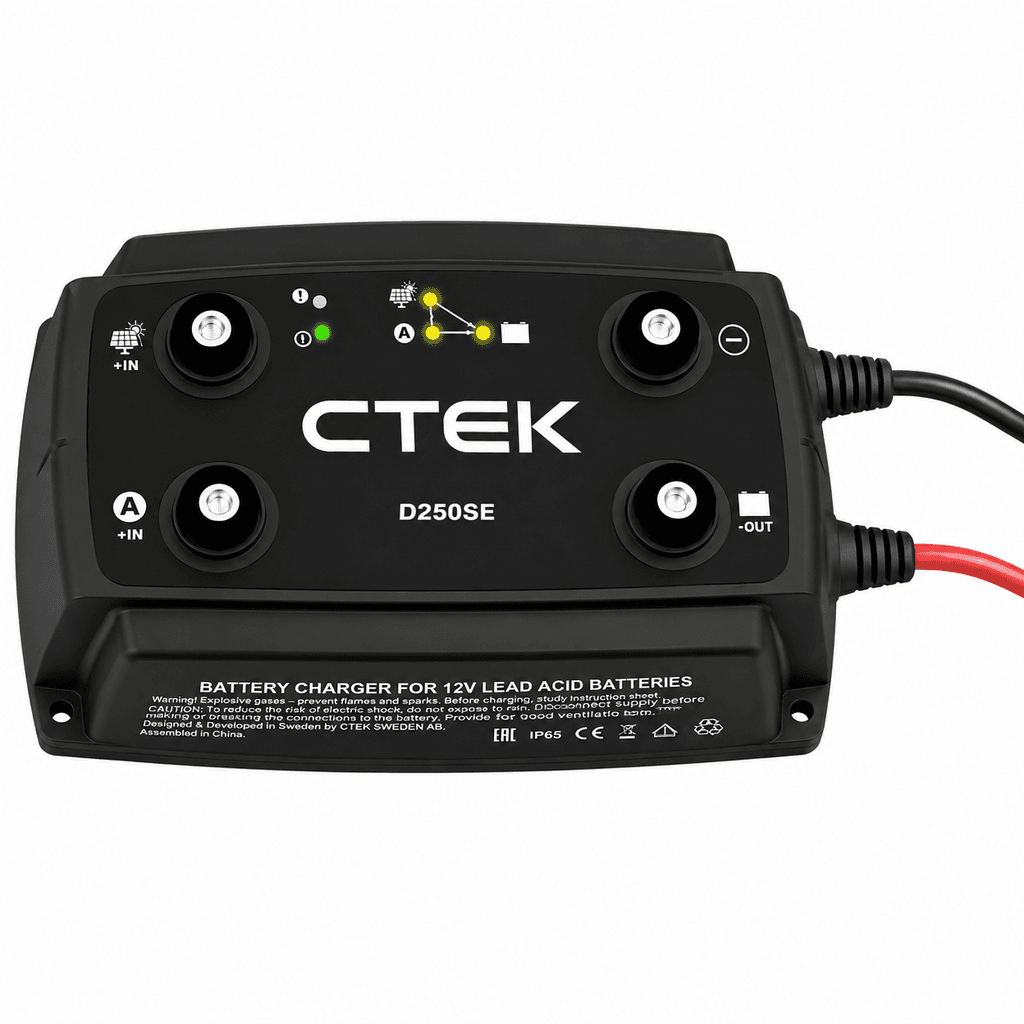
The CTEK D250SE is a 20A DC-DC charger for boaters whose house battery does not need the higher charging current of a 40A or 50A unit. It can charge a 12V service battery from the engine’s charging system and accepts solar input, giving you another way to replenish the battery when the engine is off.
Its lower output makes it worth considering for a smaller house battery bank, provided 20A meets your charging needs. The D250SE supports compatible lead-acid and lithium batteries, but check CTEK’s battery requirements and your boat’s wiring before installation.
Why We Like It
The D250SE combines alternator charging and solar input in a 20A charger. It gives boaters with a smaller house battery bank a way to use both charging sources without choosing a higher-output unit than their setup needs.
Key Features
- Up to 20A charging output
- Alternator and solar inputs
- Built-in solar charge control
- Charging support for compatible 12V lead-acid and lithium service batteries
- Automatic charging operation
Best For
Boaters with a smaller 12V house battery bank who want charging from both the engine and a solar panel.
Pros & Cons
| Pros | Cons |
|---|---|
| Accepts alternator and solar input | 20A output may be slow for a large house battery bank |
| Supports compatible lead-acid and lithium batteries | Higher price than some higher-output alternatives |
| Automatic charging operation | No app-based monitoring |
3. LiTime 12V 40A DC-DC Battery Charger with MPPT — Best Value with Solar
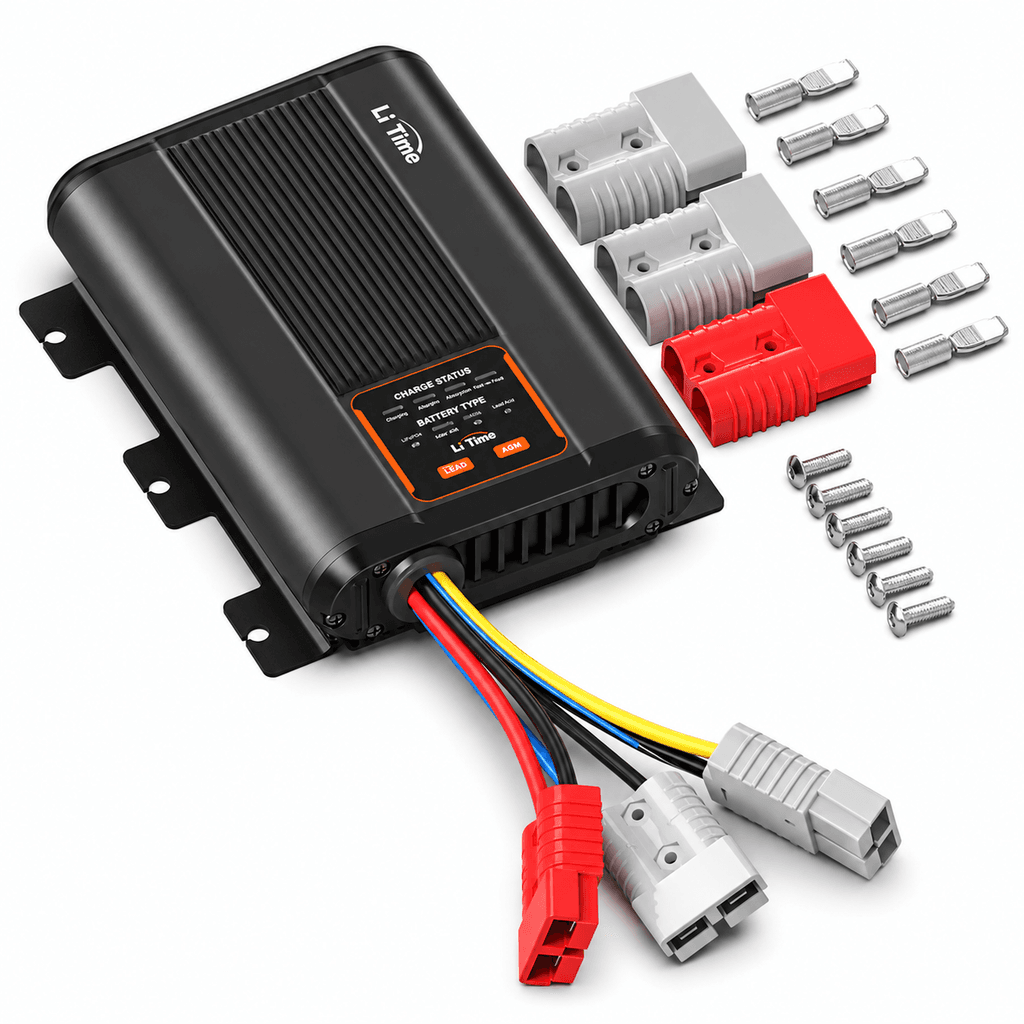
The LiTime 12V 40A DC-DC Charger with MPPT combines alternator charging and solar input in one unit. Its 40A output offers more charging capacity than the CTEK D250SE, making it an option for boaters with a larger 12V house battery bank.
Built-in MPPT solar charging can also be useful if your boat has a compatible solar panel. Before choosing it, check the charger’s input limits, battery settings, and mounting requirements against your boat’s electrical setup.
Why We Like It
The LiTime gives you 40A DC-DC charging and built-in MPPT solar charging in one unit. It’s a practical value choice for a boat with both an engine charging source and a compatible solar panel.
Key Features
- Up to 40A charging output
- Alternator and solar inputs
- Built-in MPPT solar charge control
- Charging profiles for compatible lithium and lead-acid batteries
- Reverse charging function for the starter battery
Best For
Boaters who want 40A house battery charging from the engine and a built-in controller for a compatible solar panel.
Pros & Cons
| Pros | Cons |
|---|---|
| 40A output for faster charging than a 20A unit | Requires sufficient alternator capacity and correctly sized wiring |
| Built-in MPPT solar charging | Solar panel input must meet the charger’s limits |
| Supports compatible lithium and lead-acid batteries | No app-based monitoring |
4. Power Queen 12V 40A DC-DC Charger with MPPT — Budget Alternative
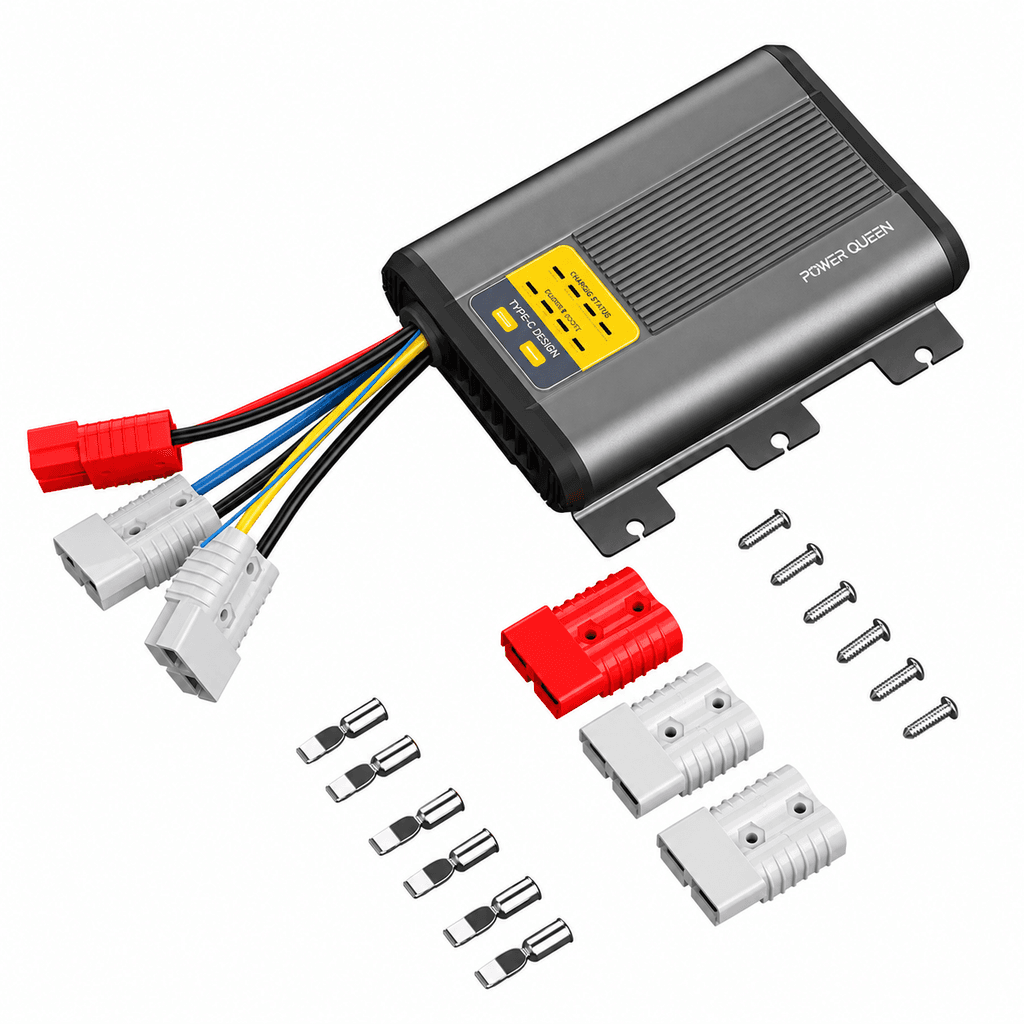
The Power Queen 12V 40A DC-DC Charger can recharge a boat’s house battery from the engine’s charging system. It also accepts solar input, allowing a compatible panel to help replenish the battery when the engine is off.
With 40A output and built-in MPPT solar charging, it offers both charging options in one unit at a lower price than some of the other chargers in this guide. Before installing it, confirm that your battery type, solar panel, wiring, and available mounting space meet Power Queen’s requirements.
Why We Like It
The Power Queen combines 40A engine charging and MPPT solar charging at a lower price than the premium options in this guide. It gives boaters a way to charge a compatible house battery from either source without adding a separate solar controller.
Key Features
- Up to 40A charging output
- Alternator and solar inputs
- Built-in MPPT solar charging
- Charging support for compatible lithium and lead-acid batteries
- Battery type and charging status indicators
Best For
Boaters seeking a lower-priced 40A charger that can use both engine and compatible solar input to charge a 12V house battery.
Pros & Cons
| Pros | Cons |
|---|---|
| 40A output with alternator and solar inputs | Requires properly sized wiring and alternator capacity |
| Built-in MPPT solar charging | No app-based monitoring |
| Lower-priced option among these four chargers | Check solar input limits before connecting a panel |
What to Look for in a Marine DC-DC Battery Charger
Charging current: Choose an output that suits your house battery bank and does not exceed what your engine’s charging system can safely support. A higher amp rating can shorten charging time, but the wiring and alternator must be sized for it.
Battery compatibility: Confirm that the charger has a charging profile for your house battery chemistry, whether it is LiFePO4, AGM, gel, or flooded lead-acid. Check the battery manufacturer’s recommended charging settings too.
Solar input: If you plan to add a solar panel, a charger with built-in MPPT can manage solar and engine charging in one unit. Check the charger’s permitted solar voltage and wattage before connecting a panel.
Installation location: Look at the charger’s dimensions, ventilation requirements, and water resistance rating. Choose a location that meets the manufacturer’s instructions and protects the electrical connections.
Monitoring: App monitoring can make settings and troubleshooting easier. If you prefer a simpler installation, status lights may provide all the information you need.
Frequently Asked Questions
What does a DC-DC charger do on a boat?
It controls charging from the engine’s charging system to a separate house battery. It can provide a charging profile suited to the house battery rather than simply connecting the two batteries.
Do I need a DC-DC charger for a lithium house battery?
It depends on your boat’s charging system and the battery manufacturer’s requirements. A compatible DC-DC charger can limit charging current and provide a suitable lithium charging profile.
Can a DC-DC charger replace my shore-power battery charger?
No. The chargers in this guide use DC input from the engine charging system, and some also accept solar input. A shore-power charger uses AC electricity when your boat is plugged in.
Can I use a DC-DC charger and solar panel together?
Yes, if you choose a model with a compatible solar input. Check the panel’s voltage and power against the charger’s limits and follow the manufacturer’s wiring instructions.
Final Verdict
The best marine DC-DC charger depends on your house battery, engine charging capacity, and whether you want solar input. The Victron Energy Orion XS 12/12-50A is our best overall pick for adjustable charging and Bluetooth monitoring. The CTEK D250SE suits a smaller battery bank that needs 20A charging, while the LiTime 40A combines higher output with built-in MPPT solar charging. The Power Queen 40A is a lower-priced dual-input alternative.
Planning the rest of your electrical system? See our Best Marine Batteries for 2026 guide to compare house battery options. Our Best Onboard Marine Battery Chargers for 2026 guide covers charging when shore power is available, and Best Portable Power Stations for Boats in 2026 looks at portable power for trips.
Before buying, confirm battery compatibility, charging current, wiring size, mounting requirements, and solar input limits for your specific boat.