
A reliable boat trailer jack can make a big difference every time you prepare your boat for the water. Whether you’re connecting your trailer to your tow vehicle, positioning it in the driveway, or storing your boat between trips, the right jack helps you lift and support the trailer tongue safely.
But not all boat trailer jacks are designed for the same job. Some offer larger wheels for easier maneuvering, others feature dual-wheel designs, and heavier-duty models provide additional lifting capacity for larger trailer setups.
In this guide, we compare five boat trailer jacks for 2026, covering lifting capacity, wheel design, corrosion resistance, mounting options, and overall convenience.
Whether you own a small fishing boat, an aluminum river boat, or a larger recreational boat, these recommendations will help you find a trailer jack that fits your needs.
Affiliate Disclosure: Boat Gear Pilot participates in the Amazon Services LLC Associates Program and the eBay Partner Network. As an Amazon Associate, we earn from qualifying purchases. We may also earn commissions from qualifying purchases through eBay and other affiliate partnerships, at no additional cost to you.
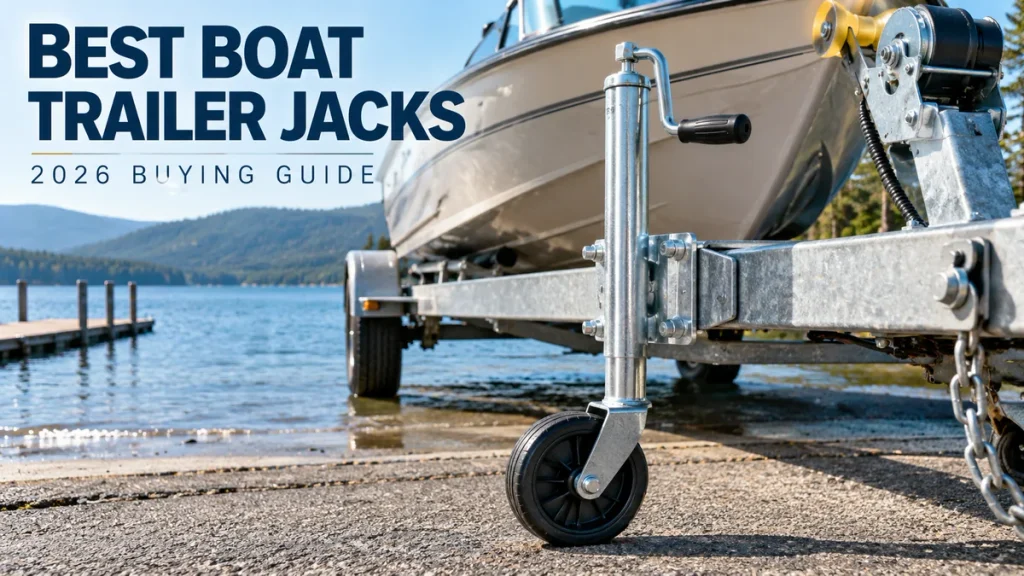
Quick Picks: Best Boat Trailer Jacks for 2026
| Category | Product | Rated Capacity |
|---|---|---|
| Best Overall | CURT 28115 | 1,500 lbs |
| Best Dual-Wheel Value | MaxxHaul 70149 | 1,500 lbs |
| Best for Smaller Trailers | CURT 28112 | 1,200 lbs |
| Best Budget | REESE Towpower 74410 | 1,000 lbs |
| Best Higher-Capacity Dual-Wheel | YOMILINK YM-TJW-2000 | 2,000 lbs |
Our selections cover several popular trailer-jack configurations, from basic manual swivel jacks to higher-capacity dual-wheel models. The best option depends on your trailer’s actual tongue weight, mounting dimensions, and how often you need to maneuver it.
1. CURT 28115 — Best Overall Boat Trailer Jack
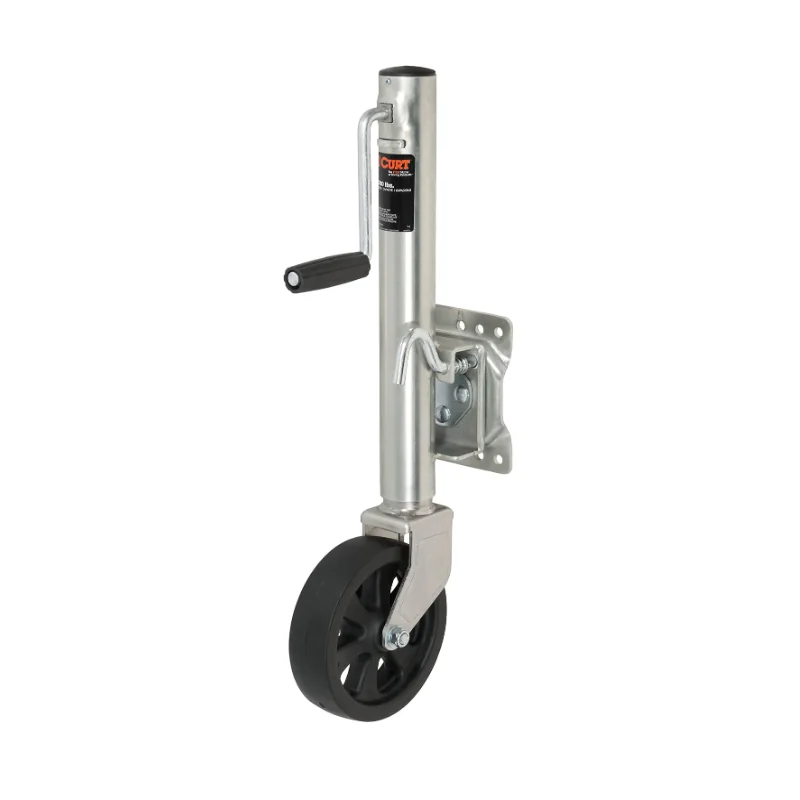
The CURT 28115 earns our Best Overall recommendation thanks to its balance of lifting capacity, convenience, and practical trailer maneuverability.
With a 1,500-pound lifting capacity and an 8-inch wheel, this swivel trailer jack is designed for recreational boat trailers that require dependable support during hitching and unhitching.
Its swivel mounting system allows the jack to rotate into a horizontal storage position when you’re ready to tow. This helps maintain ground clearance and keeps the jack from interfering with normal trailer operation.
The zinc-plated steel construction provides corrosion resistance, an important consideration for boating environments where trailers regularly encounter moisture and road spray.
Why We Like It
We like the CURT 28115 because it combines the features most recreational boat owners need without unnecessary complexity.
The 8-inch wheel provides a larger contact surface than many compact jacks, while the swivel mechanism makes switching between towing and parking convenient.
Its 1,500-pound capacity also makes it suitable for a broad range of recreational boat trailers when properly matched to the actual tongue load.
Key Features
- 1,500-pound lifting and support capacity
- 8-inch trailer wheel
- 10 inches of vertical travel
- Side-wind crank handle
- Swivel mounting bracket
- Zinc-plated steel construction
- Bolt-on mounting configuration
Best For
Recreational boat owners who want an all-around trailer jack for regular hitching, unhitching, and positioning on suitable firm surfaces.
Pros & Cons
Pros
- Practical lifting capacity
- Large 8-inch wheel
- Convenient swivel-away design
- Corrosion-resistant finish
- Straightforward manual operation
Cons
- Requires manual cranking
- Wheels may struggle on loose gravel or soft ground
- Not suitable for tongue loads above its rated capacity
Check Current Price & Availability
2. MaxxHaul 70149 — Best Dual-Wheel Value
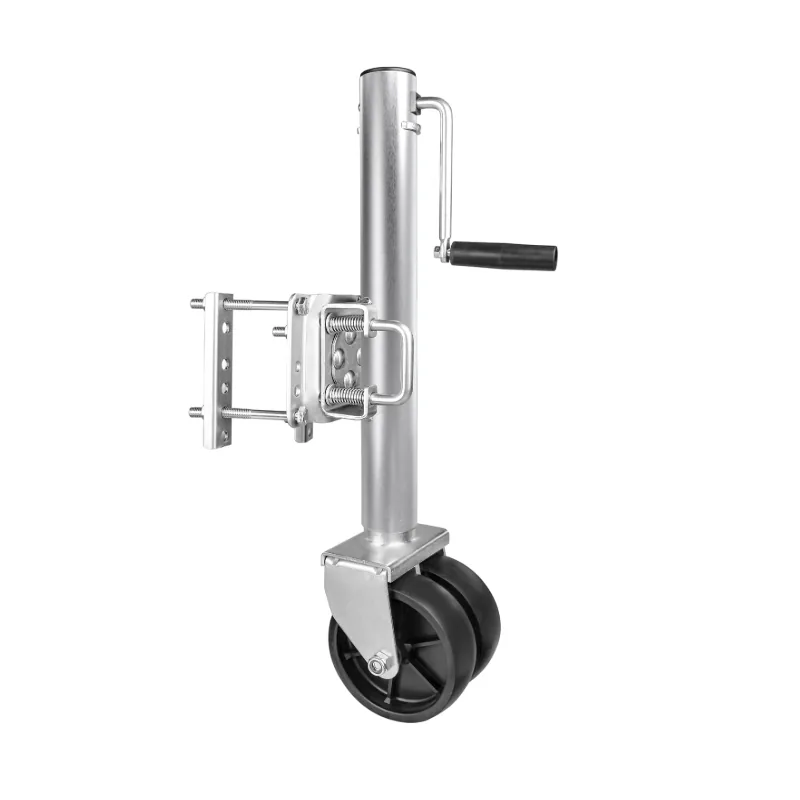
If you frequently move your boat trailer around the driveway or storage area, the MaxxHaul 70149 is worth considering.
Unlike conventional single-wheel trailer jacks, this model features dual 6-inch wheels designed to provide a wider wheel arrangement for repositioning a disconnected trailer.
It offers a 1,500-pound lifting capacity, making it an option for many smaller and medium-sized boat trailers.
The swing-back mounting system allows the jack to rotate out of the way for towing, while its side-wind crank provides straightforward manual operation.
Why We Like It
The biggest advantage of the MaxxHaul 70149 is its dual-wheel design.
For owners who frequently reposition a trailer by hand, having two wheels can offer a useful alternative to a traditional single-wheel jack.
We also appreciate its combination of lifting capacity, practical mounting design, and straightforward construction.
Keep in mind that dual wheels do not automatically make a trailer easier to move on gravel, grass, or other soft surfaces. Ground conditions still matter.
Key Features
- 1,500-pound lifting capacity
- Dual 6-inch wheels
- Approximately 11.5 inches of lifting travel
- Side-wind crank
- Swing-back mounting system
- Corrosion-resistant finish
- Manual operation
Best For
Boat owners who regularly reposition disconnected trailers on concrete, asphalt, or other suitable firm surfaces.
Pros & Cons
Pros
- Dual-wheel configuration
- Good general-purpose lifting capacity
- Convenient swing-back design
- Suitable for frequent trailer repositioning
- Straightforward installation on compatible frames
Cons
- Small wheels can struggle on soft surfaces
- Requires manual operation
- Dual-wheel assembly takes up more space than a compact single-wheel design
Check Current Price & Availability
3. CURT 28112 — Best for Smaller Boat Trailers
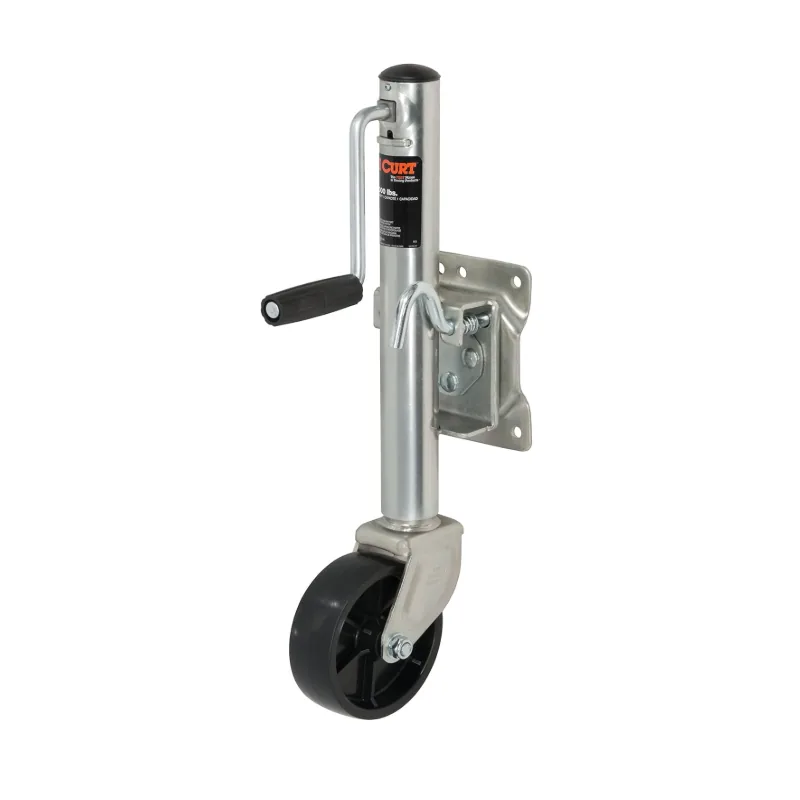
Not every boat trailer needs a large, heavy-duty jack.
For owners of smaller aluminum fishing boats, lightweight utility boats, and other compact recreational trailers, the CURT 28112 offers a practical alternative.
This model features a 1,200-pound lifting capacity and a 6-inch wheel, along with a swivel mounting system that allows it to rotate into a storage position during towing.
Its zinc-plated steel construction provides corrosion resistance, while the side-wind crank offers familiar manual operation.
Why We Like It
The CURT 28112 offers the essential features needed for smaller trailer applications.
Its compact wheel assembly and swivel mounting design are convenient when working with lightweight trailers that don’t require the additional capacity of a heavier jack.
We also like that it comes from an established trailer equipment manufacturer with a broad range of towing products.
Key Features
- 1,200-pound lifting capacity
- 6-inch wheel
- 10 inches of vertical travel
- Side-wind crank
- Swivel mounting bracket
- Zinc-plated steel construction
- Compact manual design
Best For
Smaller fishing boats, lightweight aluminum boats, and recreational trailers with compatible tongue weights and mounting dimensions.
Pros & Cons
Pros
- Compact configuration
- Convenient swivel-away storage
- Suitable for lighter trailer applications
- Corrosion-resistant finish
- Simple manual operation
Cons
- Lower capacity than larger jacks
- Smaller wheel
- Not recommended for heavier trailer tongue loads
Check Current Price & Availability
4. REESE Towpower 74410 — Best Budget Boat Trailer Jack
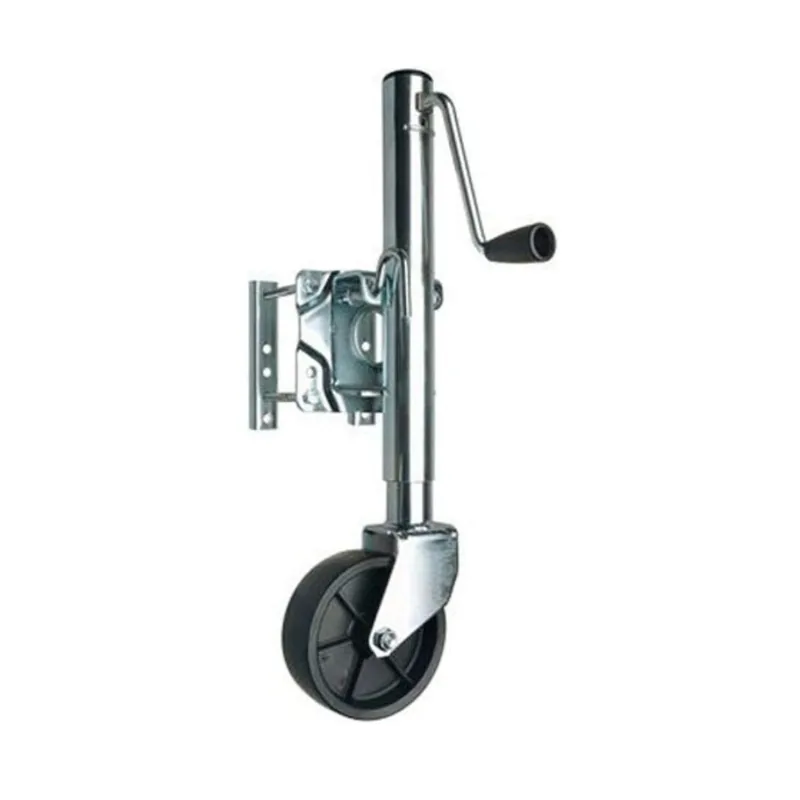
The REESE Towpower 74410 is a straightforward option for boat owners who want a basic trailer jack without paying for higher-capacity features they may not need.
With a 1,000-pound lifting capacity and a 6-inch wheel, this manual swivel jack is designed for compatible lighter-duty trailers.
It features a side-wind crank handle and a swivel mounting mechanism that allows the jack to rotate out of the way during towing.
For smaller recreational boats, the REESE 74410 provides an uncomplicated solution for supporting the trailer tongue during routine hitching and storage.
Why We Like It
We like the REESE Towpower 74410 because it focuses on essential functionality.
It offers the main features many small-boat owners need: a wheeled base, swivel storage, manual lifting, and a familiar bolt-on mounting design.
For owners replacing a worn-out jack on a lightweight boat trailer, this is a model worth comparing against more expensive alternatives.
Key Features
- 1,000-pound lifting capacity
- 6-inch wheel
- 10 inches of vertical travel
- Side-wind crank handle
- Swivel mounting system
- Compatible with specified trailer frames up to 3 × 5 inches
- Manual lifting mechanism
Best For
Budget-conscious owners of smaller boat trailers who need basic lifting and support functionality.
Pros & Cons
Pros
- Straightforward design
- Simple manual operation
- Convenient swivel storage
- Compact wheel assembly
- Suitable for lightweight applications
Cons
- Lowest lifting capacity in our comparison
- Smaller wheel
- Not designed for heavier trailer setups
- Fewer premium features
Check Current Price & Availability
5. YOMILINK YM-TJW-2000 — Best Higher-Capacity Dual-Wheel Trailer Jack
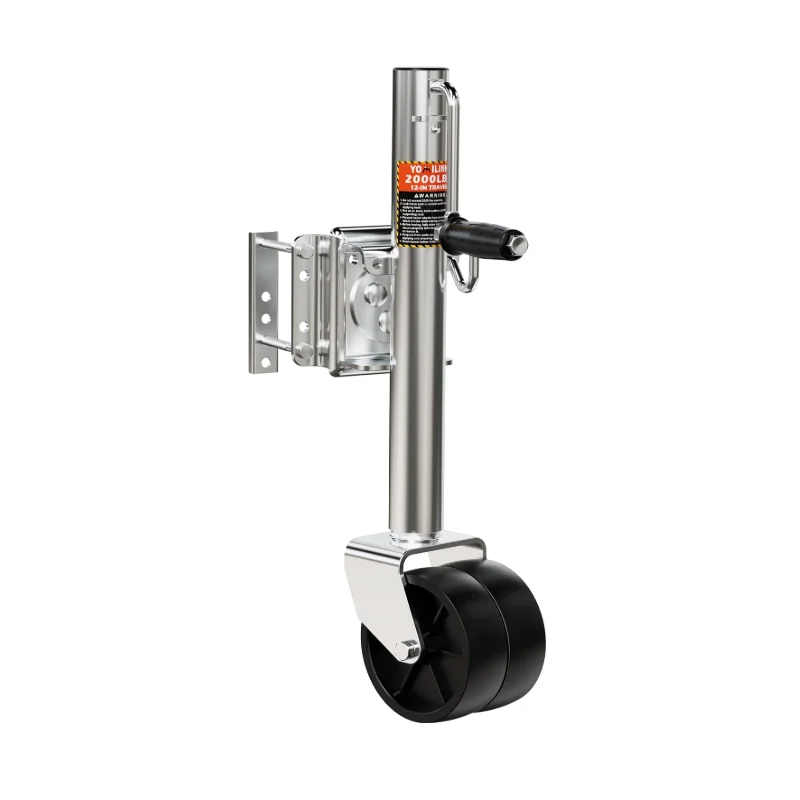
For boat owners looking for more lifting capacity than a typical 1,000- or 1,500-pound swivel jack, the YOMILINK YM-TJW-2000 provides a higher-capacity alternative.
This model is advertised with a 2,000-pound lifting capacity and a dual-wheel configuration designed to assist with trailer positioning.
Its swivel mounting system allows the jack to rotate into a horizontal storage position when the trailer is connected to the tow vehicle.
The combination of higher rated capacity and dual wheels makes it worth considering for owners whose trailer tongue loads fall within the specified limits.
Why We Like It
The YOMILINK stands out because of its advertised 2,000-pound capacity.
That gives it additional rated capacity compared with the other wheeled jacks in our lineup.
Its dual-wheel design also provides an alternative for owners who want to reposition a compatible trailer by hand.
However, this model has a less established marine equipment reputation than brands such as CURT or REESE. Buyers should pay particular attention to verified customer reviews, mounting dimensions, and the manufacturer’s installation instructions.
Key Features
- Advertised 2,000-pound lifting capacity
- Dual-wheel configuration
- Swivel mounting design
- Manual crank operation
- Approximately 12-inch advertised lifting range
- Steel construction
- Designed for compatible boat and utility trailer applications
Best For
Boat owners who want a higher-capacity manual dual-wheel jack and have confirmed that its mounting specifications and tongue-weight rating match their trailer.
Pros & Cons
Pros
- Highest advertised lifting capacity among our wheeled selections
- Dual-wheel design
- Swivel-away mounting
- Useful alternative to standard 1,500-pound models
- Manual operation without electrical power
Cons
- Less established brand reputation
- Product specifications should be carefully checked before purchase
- Dual wheels may still struggle on uneven or soft ground
- Requires manual cranking
Check Current Price & Availability
How to Choose the Best Boat Trailer Jack
Choosing the right boat trailer jack involves more than finding the highest lifting capacity.
The best jack should match your trailer’s actual tongue weight, mounting dimensions, storage conditions, and how you use the trailer.
Here are the most important factors to consider.
1. Trailer Jack Weight Capacity
One of the most important specifications is the jack’s lifting capacity.
This rating refers to the amount of weight the jack is designed to lift or support—not the total weight of your boat and trailer.
For example, a boat and trailer combination might weigh several thousand pounds, but only part of that load is supported at the trailer tongue.
You should measure or accurately determine your fully loaded trailer’s tongue weight before selecting a jack.
Remember that fuel, batteries, coolers, fishing equipment, and other cargo can affect weight distribution.
Choose a jack rated for at least the actual loaded tongue weight, with an appropriate safety margin.
2. Single-Wheel vs. Dual-Wheel Trailer Jacks
Wheel configuration can affect how conveniently you reposition your trailer.
Single-wheel trailer jacks are common on recreational boat trailers. They offer relatively simple construction and a compact design.
Dual-wheel trailer jacks feature two wheels and may provide a useful alternative when repositioning trailers on suitable hard surfaces.
However, wheel diameter, trailer weight, and ground conditions often matter more than wheel count alone.
Neither configuration should be expected to roll easily over deep gravel, soft soil, or uneven terrain.
3. Swivel Mounting vs. Fixed Mounting
Swivel trailer jacks are popular because they can rotate into a horizontal storage position during towing.
This can help maintain ground clearance and keep the jack away from the road.
Fixed or drop-leg trailer jacks may be better suited to certain heavy-duty applications.
Regardless of the design, check that the mounting configuration is compatible with your trailer’s frame.
4. Corrosion Resistance
Boat trailer equipment is regularly exposed to water, road spray, and outdoor conditions.
Saltwater boat ramps create additional corrosion concerns.
Look for galvanized finishes, zinc plating, aluminum construction, or other protective treatments appropriate for marine use.
Even corrosion-resistant trailer jacks need regular cleaning, lubrication, and inspection.
If you launch in saltwater, rinse exposed components with fresh water and follow the manufacturer’s maintenance guidance.
5. Wheel Size and Trailer Maneuverability
Larger wheels may roll more easily over small surface irregularities than smaller wheels of otherwise comparable design.
For owners who regularly move a disconnected trailer on concrete or asphalt, wheel size can be an important consideration.
Remember that manually maneuvering a heavy boat trailer carries risks, particularly on sloped or uneven ground.
Use appropriate wheel chocks and never rely on the jack wheel alone to prevent trailer movement.
6. Lifting Height and Travel
Trailer jack travel determines how much vertical adjustment the jack provides.
Before purchasing, check the height of your tow vehicle’s hitch and the trailer coupler.
Make sure the jack can raise the coupler high enough for safe hitching and provide adequate clearance when stored for towing.
7. Mounting Compatibility
Before ordering a trailer jack, check:
- Trailer frame height and width
- Mounting bracket dimensions
- Bolt-hole spacing
- Clearance around brake lines and wiring
- Crank-handle clearance
- Swivel storage clearance
- Required lifting travel
A jack can have excellent specifications and still be the wrong product if it doesn’t fit your trailer.
Frequently Asked Questions
What size trailer jack do I need for my boat?
Choose a trailer jack based on your actual loaded trailer tongue weight.
The jack must be rated to safely support that load, with an appropriate safety margin.
Also verify mounting compatibility, lifting height, and ground clearance.
Is a dual-wheel trailer jack better?
A dual-wheel jack can be useful for certain trailer maneuvering applications, particularly on firm surfaces.
However, it isn’t automatically better than a single-wheel design.
Wheel diameter, trailer load, surface conditions, and construction quality all influence performance.
Can I use a regular trailer jack on a boat trailer?
Yes, provided the jack has the appropriate lifting capacity, mounting configuration, and environmental protection.
Because boat trailers are exposed to moisture, corrosion resistance is particularly important.
How long do boat trailer jacks last?
Service life depends on construction quality, maintenance, frequency of use, load conditions, and exposure to moisture or saltwater.
Inspect the jack regularly for corrosion, mechanical wear, damaged mounting hardware, and problems with the crank or swivel mechanism.
How do I maintain a boat trailer jack?
Follow the manufacturer’s maintenance instructions.
Regularly inspect the crank mechanism, wheel assembly, mounting hardware, swivel lock, and protective finish.
Clean away dirt and road salt, lubricate approved components, and replace damaged parts.
Can I move a loaded boat trailer by hand?
Some smaller trailers can be repositioned manually on suitable level surfaces, but trailer weight and ground conditions are critical.
Never attempt to control a heavy trailer on a slope by hand, and always use appropriate safety precautions.
What is the difference between a boat trailer jack and a regular utility trailer jack?
Many trailer jacks can be used for both applications when their capacity and mounting specifications are appropriate.
Marine trailers often benefit from additional corrosion protection because of exposure to water and launch-ramp conditions.
Final Verdict: Which Boat Trailer Jack Should You Buy?
For most recreational boat owners, the CURT 28115 is our Best Overall recommendation. Its 1,500-pound lifting capacity, 8-inch wheel, and convenient swivel mounting system make it a versatile choice for everyday trailering.
If you frequently reposition your trailer, the MaxxHaul 70149 offers a practical dual-wheel alternative.
Owners of smaller recreational boat trailers should consider the CURT 28112, while the REESE Towpower 74410 provides straightforward functionality for budget-conscious buyers.
For those needing additional rated capacity, the YOMILINK YM-TJW-2000 offers an advertised 2,000-pound lifting capacity with dual wheels, although buyers should carefully verify the model’s specifications and seller reputation before purchasing.
Choosing the right trailer jack is only one part of maintaining a safe and dependable towing setup. Our Best Boat Trailer Winch Straps guide covers another important component of keeping your boat secure during loading and transportation.
You can also explore our Best Boat Trailer Accessories guide for additional equipment that can make towing, launching, and retrieving your boat easier.
Before buying any trailer jack, verify your trailer’s loaded tongue weight, mounting dimensions, required lifting range, and intended operating conditions.
The best boat trailer jack isn’t necessarily the most expensive or highest-capacity option. It’s the one that fits your trailer correctly and makes every trip to the boat ramp safer and more convenient.