
Best portable power stations for boats can provide convenient power for electronics and compatible gear when you have a dry, sheltered place to use them. In this guide, we compare four 2026 options from Anker, EcoFlow, BLUETTI, and Jackery by battery capacity, AC output, weight, and charging options.
Affiliate disclosure: This article contains affiliate links to Amazon and eBay. If you make a purchase through these links, Boat Gear Pilot may earn a commission at no additional cost to you. As an Amazon Associate I earn from qualifying purchases.
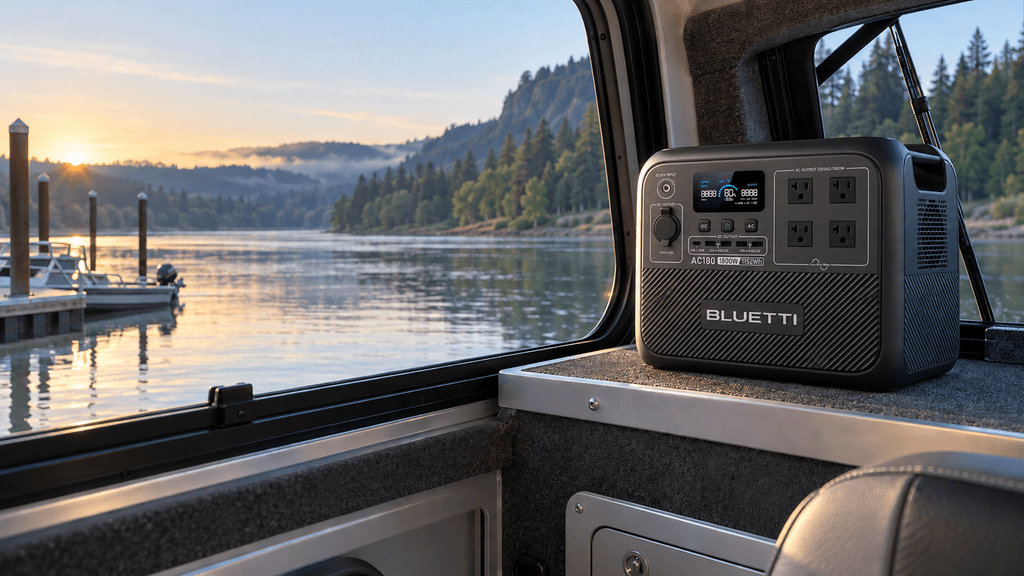
Table of Contents
Quick Picks
- Anker SOLIX C1000: A balanced choice for charging devices and running small appliances.
- EcoFlow DELTA 2: A choice for boaters who value fast recharging.
- BLUETTI AC180: The largest battery capacity of these four.
- Jackery Explorer 1000 v2: A lighter option to carry between the boat and home.
1. Anker SOLIX C1000 — Best All-Around Pick
Why We Like It
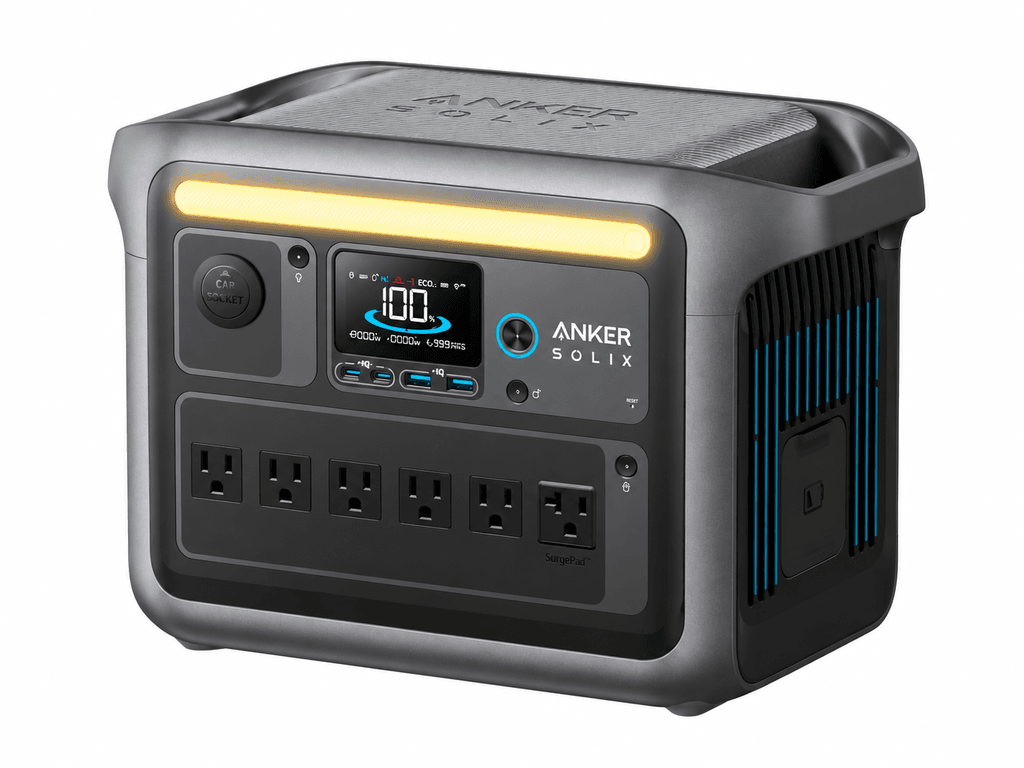
The Anker SOLIX C1000 offers a useful balance of battery capacity, outlet choices, and portability. Its AC, USB, and 12 V outputs let you power different devices from one unit, while AC, solar, and car charging give you options for recharging between trips. For a boat, its strongest use is as portable power for a fridge or personal electronics kept in a dry, secure spot
Key Features
- 1,056 Wh battery capacity
- 1,800 W rated AC output
- Six AC outlets, two USB-C ports, two USB-A ports, and one 12 V car outlet
- Supports AC, solar, and car charging
- Weighs about 28 lb
Best for
Best for: Boaters who want one portable unit for several kinds of devices.
Consider before buying: Check your fridge’s power requirements and the station’s expected runtime. Battery capacity alone does not tell you exactly how long an appliance will run.
Pros and Cons
| Pros | Cons |
|---|---|
| 1,056 Wh battery capacity | About 28 lb to carry |
| 1,800 W rated AC output | Must be kept dry and protected from spray |
| AC, USB, and 12 V outlets | Actual runtime depends on what you power |
| AC, solar, and car charging options | |
| Portable between the boat and home |
EcoFlow DELTA 2 — Best for Fast Recharging
Why We Like It
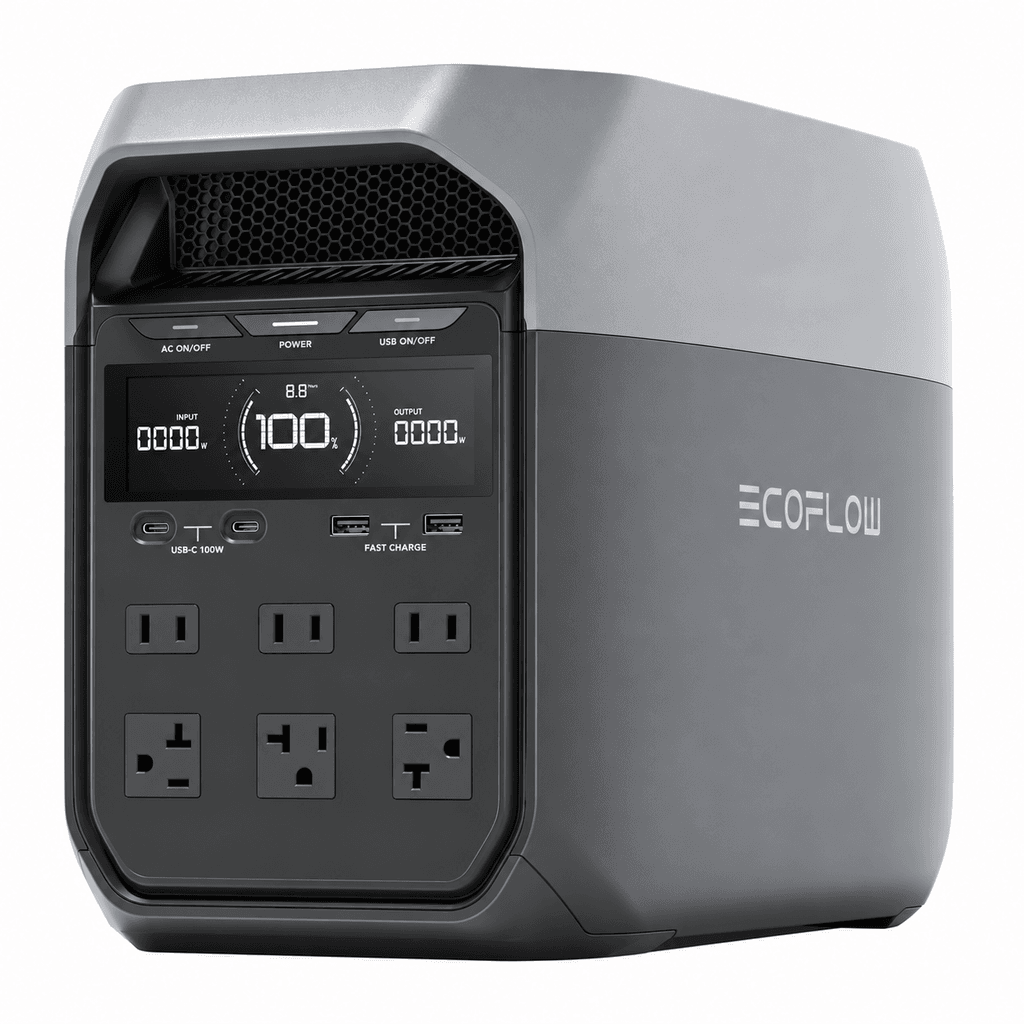
The EcoFlow DELTA 2 recharges quickly from a wall outlet, making it convenient when you have limited time between boat trips. Its 1,024 Wh capacity and 1,800 W AC output can power compatible gear without running a generator.
Key Features
- 1,024 Wh LFP battery
- 1,800 W AC output
- Six AC outlets, six USB ports, and a 12 V car outlet
- Wall, solar, and car charging options
- Supports an optional extra battery
- Weighs approximately 27 lb
Best For
Boaters who want to recharge a portable power station quickly between trips and run compatible electronics or small appliances while keeping the unit sheltered from water.
Pros & Cons
| Pros | Cons |
|---|---|
| Fast wall charging between trips | Approximately 27 lb to carry |
| 1,024 Wh LFP battery | Must be protected from rain and spray |
| 1,800 W AC output | Actual runtime depends on the devices connected |
| AC, USB, and 12 V outlets | |
| Optional extra battery for more capacity |
3. BLUETTI AC180 — Best for Higher Battery Capacity
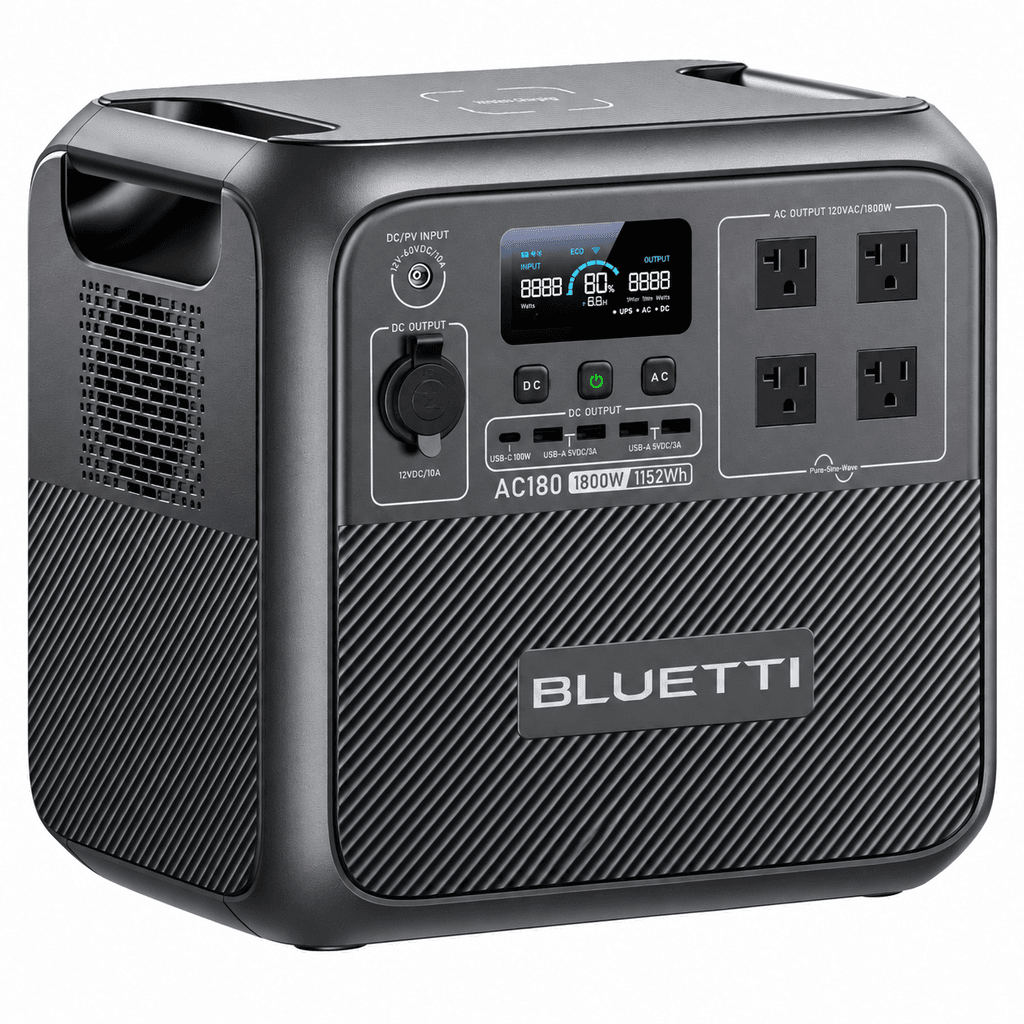
The BLUETTI AC180 offers a 1,152 Wh battery and 1,800 W AC output. It gives boaters more stored energy than the first two options for powering compatible gear between charges. Keep it in a dry, sheltered location aboard the boat.
Why We Like It
The BLUETTI AC180 has the largest built-in battery of the four power stations in this comparison. Its 1,152 Wh capacity gives you more room for charging electronics and running compatible gear during a day on the boat.
Key Features
- 1,152 Wh LiFePO₄ battery
- 1,800 W AC output through four outlets
- USB-A, 100 W USB-C, and 12 V car outlets
- Built-in wireless charging pad
- Wall, solar, and car charging options
- Weighs approximately 35 lb
Best For
Boaters who want more built-in battery capacity for charging electronics and running compatible gear, and who have a dry, sheltered place to use and store the power station.
Pros & Cons
| Pros | Cons |
|---|---|
| 1,152 Wh battery, the largest built-in capacity in this comparison | Approximately 35 lb to carry |
| 1,800 W AC output | Must be protected from rain and spray |
| AC, USB, and 12 V outlets | Actual runtime depends on the devices connected |
| Built-in wireless charging pad | |
| Wall, solar, and car charging options |
4. Jackery Explorer 1000 v2 — Best for Easy Portability
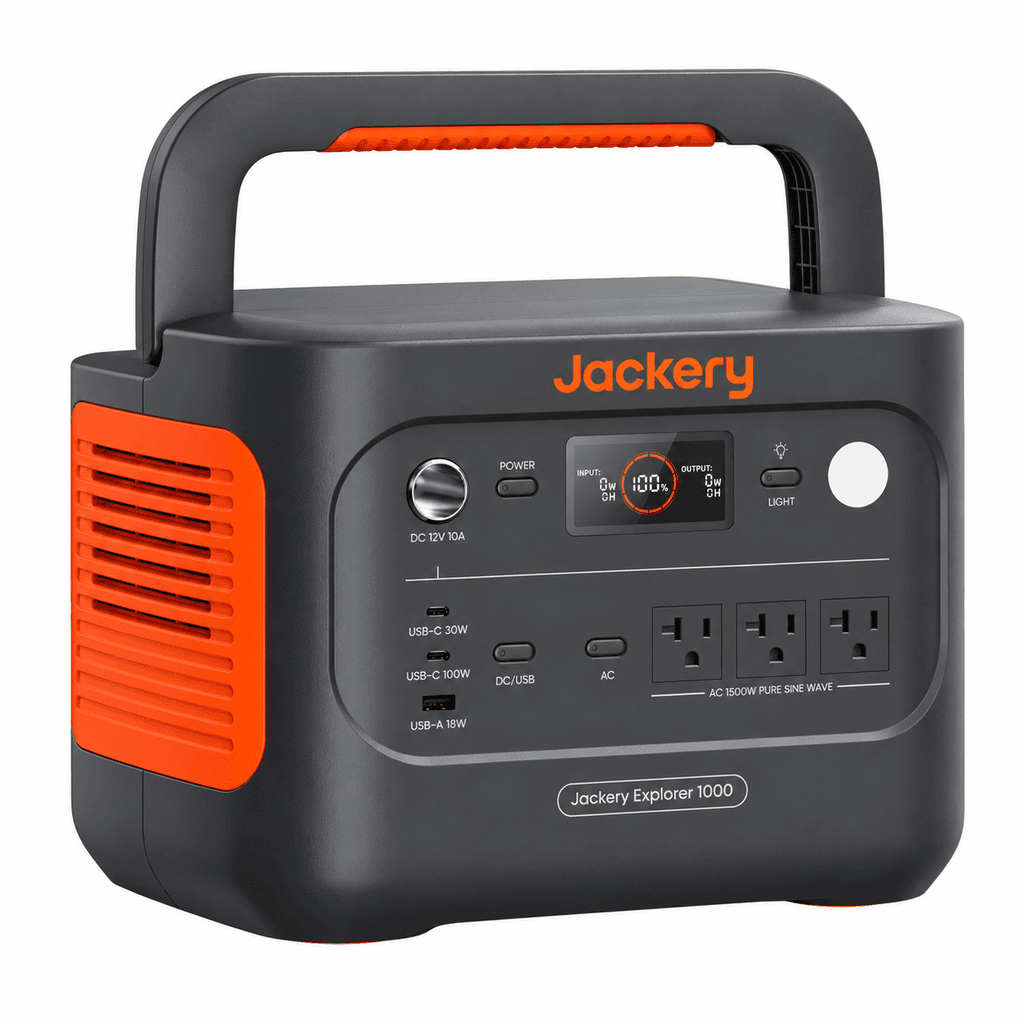
The Jackery Explorer 1000 v2 has a 1,070 Wh battery and 1,500 W AC output. At about 24 lb, it’s the lightest of the four options, making it easier to carry between home and the boat. Keep it sheltered from rain and spray.
Why We Like It
The Jackery Explorer 1000 v2 is the lightest power station in this comparison, which makes carrying it to and from the boat easier. It still offers enough battery capacity and AC output for charging electronics and powering compatible gear during a trip.
Key Features
- 1,070 Wh LiFePO₄ battery
- 1,500 W rated AC output
- Three AC outlets, two USB-C ports, one USB-A port, and a 12 V car outlet
- Wall, solar, and car charging options
- Foldable carrying handle
- Weighs approximately 23.8 lb
Best For
Boaters who plan to carry their power station between home and the boat and want a lighter option for charging electronics and powering compatible gear.
Pros & Cons
| Pros | Cons |
|---|---|
| Lightest of the four at approximately 23.8 lb | 1,500 W AC output is lower than the other three |
| 1,070 Wh battery capacity | Must be protected from rain and spray |
| Foldable handle for carrying | Actual runtime depends on the devices connected |
| AC, USB, and 12 V outlets | |
| Wall, solar, and car charging options |
Best Portable Power Stations for Boats: Quick Comparison
The best portable power stations for boats vary in capacity, output, and weight, so compare those specifications against the gear you plan to use.
| Power Station | Battery Capacity | AC Output | Weight | Best For |
|---|---|---|---|---|
| Anker SOLIX C1000 | 1,056 Wh | 1,800 W | About 28 lb | Overall balance |
| EcoFlow DELTA 2 | 1,024 Wh | 1,800 W | About 27 lb | Fast recharging |
| BLUETTI AC180 | 1,152 Wh | 1,800 W | About 35 lb | Higher capacity |
| Jackery Explorer 1000 v2 | 1,070 Wh | 1,500 W | About 24 lb | Easy portability |
What to Look For in a Boat Power Station
Choose battery capacity based on how much energy your devices use and how long you need to run them. Check that the station’s rated AC output can handle the devices you plan to plug in, especially anything with a motor. Consider weight if you’ll carry it between your vehicle and boat, and make sure its ports match your gear.
These portable power stations are not waterproof. Use and store yours in a dry, ventilated location protected from rain, spray, and standing water.
Frequently Asked Questions
Can I use a portable power station on a boat?
Yes, if you have a dry, ventilated place to use it. Keep it away from rain, spray, and standing water.
How long will it power my gear?
Runtime depends on the device’s power use. For a rough estimate, divide the station’s watt-hour capacity by the device’s wattage, then allow for energy lost during conversion.
Can I recharge it while aboard?
These models support more than one charging method, but the available options depend on your boat’s setup. Follow the manufacturer’s instructions for the power station and charging equipment.
Final Verdict
The best portable power station for your boat depends on what you need to power, how long you’ll be aboard, and how often you’ll carry the unit on and off the boat.
The Anker SOLIX C1000 is our best overall pick for its balance of battery capacity, AC output, and portability. The EcoFlow DELTA 2 is a strong choice when fast recharging matters most. Choose the BLUETTI AC180 for the most built-in battery capacity, or the Jackery Explorer 1000 v2 if lighter weight is your priority.
For your boat’s installed power system, see our Best Marine Batteries for 2026 and Best Onboard Marine Battery Chargers for 2026 guides. If you’re planning electronics upgrades, our Best Marine GPS & Chartplotters for 2026 guide can help with the next part of your setup.
Before buying, check your devices’ power requirements and make sure you have a dry, ventilated place to use and store the power station.