Choosing the best marine VHF radio for your boat is an important part of staying connected and prepared on the water. Modern fixed-mount VHF radios offer much more than basic voice communication, with features such as Digital Selective Calling (DSC), built-in GPS, AIS, weather alerts, and integration with compatible marine electronics. In this guide, we compare some of the best marine VHF radios for 2026 to help you choose the right model for your boat, boating style, and electronics setup.
Affiliate Disclosure: Boat Gear Pilot participates in affiliate programs, including the Amazon Services LLC Associates Program and the eBay Partner Network. As an Amazon Associate, we earn from qualifying purchases. We may also earn a commission from qualifying purchases made through eBay and other affiliate links, at no additional cost to you.
Table of Contents
Quick Picks
Best Overall: Standard Horizon GX2410GPS
Best Value: Uniden UM725G
Best Compact VHF with GPS: Icom IC-M330G
Best for AIS & Garmin Integration: Garmin VHF 215 AIS
Our four best marine VHF radios for 2026 cover different budgets, electronics systems, and communication needs, from straightforward DSC calling to advanced AIS integration.
1. Standard Horizon GX2410GPS — Best Overall
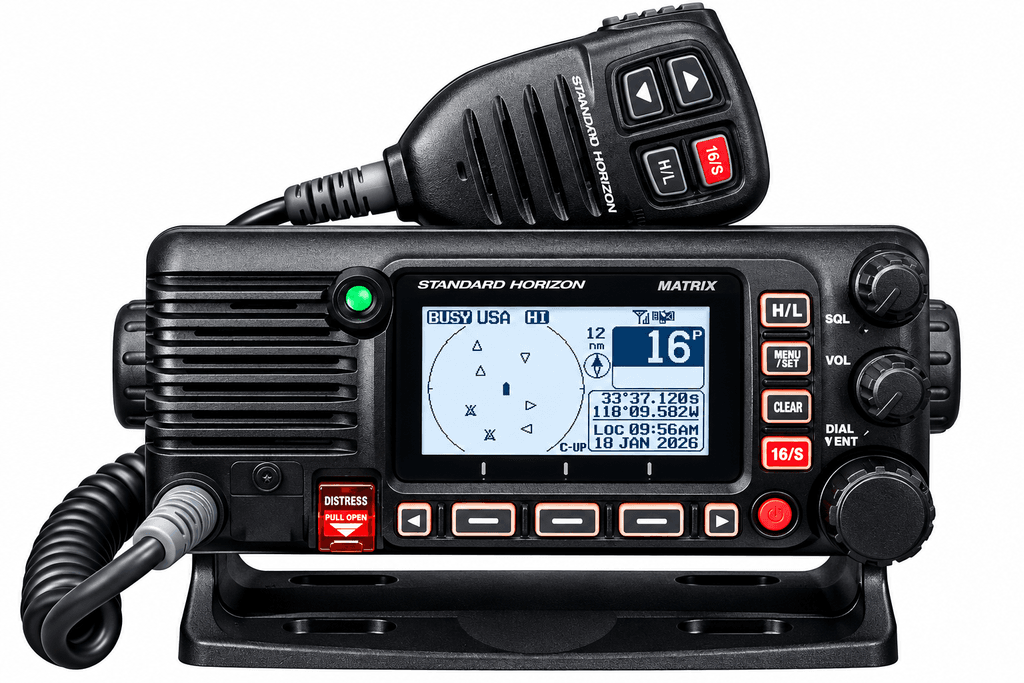
The Standard Horizon GX2410GPS is a feature-packed fixed-mount marine VHF radio designed for boaters who want reliable communication along with built-in GPS and AIS capabilities. It combines Class D DSC with an integrated 66-channel GPS receiver and dual-channel AIS receiver, while NMEA 2000 and NMEA 0183 connectivity make it easy to integrate with compatible marine electronics.
Why We Like It
The GX2410GPS combines several valuable safety and navigation features in one unit. Its built-in GPS supports DSC functionality without requiring a separate GPS source, while the integrated dual-channel AIS receiver helps you monitor nearby AIS-equipped vessels. NMEA 2000 connectivity also makes it easier to integrate the radio with compatible chartplotters and other marine electronics.
Key Features
- 25-watt fixed-mount marine VHF radio
- Built-in 66-channel GPS receiver
- Integrated dual-channel AIS receiver
- Class D Digital Selective Calling (DSC)
- NMEA 2000 and NMEA 0183 connectivity
- IPX8 waterproof rating
- NOAA weather channels and alerts
- Optional second-station capability
Potential Drawbacks
- More expensive than basic fixed-mount VHF radios
- Built-in AIS is receive-only, not an AIS transceiver
- Advanced networking features may be unnecessary for simpler boat setups
- Requires a properly installed VHF antenna for effective communication range
Best For
Boaters who want a premium fixed-mount VHF radio with built-in GPS, DSC, AIS reception, and strong integration with compatible marine electronics.
2. Uniden UM725G — Best Value
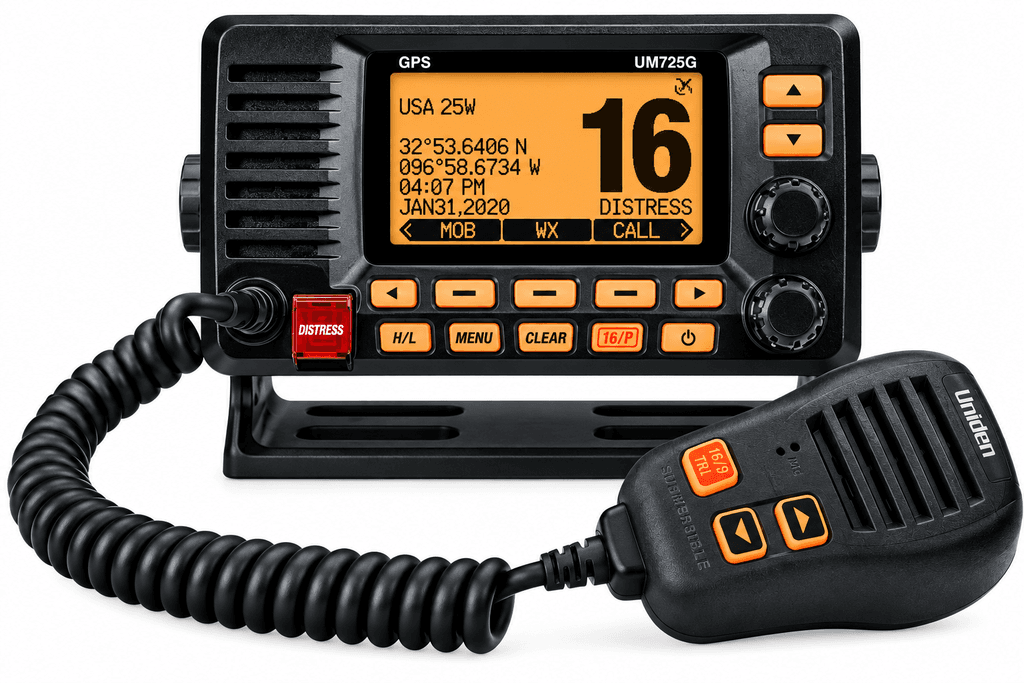
The Uniden UM725G is a compact fixed-mount marine VHF radio that delivers many of the safety and communication features boaters need at a more affordable price. It includes built-in GPS, Class D DSC, NOAA weather alerts, and NMEA 2000 connectivity, making it a strong option for boaters who want modern features without paying for a premium VHF radio.
Why We Like It
The UM725G offers a useful mix of safety features and connectivity without the higher price of many premium marine radios. Its built-in GPS simplifies DSC setup, while NMEA 2000 support allows it to communicate with compatible marine electronics. The compact design also makes it a good fit for boats with limited helm space.
Key Features
- 25-watt fixed-mount marine VHF radio
- Built-in GPS receiver
- Class D Digital Selective Calling (DSC)
- NMEA 2000 connectivity NOAA weather channels and alerts
- IPX8 waterproof rating
- Compact design for easier helm installation
Potential Drawbacks
- Does not include a built-in AIS receiver
- Smaller display than some premium VHF radios
- Fewer advanced features than higher-priced models
- Requires a properly installed VHF antenna for effective communication range
Best For
Boaters looking for an affordable fixed-mount VHF radio with built-in GPS, DSC, weather alerts, and NMEA 2000 connectivity without paying for features they may not need.
3. Icom IC-M330G — Best Compact VHF with GPS
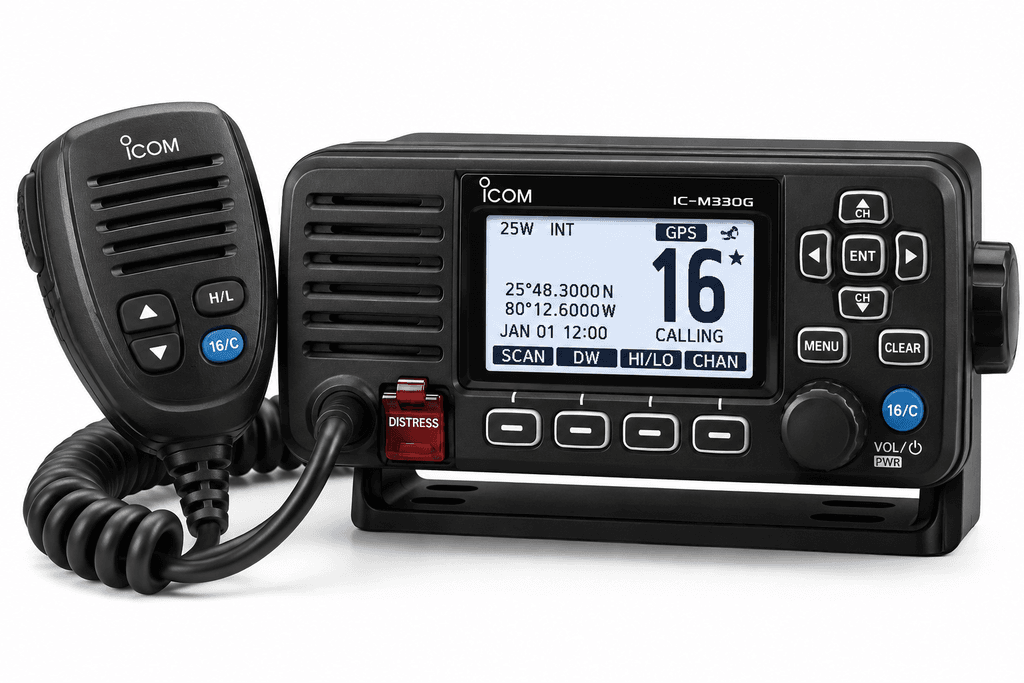
The Icom IC-M330G is an ultra-compact fixed-mount marine VHF radio designed for boats where helm space is limited. It combines 25-watt transmission, built-in GPS, Class D DSC, weather alerts, and a clear full-dot-matrix display in a compact package.
Why We Like It
The biggest advantage of the IC-M330G is its compact design without giving up the core safety features most boaters need. Built-in GPS supports DSC operation, while the intuitive controls and clear display make the radio easy to use from the helm. Its small footprint also makes it a practical choice for center consoles and other boats with limited dash space.
Key Features
- 25-watt fixed-mount marine VHF radio
- Built-in GPS receiver
- Class D Digital Selective Calling (DSC)
- Full-dot-matrix display
- NOAA weather channels and alerts
- IPX7 waterproof protection
- AquaQuake water-draining function
- Compact design for space-limited helms
Potential Drawbacks
- No built-in AIS receiver
- Smaller display than larger premium VHF radios
- Fewer advanced networking features than higher-end models
- Requires a properly installed VHF antenna for effective communication range
Best For
Boaters who need a dependable fixed-mount VHF radio with built-in GPS but have limited space at the helm.
4. Garmin VHF 215 AIS — Best for AIS & Garmin Integration
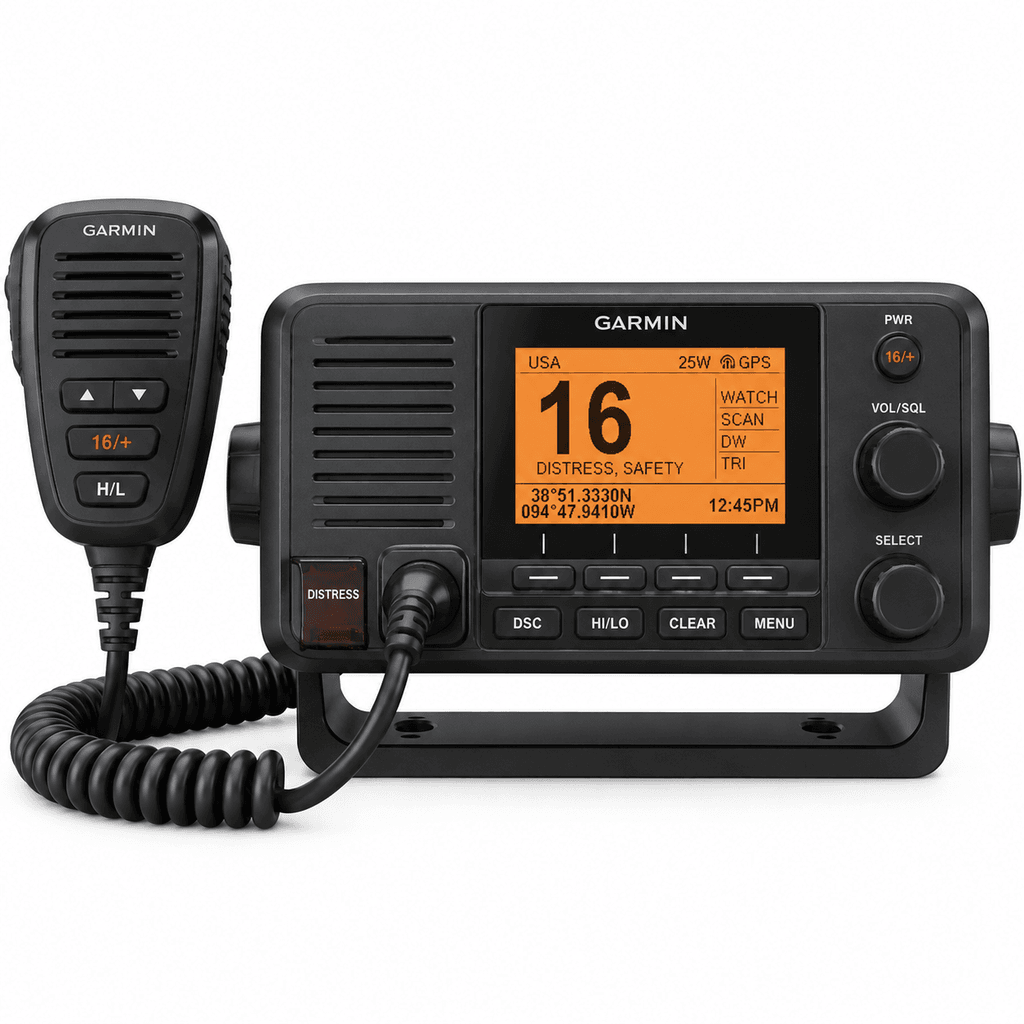
The Garmin VHF 215 AIS is a fixed-mount marine VHF radio designed to integrate with Garmin marine electronics while adding built-in AIS reception and DSC safety features. It provides 25-watt transmission, built-in GPS, a Class D DSC system, and AIS target information that can be shared with compatible Garmin chartplotters and multifunction displays.
Why We Like It
If your boat already uses Garmin chartplotters or multifunction displays, the VHF 215 AIS can fit naturally into that electronics setup. Its built-in GPS, DSC, and AIS receiver provide useful safety and situational-awareness features, while Garmin integration can make information easier to manage from the helm.
Key Features
- 25-watt fixed-mount marine VHF radio
- Built-in GPS receiver
- Integrated AIS receiver
- Class D Digital Selective Calling (DSC)
- Garmin marine electronics integration
- NMEA 2000 connectivity
- NOAA weather channels and alerts
- IPX7 waterproof protection
Potential Drawbacks
- More expensive than basic fixed-mount VHF radios
- AIS is receive-only rather than an AIS transceiver
- Garmin-focused features are less useful if your boat uses another electronics ecosystem
- Requires a properly installed VHF antenna for effective communication range
Best For
Boaters who already use Garmin marine electronics and want a VHF radio with built-in GPS, AIS, DSC, and straightforward integration with their existing helm system.
| Marine VHF Radio | GPS | AIS Receiver | DSC | NMEA 2000 | Best For |
|---|---|---|---|---|---|
| Standard Horizon GX2410GPS | Yes | Yes | Yes | Yes | Best Overall |
| Uniden UM725G | Yes | No | Yes | Yes | Best Value |
| Icom IC-M330G | Yes | No | Yes | No | Compact Installations |
| Garmin VHF 215 AIS | Yes — Built-in GPS | Yes | Yes | Yes | Garmin Integration |
How to Choose the Best Marine VHF Radio
Built-In GPS
A VHF radio with built-in GPS can provide your location directly to the radio’s DSC system without relying on a separate GPS source. This can simplify installation and help ensure your position information is available when making a DSC distress call.
AIS Receiver
An Automatic Identification System (AIS) receiver allows your VHF radio to receive information from nearby AIS-equipped vessels, including identification, position, course, and speed. When connected to a compatible chartplotter, AIS targets can often be displayed directly on your navigation screen, helping improve situational awareness in busy waterways.
Digital Selective Calling (DSC)
Digital Selective Calling allows a properly configured VHF radio to send a digital distress alert that can include your boat’s identity and GPS position. To use DSC effectively, your radio should be programmed with your boat’s MMSI number and connected to a reliable GPS source or use its built-in GPS.
NMEA 2000 Connectivity
NMEA 2000 allows compatible marine electronics to share information across your boat’s network. A VHF radio with NMEA 2000 can communicate with compatible chartplotters, GPS units, and other electronics, making installation and integration easier on boats with an existing NMEA 2000 network. If you’re also upgrading your navigation electronics, see our guide to the [Best Marine GPS & Chartplotters for 2026].
Waterproof Rating
Marine electronics are regularly exposed to spray, rain, and moisture, so waterproofing matters. Look for a fixed-mount VHF radio with an IPX7 or IPX8 rating. IPX7-rated equipment is designed to withstand temporary immersion, while IPX8 models are tested for more demanding water exposure according to the manufacturer’s specifications.
Don’t Forget the VHF Antenna
Even the best marine VHF radio depends on a properly installed antenna. Antenna height, quality, cable condition, and installation can significantly affect communication range. Make sure the antenna you choose is designed for marine VHF frequencies and appropriate for your boat.
Frequently Asked Questions
Do I need a VHF radio if I already have a cell phone?
Yes. A cell phone is useful on the water, but it shouldn’t replace a marine VHF radio. VHF radios allow you to communicate with the Coast Guard, marinas, bridges, and nearby boats, and they can continue to work in areas where cellular coverage is weak or unavailable.
What is DSC on a marine VHF radio?
Digital Selective Calling (DSC) is a safety feature that allows your VHF radio to send a digital distress alert. When the radio is properly configured with an MMSI number and GPS position, a distress call can transmit important information that helps rescuers identify your vessel and location.
What is the difference between AIS and DSC?
AIS helps you monitor nearby AIS-equipped vessels by receiving information such as their position, course, speed, and identity. DSC is primarily a communication and safety system that allows compatible VHF radios to send digital calls and distress alerts. Some marine VHF radios include both AIS reception and DSC.
How far can a marine VHF radio transmit?
Marine VHF range depends heavily on antenna height, antenna quality, installation, weather, and surrounding terrain. Because VHF communication is primarily line-of-sight, mounting the antenna higher can significantly improve range. A properly installed 25-watt fixed-mount VHF radio will generally provide greater practical range than a handheld VHF.
Do I need an MMSI number for my VHF radio?
You can use a marine VHF radio for normal voice communication without an MMSI number, but an MMSI is required to use DSC features properly. The MMSI identifies your vessel when making DSC calls and should be programmed into the radio according to the manufacturer’s instructions.
Final Thoughts
The best marine VHF radio for your boat depends on the features you need and the electronics already installed at your helm. The Standard Horizon GX2410GPS stands out for its combination of GPS, AIS reception, DSC, and connectivity, while the Uniden UM725G offers a more affordable option with the core features many boaters need.
For smaller helms, the Icom IC-M330G provides built-in GPS and DSC in a compact package. Boaters using Garmin electronics may prefer the Garmin VHF 215 AIS for its AIS capabilities and integration with compatible Garmin marine electronics.
Whichever radio you choose, proper installation, a quality VHF antenna, and correctly configuring your MMSI and DSC features are important parts of getting the most from your marine communication system.